







For the second year in a row, the U.S. Forest Service is facing significant proposed cuts to funding and programs.
The proposed zeroing out of significant functions comes as the Forest Service (USFS) juggles a highly contested reorganization plan, which would bring the agency’s headquarters to Utah and close regional offices and research facilities, with the aftershocks of reductions in force that removed foundational knowledge.
Despite reassurances from the administration, the significant changes in structure and funding have made the public question the intent, and these tensions have been on display in budget hearings. Two months after the announcement of the reorganization and well into budget decisions for the upcoming fiscal year, members of Congress and the public have outstanding questions.
President Theodore Roosevelt originally tasked the USFS in 1905 with the mission “to sustain the health, diversity and productivity of the nation’s forests and grasslands to meet the needs of present and future generations.” The Service now manages 154 national forests and 20 national grasslands. While the Trump administration claims the USFS can fulfill its mission more efficiently and effectively with the changes, those who spent their careers with the agency question if the agency’s decline is being manufactured through underfunding, understaffing and resource cuts.
If you’re just tuning in
This year, the proposed federal budget is like a scene from “Ground Hog Day.” Legislators and stakeholder groups find themselves trapped in the 1993 Bill Murray film with conversations happening repeatedly and no progression. All the same budget lines from 2026, spanning from urban forests to research, have been slashed from the proposed budget.
Last year, the USFS was one of the hardest-hit agencies by reduction-in-force initiatives. The deferred resignation program, which incentivized retirement, caused the loss of 16% of USFS’ total workforce—approximately 5,860 employees. In parallel, last year’s budget proposed zeroing out significant programs, such as State, Private and Tribal Forestry; Forest and Rangeland Research; Urban and Community Forestry; and Community Forest/Open Space Conservation programs. These programs cover everything from connecting urban residents to 130 million acres of their local forests to fostering management partnerships with private and Tribal organizations.
Ultimately, Congress rejected severe cuts. In 2026, a temporary spending bill was put in place to prevent a shutdown in the form of a continuing resolution. The final spending bill for 2026 featured less drastic cuts.

The presidents’ proposed budget is usually not exactly what will be funded for FY 2027. Congress will ultimately debate, alter and vote on some form of the budget. But the Trump administration’s proposed budget does communicate its priorities. To retired USFS endangered species specialist Dennis Krusac, the zeroing out of the programs and reorganization speak volumes.
To some groups, like the National Federation of Federal Employees, a union of federal workers, the reorganization plan is being interpreted as a modified reduction in force meant to decrease the USFS’ role. They described the reorganization as “a workforce disruption, designed to indirectly and illegally carry out a reduction-in-force, dismantle critical programs, and ultimately privatize the work of the USFS.”
The reorganization
The reorganization of the USFS is part of a broader restructuring effort within the U.S. Department of Agriculture (USDA). In announcing the larger reorganization plan, the USDA described itself as a “bloated, expensive and unsustainable organization.” The Trump administration’s reorganization of the USDA focuses on reducing bureaucracy, streamlining operations, aligning staffing with budget and agricultural priorities and improving service to the public.
The reorganization severely reduces the Washington, D.C. office and reestablishes the headquarters in Salt Lake City, Utah. The administration calls the reorganization “common sense” in its press release due to the agency’s concentration of lands and operational challenges in the West.
The U.S. Bureau of Land Management conducted a similar move in 2019 that relocated its headquarters out of DC. This decision was later reversed in 2021, and the headquarters moved back to Washington, D.C. When the headquarters was moved out of Washington, D.C., only 13% of employees relocated, and the rest left the agency.
The USFS reorganization plan aims to transition to a state-based model. The plan spoke of eliminating nine regional offices, closing 57 of the 77 research stations and establishing 15 state offices and five service centers. Following widespread concern from scientists, employees and stakeholders, agency communications have increasingly described many of those facilities as being under evaluation rather than slated for closure.
The changes in structure were justified in an April 16 budget hearing by Tom Schultz, the chief of the USFS, as simplifying the chain of command and “driving decision-making down to the most appropriate level”—the man or woman on the ground doing the work. Schultz states that closing regional offices is necessary to reduce hurdles to getting work done and to reduce the number of directives.
“What we’re trying to do is cut through the regulation,” Schultz said, adding that the regional offices were increasing the amount of policy hurdles that exist.
Krusac stated that this is a misrepresentation of the regional offices. “Regional foresters don’t have the authority to make policy,” he said. “They implement policies sent down from the Washington office. Regional foresters can and do establish regional direction on how to implement those policies.”
According to a Snopes interview with Chris French, the associate chief of the Forest Service, employees from the dissolved regional offices would be guaranteed new positions at their previous pay level, though it is still unclear where they’ll work.
Instead of regional offices, they will have state directors that oversee Forest Service operations within one or more states and oversee internal and external operations.
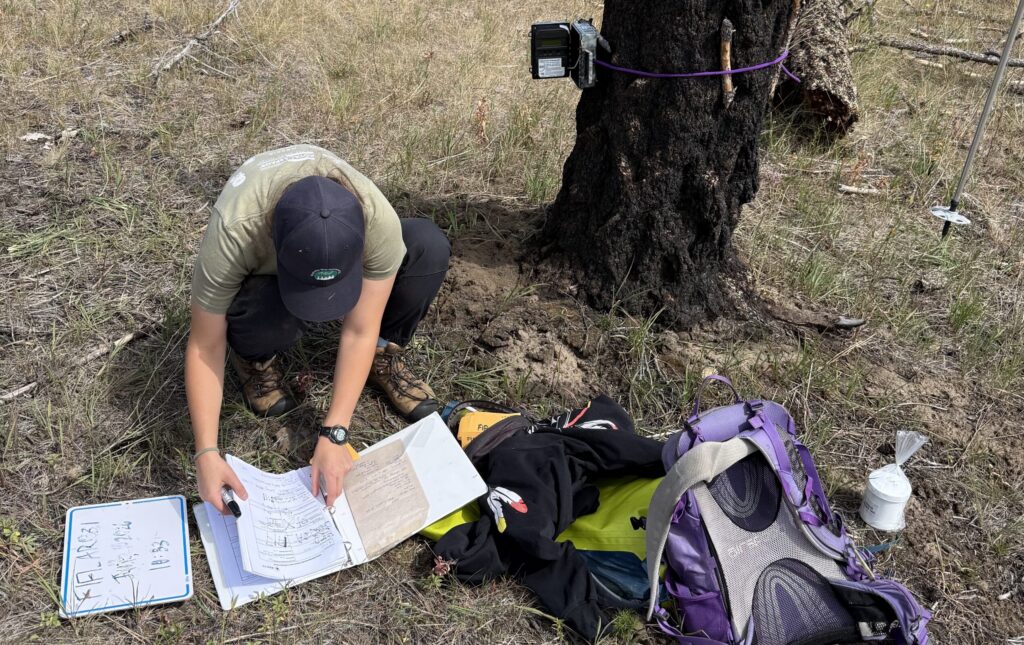
The budget cuts to research and development include key assets, such as experimental forests, which conduct long-term research on ecosystem processes, silviculture and forest management options, wildlife habitat characteristics and forest growth and development.
This paired with the executive order “Immediate Expansion of American Timber Production” leads many to question the intent of the reorganization.
“Part of the problem is the administration wants to manage the Forest Service like a for-profit corporation,” Krusac said regarding the changes. “The Forest Service is meant to deliver goods and services to the public, and you need to approach management differently.”
A problem of their own making
In a now-removed page, the USFS justified the reorganization because of past budgeting, stating “The Forest Service’s facilities footprint is extensive and significantly larger than can be supported under current congressional appropriations, which are declining for facilities—approximately $37 million less in FY 2026 compared to FY 2025.” They stated that the deferred maintenance for facilities has grown to $3 billion and that maintenance costs were not a good use of tax dollars.
“Funding has changed dramatically over the years. When I first started we were very well funded,” said Marty Raphael, a retired USFS biologist with the Pacific Northwest Research Station. Raphael had a team of 15 people to support the Northwest Forest Plan, a landscape approach to federal land management to protect threatened and endangered species. He and his team were able to do field work and go to conferences in the early 1990s. But since the 90s, funding has changed. “It’s just declined, declined, declined. Funding was reduced and we couldn’t keep the same staff size we had, so it became much more difficult to do the research,” he said.
Some scientists and professional societies argue the conditions cited by the agency are the result of decades of staffing and funding decisions that have steadily reduced the USFS’ internal capacity.
In a letter to the administration addressing the reorganization, the Society of American Foresters stated, “Over the past three decades, fields critical to forest health, such as entomology and pathology, have experienced a 40% reduction in staffing across sectors, alongside a 50% decline in [USFS] research scientists and a 70% loss of [USFS] wood products research staff.”
The administration has framed the restructuring as a way to make the agency more efficient and responsive, despite those financial constraints. “This is about building a Forest Service that is nimble, efficient, effective and closer to the forests and communities it serves,” Schultz said in a press release.

But retired USFS staff like Krusac and Raphael question if that can occur under current proposed funding levels.
“It’s distressing,” Raphael said. “I felt like we were really able to accomplish a lot in those earlier days when we had adequate resources to do the work we needed to do. I feel bad for the scientists that are there now because they’re really constrained.”
In the budget hearing, Schultz stated that, “in much of the western United States, mortality on productive timberlands now exceeds growth, particularly in the national forest system. This is driven by fires, insects, disease. In other words, our forests are dying faster than they’re growing.” Yet the programs that promote forest health in state, private and Tribal forestry under the current proposed budget would not receive funding. In the past, this funding and research allowed Krusac and the USFS in the southeast to manage large-scale southern pine beetle outbreaks, for example.
Retired federal employees aren’t alone in their concerns. Many in Congress echo the same sentiments.
“The reorganization is shrinking agency capacity just as the budget shrinks agency capacity,” said Sen. Jeff Merkley (D-OR) in a budget hearing.
Is this legal?
There is some debate about the legality of the reorganization plan and whether it violates the law passed just this year. Opponents of the restructuring and proposed budget argue the appropriations language requires explicit congressional approval before implementation can begin.
Congressional appropriations language passed in late 2025 and early 2026 may support the argument, or at the very least complicate its progression. In the budget for 2026, Congress stated that funds cannot be used to “eliminate programs or projects, relocate an office or employees, or reorganize offices, programs or activities” without prior approval from the Committee on Appropriations.
Additional restrictions in the U.S. Department of the Interior budget bill passed in January 2026 prohibited that agency from reprogramming funds without advance notification and approval from appropriations committees.
Supporters of the administration maintain that the secretary has the authority to move forward with the restructuring and that legal counsel agrees.
Do I or don’t I update my resume?
Although the reorganization may not require firing employees, if the proposed budget is accepted, it could lead to the loss of a significant number of employees. This means that for the second year in a row, federal employees are again caught in limbo. The proposed $309 million cut to the research and development budget could eliminate up to 1,215 scientific positions just as some prepare to move their offices due to the reorganization. During a budget hearing, Merkley said the reorganization is projected to reduce the agency’s non-fire workforce by 40%. Learning from the past and looking for protections, some federal workers in the crosshairs are unionizing to increase protection.
The USFS is recognized as the world’s largest forestry research organization, a role that has amplified concerns about the scale and direction of the restructuring. The Trump administration has proposed slashing the Office of International Programs. To some, this closure represents the loss not only of facilities but also of decades of federal investment in science-based decision-making and the U.S. relinquishing its leadership in this area of expertise. Additionally, funds for professional development are constrained.
“It’s almost impossible to get approval for conferences now,” Raphael said. “It cuts scientists off from the broader community that they used to interact with.” Raphael stressed these conferences are important for the scientists’ professional growth and scientific progress. The Society of American Foresters expressed additional concerns that we are losing foresters at a time when the need for forestry professionals has never been greater. Enrollment in forestry programs at universities is down.
“This isn’t the bright vision for the future that I know many of us strive for,” Merkley said during a recent budget hearing. “These changes appear to weaken an agency that has been a global benchmark for integrating forest research and stewardship for over a century.”
Ultimately, what does the public want?
“Nobody is asking for this,” said Robert Bonnie, who oversaw the USFS as a USDA undersecretary during the Obama administration, in an interview with High Country News. “None of the farm groups want this. No one in conservation wants this. Nobody.”
The mission of the USFS clearly states that the land should be used “to meet the needs of present and future generations.”
In that context, the USDA’s analysis of public comments about the proposed reorganization states a clear message: “Protect forest service personnel and resources.” The report purports to “safeguard the Forest Service’s budget, staffing and operational independence to maintain ecological and public service integrity.” But the role of and value of regional offices were also a significant area of focus in the comments, emphasizing their importance while the reorganization plan seeks to dissolve them. The current FY 2027 budget request from the administration, which proposes cutting the Office of Tribal Relations, also appears to go against public comments emphasizing the importance of Tribal relations.
The USFS website refers to fears expressed by the public regarding the reorganization and fate of the agency as “myths” and tries to combat what they state are “inaccurate” portrayals of the changes. One of the concerns that the USFS has labeled a “myth” is that the changes could make it easier to hand over control of federal forests to individual states or lead to the privatization of public lands. But recently 1.4 million acres of land were transferred to Alaska from the BLM, and Rep. Russ Fulcher (R-ID) circulated a letter calling for the transfer of lands to the state for better management.
Meanwhile, the 2027 budget proposes a 64% decrease in funding for trail maintenance and an increase in the budget from $39 million in 2026 to $175 million to lumber and other forest products.
At the crossroads
Ultimately, the question is not only what the USFS is becoming but also whether it can remain what it was created to be and continue to lead the globe in forestry research.
“I guarantee we will make mistakes, there’s no doubt,” Schultz said in a budget hearing. “And our goal is to learn from the mistakes that we make, hopefully not repeat them.”
But large mistakes in the environment and its management may take generations to rectify, leaving lasting stains on lives and landscapes.
In the Committee of Appropriations budget hearing, Schultz stated, “Untouched forests are unsustainable.”
Krusac’s response is, “How did all these systems exist before mankind got here?”
The Wildlife Society expresses support for the U.S. Forest Service professionals who continue to do important work, despite changes and uncertainty, and for the agency leaders charged with decision-making in a shifting management landscape.
Article by Kaylyn Zipp