

A rare subspecies of caiman is rapidly declining in the northernmost part of its range in southern Mexico.
The quick drop should prompt a listing change for the species under international regulations, said Giovany González-Desales, a PhD student at the Autonomous University of Chiapas.
“The populations have been diminishing significantly,” he said. “Distribution is very restricted to a small area in Mexico.”
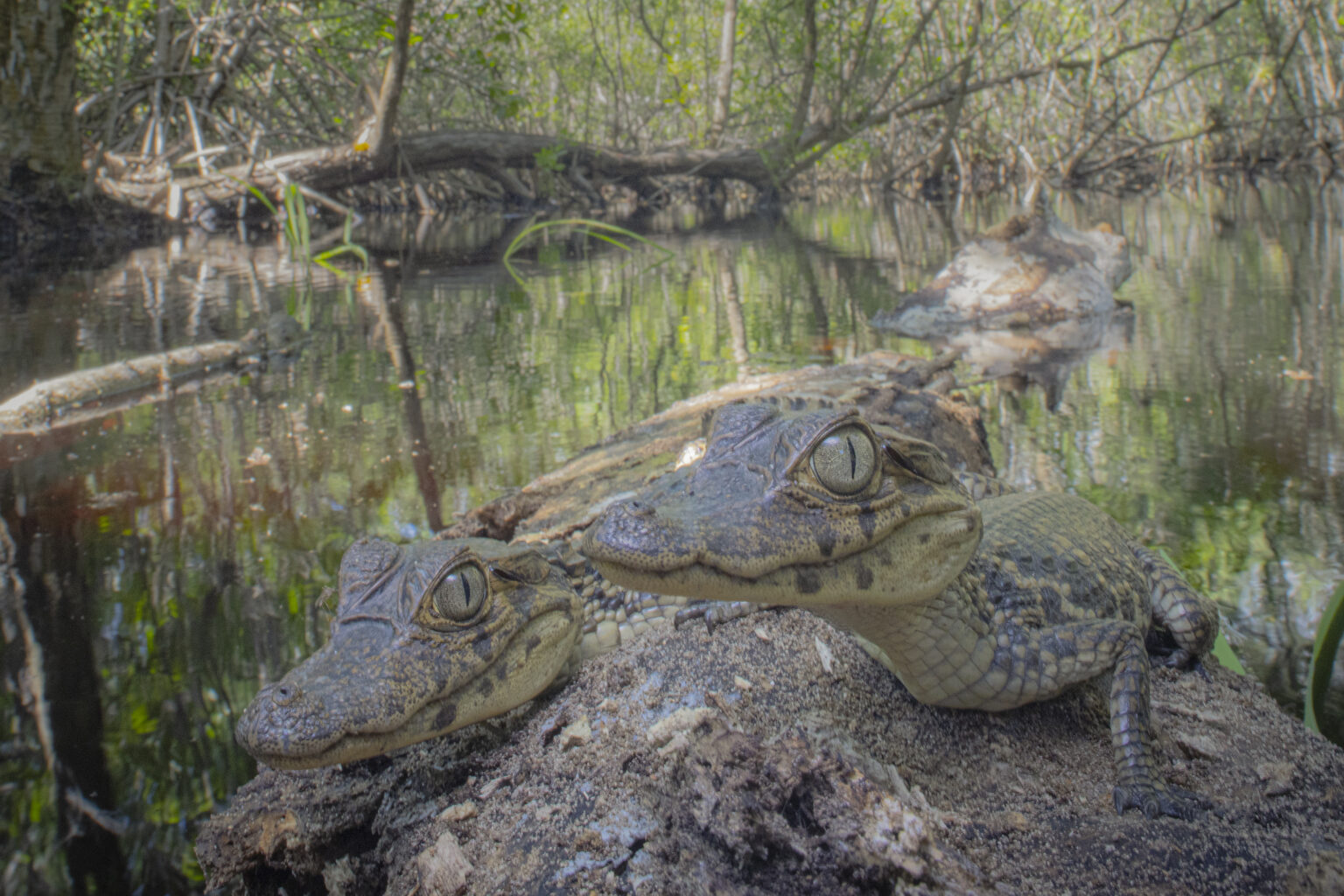
The Chiapas caiman (Caiman crocodilus chiapasius) is a subspecies of spectacled caiman (C. crocodilus). The subspecies is only found in its namesake Mexican state in the southernmost corner of the country and in parts of El Salvador and Guatemala.
In a study published recently in the Journal for Nature Conservation, González-Desales led a team that reviewed long-term monitoring of the subspecies in Chiapas while conducting his master’s at the university.
Tracking crocs in mangrove swamps
The team focused mainly on one population in La Encrucijada Biosphere Reserve near the southern Pacific Coast of Mexico not far from the Guatemalan border, an area they expected to be a stronghold for the species due to a plethora of swampy mangrove habitat. Starting in 2014, the researchers monitored Chiapas caimans twice a year in the reserve. They also used older, less rigorous population monitoring data collected from 1980 until 2014.
Caimans aren’t easy to track. The team would capture the animals and give them a mark unique to each individual by notching the scales in the middle of their tails. But they only recaptured about 10% of the animals over the years, possibly because the captured individuals became warier of humans or moved away because of the disturbance.
In terms of density, the team found big drops in the area. In 1996, for example, they found about 18.5 caimans per transect kilometer. In 2002, during the highest year for caimans in the 2000s, they found only 11.8 individuals per kilometer. In 2011, the highest year of the 2010s, the number was down to 7.8 per kilometer. So far, in the 2020s, the highest number came in 2022 at a paltry 2.1 per kilometer.
In 2014, they observed 19 nests. In the latest survey in 2025, the data of which wasn’t included in the recent study, they only found a half dozen.
The mangroves of the area are dense, which gives the caimans refuge from larger American crocodiles (Crocodylus acutus), which are also found in the area. The crocodiles, natural competitors that are twice the size of a caiman, will often push the smaller crocodilians into suboptimal feeding areas where they subsist more on crabs than fish. “In seasons where there are many crocodiles, there are few caimans, and in seasons when there are many caimans, there are few crocodiles,” González-Desales said.
They also found some caiman nest predation from other native species, like raccoons (Procyon lotor) and their relative species, white-nosed coatis (Nasua narica), as well as lowland pacas (Cuniculus paca), locally known as tepezcuintle, which are a large tropical rodent species. They found the reserve still supported caimans of all ages. “[The mangroves in the reserve] have sufficient resources to maintain caiman populations,” González-Desales said.
Why do humans persecute and poach caimans?
The main problem affecting the caimans was humans, whether it meant poaching, habitat loss due to development in the area or land-use change.
“All of these conditions add up to create a problem for the species,” González-Desales said.
The perception of wildlife conflict also affected caiman numbers for a period in the past. In the 2010s, González-Desales said the area around the reserve experienced a rise in crocodile attacks on humans. In response, some locals began indiscriminately destroying crocodile nests to decrease their numbers in the area. A lack of biological knowledge in many of these cases led to the destruction of caiman nests as well, despite the fact that smaller caimans rarely attack humans. But González-Desales said that outreach efforts helped to limit these retaliatory nest destructions. “We worked with people, and they don’t do these malpractices anymore,” he said.
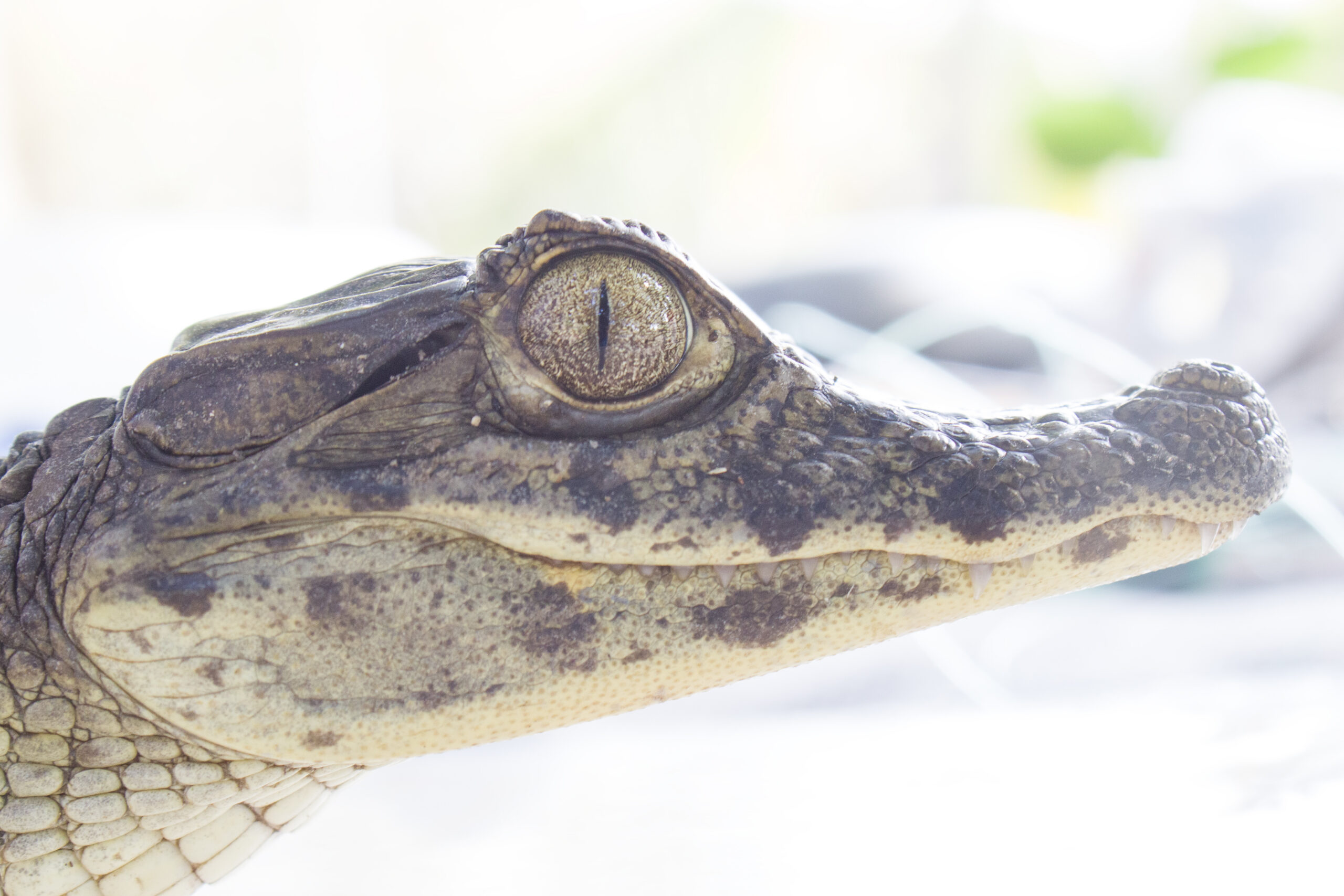
The destruction of nests for other reasons sometimes continues, as there is an illegal trade—crocodilian eggs are used in some traditional dishes. Some people also poach adult caimans for their skin, fat, meat and other parts. “They drink the blood,” González-Desales said, adding that it’s considered an aphrodisiac with curative properties in local Maya medicinal tradition.
Caimans may also experience more poaching pressure than American crocodiles, as they are a little easier to hunt, González-Desales said.
Chiapas caimans are losing habitat
The team also conducted an analysis of habitat modification in the area from 1980 to 2020. They found a significant loss of mangrove ecosystems due to the expansion of agriculture and housing in the area. They conducted projections of this data up to 2040 and 2060, which revealed the trend of habitat loss is likely to continue unless further steps are taken to protect mangrove habitats where Chiapas caimans live outside the reserve.
González-Desales said that these findings should precipitate a change in the classification of the subspecies by the International Union for Conservation of Nature. Spectacled caimans are currently listed as “least concern,” but the Chiapas subspecies has no separate listing. The drop of numbers in Mexico, combined with the projection of continued decline, means their status should change, González-Desales said. Currently, as a member of the IUCN’s Crocodile Specialist Group, he will work to change that situation.
Once this is taken care of, González-Desales hopes the team can start working on a reintroduction program for Chiapas caimans. Some facilities already work with other subspecies of spectacled caimans, he said, so perhaps the knowledge of these places can help start a program with the Chiapas subspecies.
He’d also like to see more international collaboration for the species, similar to that which occurred between Mexico, Belize and Guatemala to get the Morelet’s crocodile (C. moreletii) listed. But as of yet, researchers have little knowledge about Chiapas caimans in Guatemala and El Salvador other than the fact that the Mexican populations seem to be smaller than those in neighboring countries.
Article by Joshua Rapp Learn