

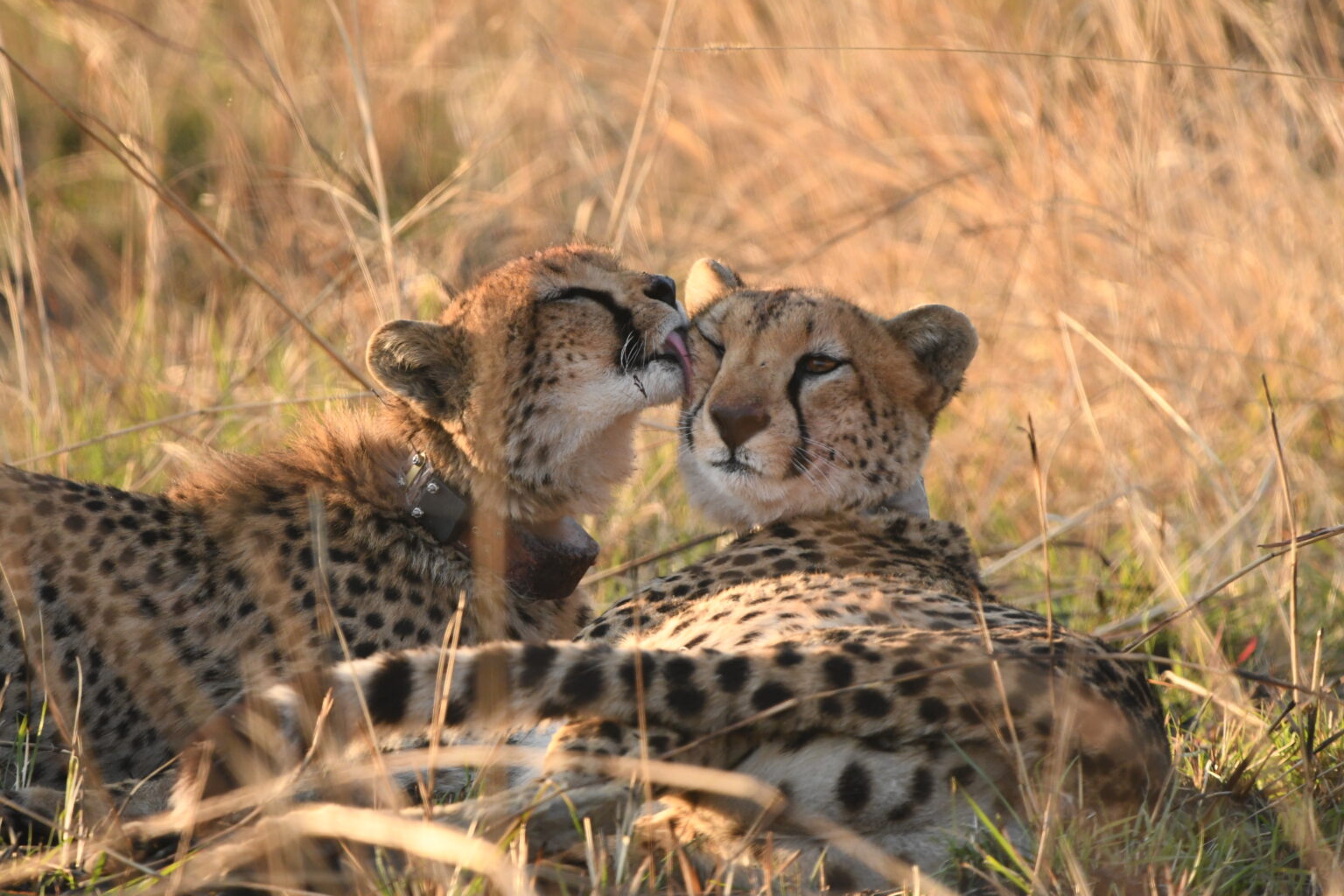
Anna Kusler sat with her colleagues about 30 yards from a sleeping cheetah in the Zambian wilderness in mortal fear. Hour by painstaking hour, the clock ticked as she waited for help, an 18-hour drive away. It was quickly nearing sunset—the time when these carnivores usually like to chase down their prey at a speed hard to outrun.
But TWS member Kusler, a PhD student at the Montana State University, wasn’t worried for her own life. The team had been tracking cheetahs as part of its work with the Zambian Carnivore Programme, a nonprofit organization that supports the Zambia Department of Parks and Wildlife. It was 2019, and as part of their monitoring work, they tracked cheetahs fitted with GPS collars. After nearly two hours watching the collared individual and its uncollared brother, they witnessed the latter stand. What they thought had been a dangling vine turned out to be an illegal snare caught on the cheetah’s foot. When they saw the animal limping along with 2-3 meters of wire dragging after it, they put the call in to their field-based veterinarian, who happened to be working in a remote area nearly 18 hours away.
They spent the better part of the next day hoping that the cheetahs wouldn’t leave before the team could remove the snare. “If he [had] lost that front foot, he would have died,” Kusler said. But when the vet finally arrived at 1 p.m. the next day, they darted the big cat and quickly removed the snare.
Poaching is a major problem affecting cheetahs and their prey in Kafue National Park—part of Africa’s second-largest contiguous conservation landscape that is roughly twice the size of Yellowstone National Park. But it was just one aspect of Kusler’s work surveying the cheetah population in the area. The big cats are found in 23 countries, but most only have small, dwindling populations of less than 100 individuals. There are only about 7,000 individuals estimated left in all of Africa, “Cheetahs are quite iconic but they’re not doing super well,” Kusler said. “They don’t have a super-hot trajectory.”
Chasing speed
Part of the problem is that cheetahs need massive ranges to run. In smaller areas, they can get muscled out by larger predators like lions (Panthera leo) or spotted hyenas (Crocuta crocuta)—their primary predators. Coexistence between the large competing carnivores is complex, and researchers still know relatively little about how cheetahs are doing in Kafue’s vast and prey-depleted landscape.
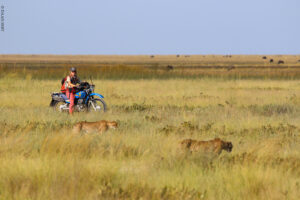
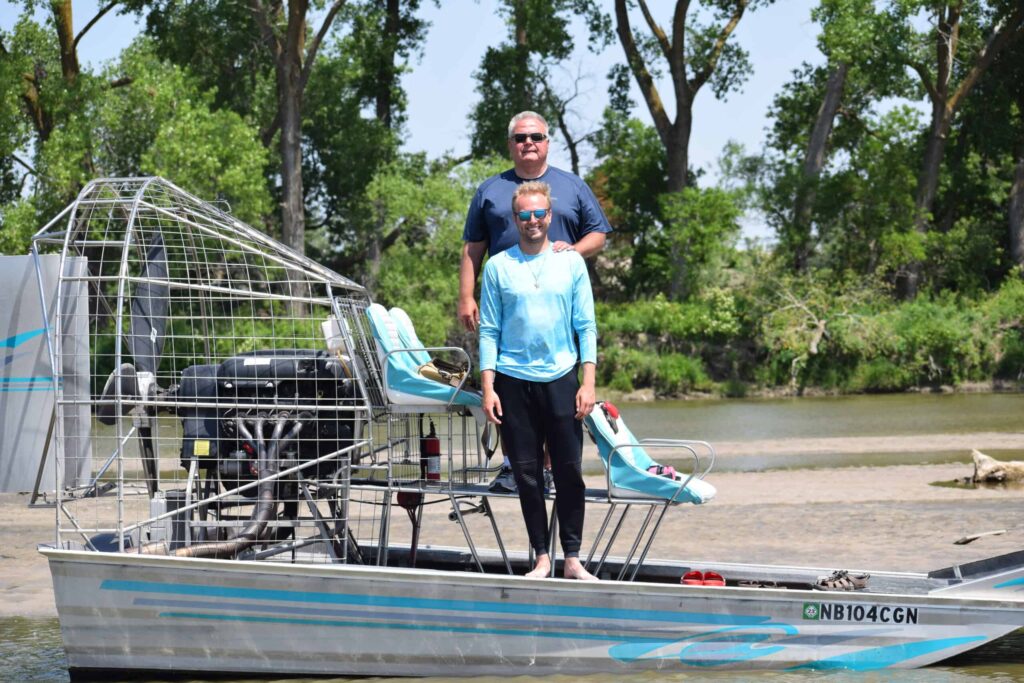
The Zambian Carnivore Programme began monitoring cheetahs, along with African wild dogs (Lycaon pictus), lions, leopards (P. pardus pardus), spotted hyenas in the Kafue ecosystem in 2011. Kusler, above, who wanted to work with cheetahs since she was a little girl, joined the team in 2018, living full-time in a canvas tent in a bush camp for most of the year until 2023. While they had a kitchen and running water in the camp, the internet was intermittent at best, and they only received fuel and supplies every few weeks.
At the 2025 TWS Conference in Edmonton, Alberta, Kusler presented her work conducting mark-recapture on 89 cheetahs from 2015 to 2023. Some individuals were fitted with GPS collars and some were monitored by proxy, as another individual in their family group or hunting coalition was fitted with a collar. Others were monitored opportunistically through a collaborative citizen science partnership with conservation partners and safari guides.
In all, this monitoring effort included 12 collared adult females over a total of 27 reproductive years. Kusler and her colleagues counted cubs in dens, modeled cub recruitment, or the number of cubs that survived to their first year of age, and calculated cheetah survival each year.
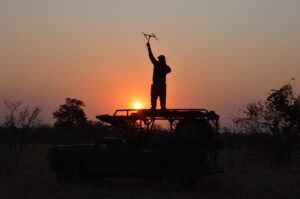
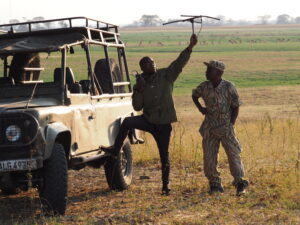
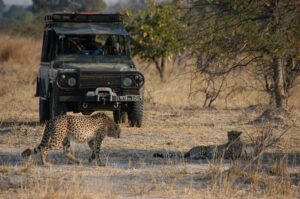
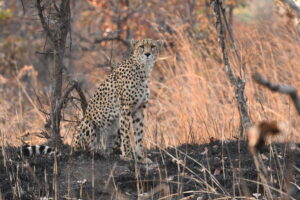
Their efforts were more than just watching the data pour in. Every day, the field team would go out in Land Rovers to check up on the cheetahs and other wildlife they were tracking, like wild dogs (Lycaon pictus) and lions. On these trips, they also photographed the animals to compare and add to a database of known individuals—the cheetahs have individual spot patterns that serve as a kind of fingerprint.
Over the course of this work, she was on the scene to watch two brother cheetahs in the act of pinning an uninterested and unenthusiastic female to the ground, making a sound called “churring” to plead their mating case. She also witnessed a sable antelope (Hippotragus niger) mother burst from the bush in time to ram a young adult cheetah off its calf.
“The cheetah learned an important lesson that day not to touch baby sable,” Kusler said. “You get to see some pretty incredible things.”
Declining cheetah stronghold
Overall, they found that there is an 88% chance that the population of cheetahs in northern and central Kafue was declining or, at the very least, was serving as a demographic sink potentially offset by better reproduction in the southern part of the system where there are fewer lions.
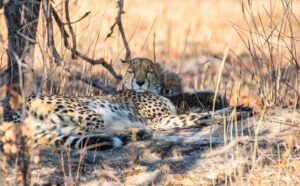
This mostly had to do with a low cub recruitment rate—most young cheetahs weren’t surviving past their first year. The reasons for low cub survival are complicated, though.
The team has found that humans are responsible for about half of all adult and subadult deaths. Of these deaths, about half were from roadkill and half were from illegal snaring. “Their survival is less than ideal at the adult and subadult age classes,” Kusler said.
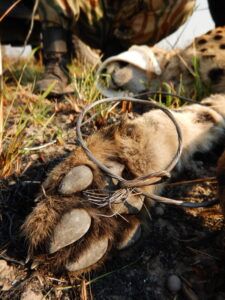
Kusler said most of the latter doesn’t specifically target cheetahs—usually poachers are looking for bushmeat from species like warthogs (Phacochoerus africanus) and impalas (Aepyceros melampus). But they will certainly kill any cheetah they find in a snare and sell its meat in the market as well. “They will usually say the meat is from something like an impala,” she said. Meanwhile, they will sell the skins, claws and teeth to other markets. “That’s where they get the big money from.”
Males also have a 10% higher survival rate than females. Kusler said this might have to do with the pressures of raising offspring, which gets back to the snaring problem. Poachers in the region will set blanket snares across the landscape, capturing everything they can. As a result, Kusler said that herbivore numbers are down by anywhere from three- to 30-fold below what they should be.
“Trying to raise offspring on the landscape with little food may impact their survival,” she said. “You can’t have carnivores if they don’t have anything to eat.”
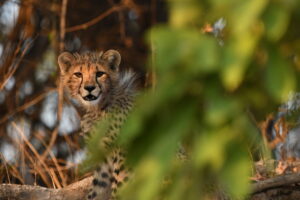
Females can’t easily reproduce after losing cubs, especially if they lost them in part due to low body conditions due to a lack of prey. “Once a mom loses her cubs, it takes her a long time to even be able to build up her body stores to get pregnant again,” Kusler said.
Reversing population declines
Rangers in the park have been addressing the snaring issue, which has decreased thanks to their efforts. In the last few years, nongovernmental organizations like African Parks, The Nature Conservancy, Musekese Conservation, Panthera, and Game Rangers International have stepped in to help support and train rangers from the Zambia Department of Parks and Wildlife to increase monitoring. Rangers now even have a helicopter to help police the land.
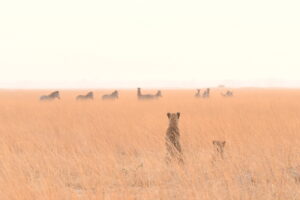
But addressing the root cause of prey depletion is a challenge, as the illegal bushmeat trade is extremely complex and has many drivers on both local and international scales. Poverty is a strong driver at the local level, but ecosystem recovery could create sustainable local job opportunities.
The Zambian government, local communities and conservation partners are trying to develop an integrated approach. Recovery will take time, but Kusler said these coordinated investments can ultimately reverse declines in Kafue’s prey and predator populations.
In the meantime, the Zambian Carnivore Project is now working with the government to plan the installation of more speed bumps on the main road that sees a lot of roadkill.
Together, these efforts have already made a measurable difference for some species like lions, and may hopefully begin to help the cheetah population turn around in the future. But for Kusler, helping that one snared individual was particularly special and somehow more “tangible” than just thinking about helping cheetahs in a more general, abstract way.
“Once he was on the ground and we were pulling the wire off of him, it brought a flood of emotions,” she said. “It was one of the most meaningful experiences of my life.”
This photo essay is part of an occasional series from The Wildlife Society featuring photos and video images of wildlife taken with camera traps and other equipment. Check out other entries in the series here. If you’re working on an interesting camera trap research project or one that has a series of good photos you’d like to share, email Josh at jl****@******fe.org.
Article by Joshua Rapp Learn