



It seems simple: carnivorous plants are the predators and insects are their prey. But a new study published in Ecology shows that carnivorous plants might not be the only ones benefiting from this seemingly one-sided relationship.
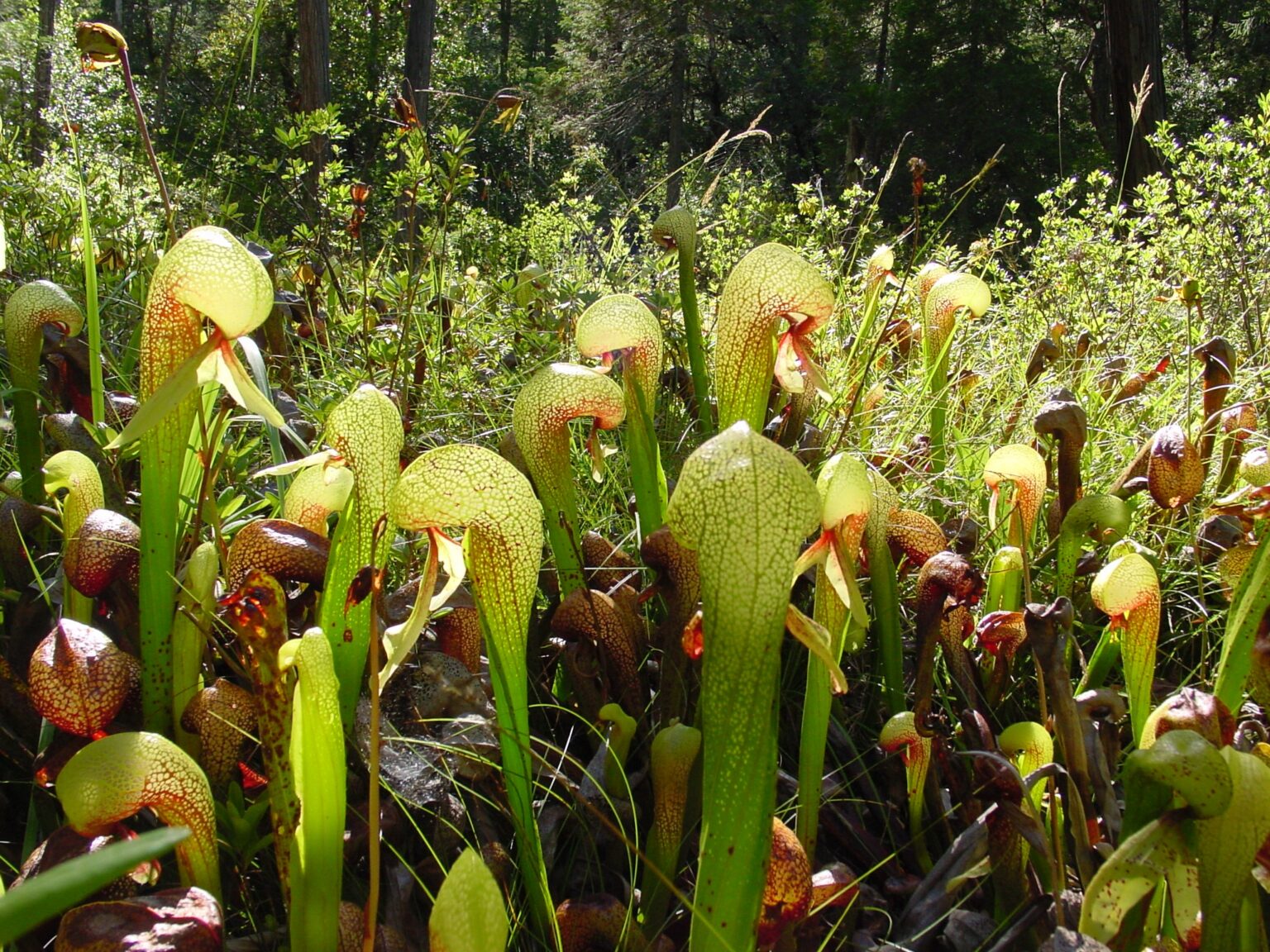
Researchers from the Okinawa Institute of Science and Technology (OIST) in Japan studied the California pitcher plant (Darlingtonia californica) native to Northern California and Oregon. They found that the sweet nectar that lures insects to their sometimes-death is also a critical source of energy for their most abundant prey: vespid wasps. This surprised the researchers but also made sense—previous studies have determined that less than 2% of wasps that visited plants for nectar were trapped. Most can dip into the nectar and escape.
“Generally, we ecologists like to categorize relationships as just being one fixed, discrete type of interaction,” said David Armitage, the study’s senior author and a professor at OIST’s Integrative Community Ecology Unit, in a press release. “But what we’re becoming more aware of is that these ecological interactions are much more context-dependent and fluid.”
While the wasps get a steady source of nectar, the pitcher plants still get a hit of nitrogen and other critical nutrients each time when the occasional wasp gets trapped. In their study, the researchers called this relationship mutualism in disguise—if the pitcher plants’ capture rate were more efficient, the wasps might wise up over evolutionary time.