



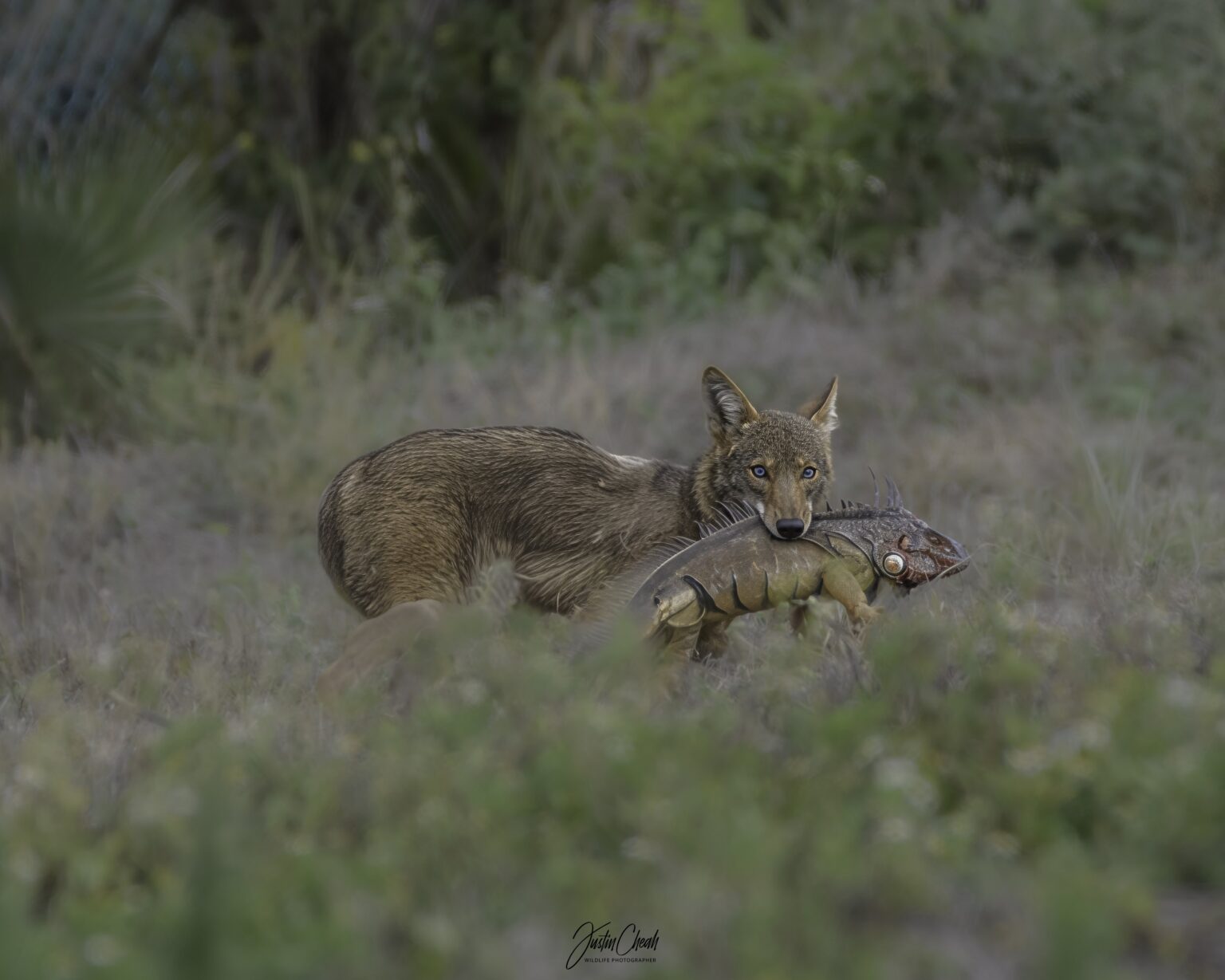
Despite their reputation for having an appetite for roadrunners, coyotes aren’t strictly bird-eaters—they’re not even carnivores. These clever and resourceful canids will take advantage of nearly any food that comes their way. New research out of southern Florida shows that coyotes in Miami-Dade County have a diverse diet, including fruits, birds and iguanas—and that their palates change with the seasons.
In a new study published in the Journal of Urban Ecology, researchers at the Montgomery Botanical Center in Coral Gables, Florida, dug through the scat of coyotes that roamed the gardens at night to see what they were eating. Combined with camera traps, their year-long study revealed a surprising pattern.
“The coyotes were choosing to eat vegetation when it was available—predominantly fruit and some grasses—and when vegetation was less available, iguanas and some peafowl,” said Mark Kraus, a volunteer at the center and lead author on the study.
Paying attention and asking questions
When Kraus first volunteered at the Montgomery Botanical Center, he was a little more qualified than most volunteers. He held a doctorate in biological research and was recently retired from his role as the chair of the natural sciences department at Miami-Dade College.
Like any good naturalist, he would observe the natural world around him. After one night of particularly low temperatures, many green iguanas (Iguana iguana), which are invasive species in Florida, died. He expected the vultures circling the garden to feast on the fresh carrion. Instead, he observed the scavengers eating avocados.
After reviewing the literature, he found records of vultures eating fruit, which the authors noted was likely due to a lack of carrion. But in the gardens, plenty of iguanas were around for the taking. “I came to the conclusion that they eat the most nutritious food, whether it’s fruit or carrion,” Kraus said.
He wondered if there were other secrets hidden in the diets of well-studied species. He found his next study on the bottom of his shoe: studying the piles of scat that coyotes (Canis latrans) left on the centers’ many paths.
Heading south
Coyotes haven’t always called the eastern U.S. home. Over the last century, the species has slowly expanded eastward. By the 1960s, they had made their way to Florida. Kraus guesses that coyotes have been in Miami-Dade County, which sits on the eastern side of Florida’s tip, for around 15 to 20 years.
For Kraus, this was one reason why the study was so exciting. “We knew we had a new population, and they were—at least from their dietary habits—being significantly different from what we expected of them,” he said.
Kraus thinks coyotes are dispersing for a few reasons, primarily because their native habitat—grasslands—has become more common across the country. Until recently, the eastern U.S. was covered in forests. “The old-timers would say, ‘You can put a squirrel on the Atlantic coast, and it can walk across the treetops till it gets to the Mississippi River,’” Kraus said. “Farmlands probably substitute for western prairies and let coyotes function the way they had historically,” he said.
Like pigeons or rats, coyotes are synanthropes—a species that tends to do well when humans move in.
Becoming ‘Scat Man’
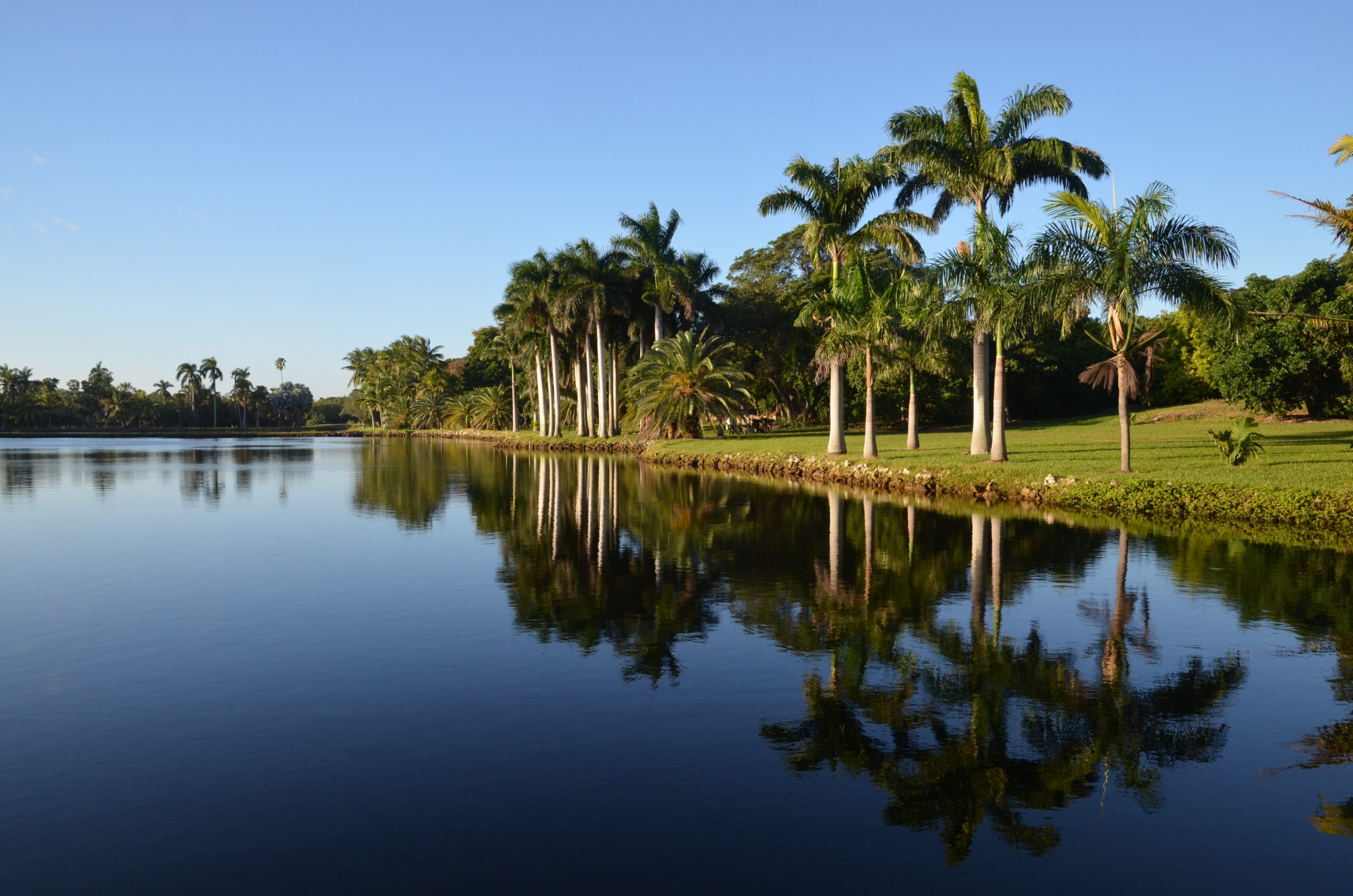
For one year, Kraus collected 120 scat samples from the botanical garden grounds. At around 120 acres, the mostly manicured garden has the largest collection of palms and cycads, which are ancient, palm-like plants, in the world.
Kraus picked apart the fecal samples to figure out what the coyotes had been eating. “Things like bones, skin, feathers and tough digestion don’t get digested,” he said. “They pass right through.” By the end of the study, he had earned the nickname “Scat Man.”
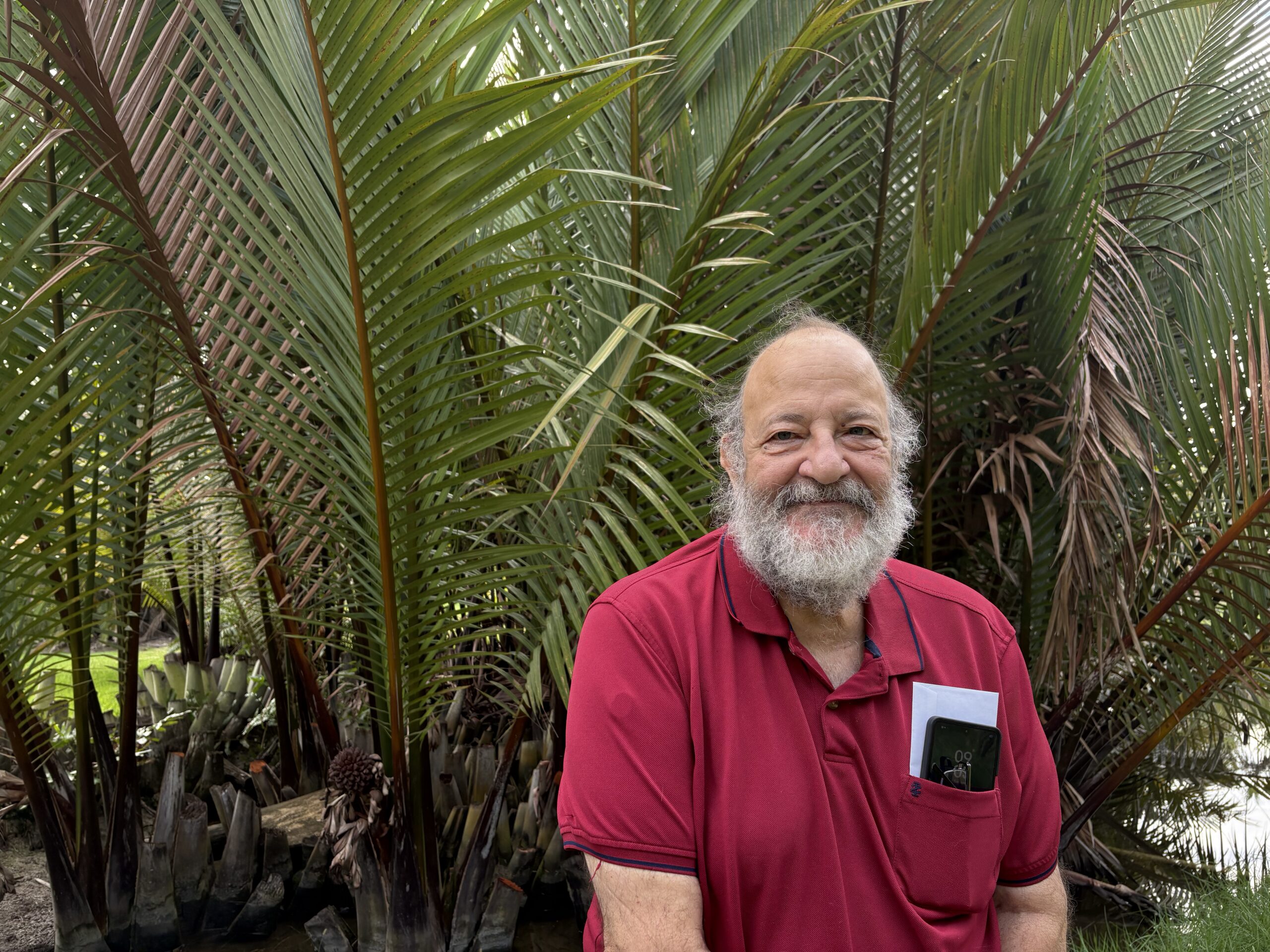
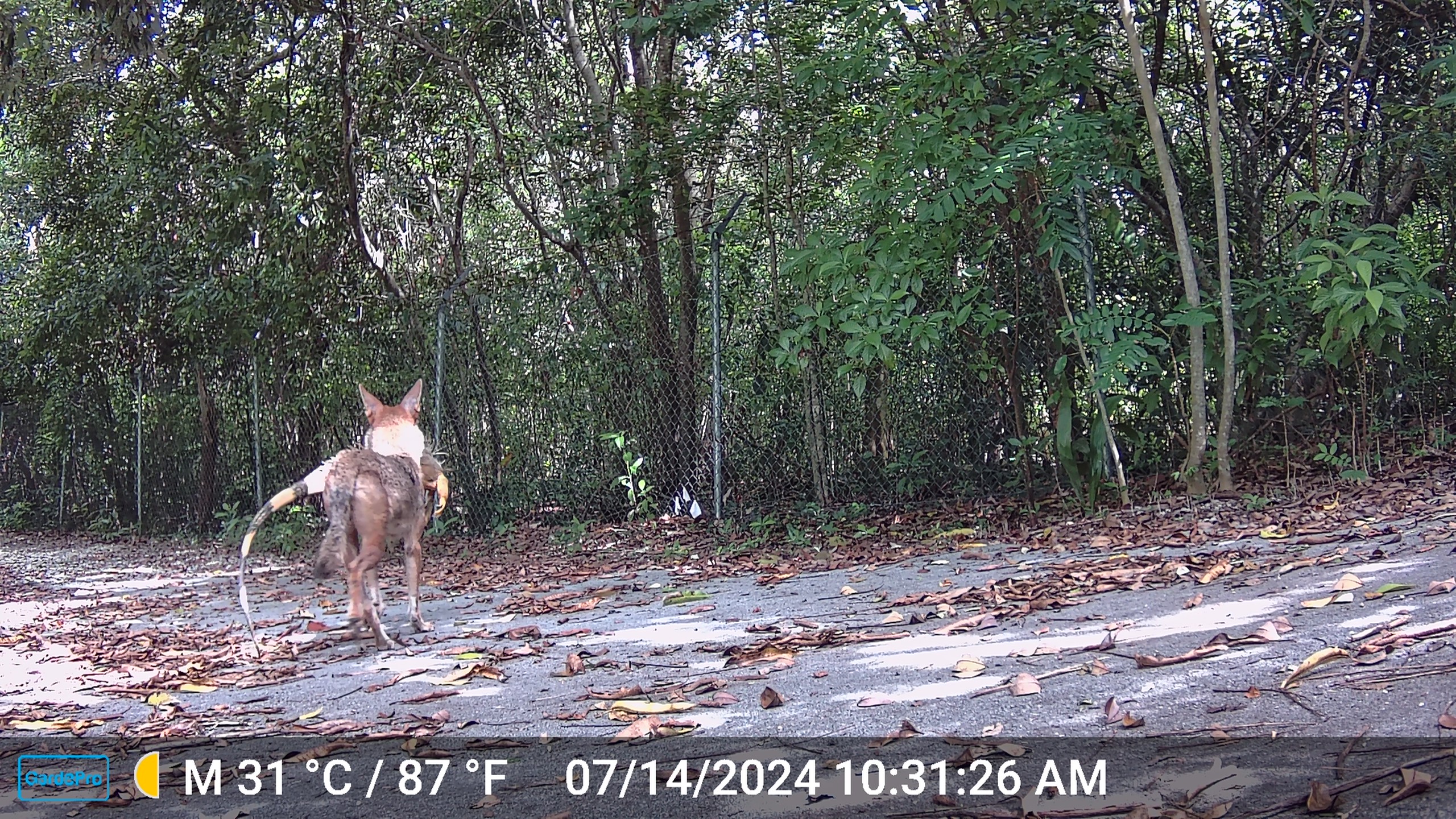
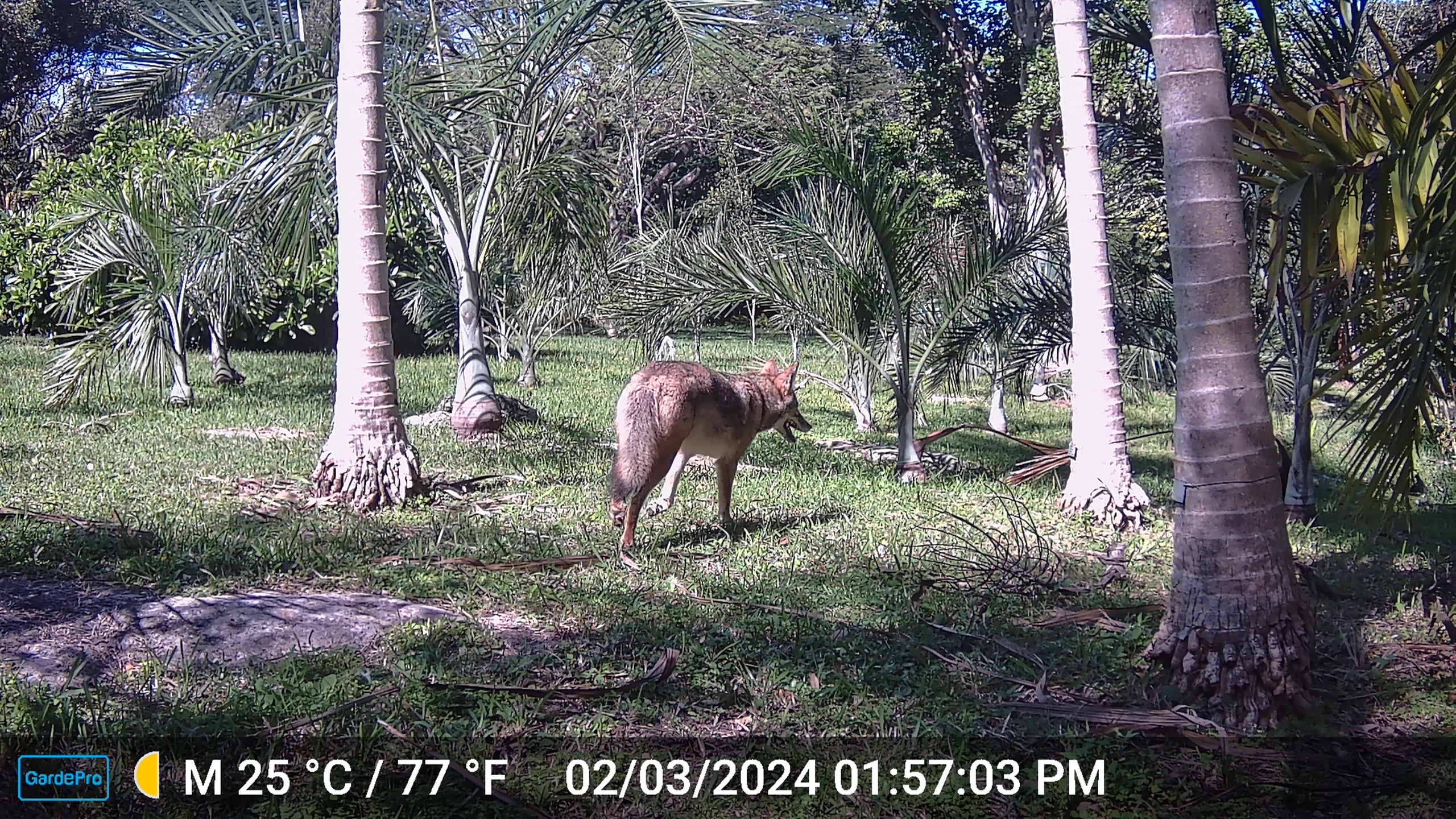
Kraus also used camera traps to document feeding patterns and worked with collaborators at the University of Florida and an employee of the botanical center to conduct the analyses.
He found that what coyotes ate depended on the season. In the wet season, which runs from April through October, the coyotes consumed more fruits and vegetation, likely because that’s when most of the plants are fruiting. In the dry season, coyotes relied more on animals, including iguanas, peafowl (Pavo cristatus) and land crabs. The iguana skin was easy to identify in the scat, as were bird bones, which are hollow.
But iguanas still made up the diet of coyotes each month of the year, except March and April. In July and August, he saw adults taking stunned or dead iguanas out of the garden through a hole in the bottom of a fence. This time period coincides with when the coyote pups need help learning how to hunt. Florida used to have red wolves (Canis rufus), as well as more robust populations of black bears (Ursus americanus) and Florida panthers (Puma concolor coryi). In an ecosystem without these apex predators, coyotes may be helping keep populations of invasive iguanas and peafowl in check.
Coyotes also took advantage of peafowl during this time of the year, which are introduced ground nesting birds. Another study looking at urban coyote diets in west-central Florida found raccoon (Procyon lotor) bones in coyote scat during the summer. “It shows that these animals are very elastic in their feeding habits,” Kraus said.
Kraus was impressed by the range of fruit the coyotes were eating. He found lots of palm fruits, which he could identify to the genus level, because all of the fruit had been swallowed whole. They commonly fed on mangoes and water chestnuts as well, but no avocados, like the vultures. “The study completely changed my view of what a coyote is and does,” Kraus said.
In future studies, he hopes that he can radio collar the coyotes to see where they go during the day when they’re not at the center. “Montgomery was the center of the universe for my study, but it’s not for these coyotes,” he said.
Article by Olivia Milloway