


The spread of screwworm flies across Central America and into the United States may have arrived partly due to illegal cattle movements south of the border.
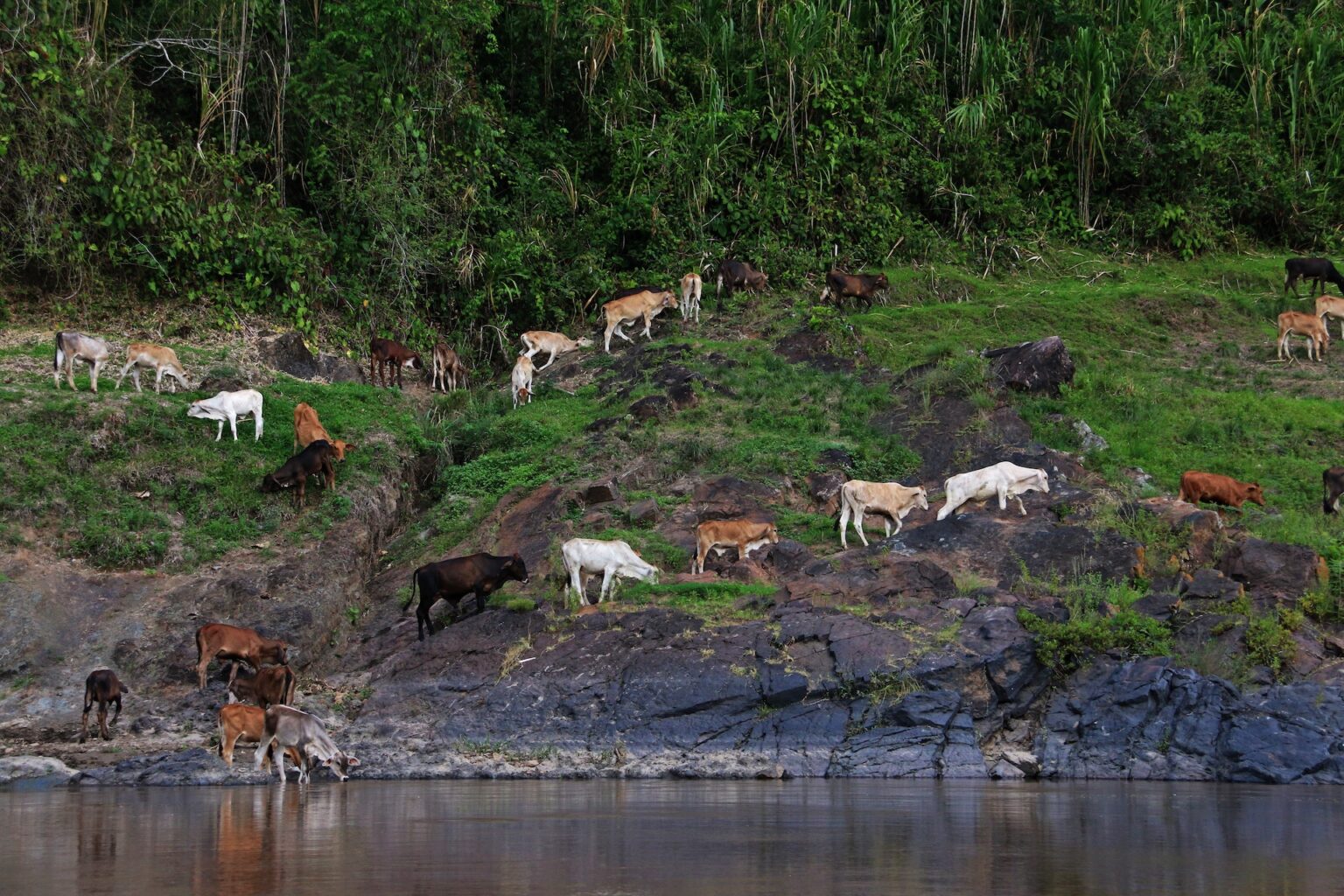
These cattle movements complicate the latest efforts to fight the spread and re-establishment of screwworm and cause concern for wildlife in protected areas where people smuggle cows.
“The impacts of the screwworm on wildlife populations could be serious,” said Diego Montecino-Latorre, a researcher with the Wildlife Conservation Society’s (WCS) Health Program.
To fight the spread of screwworm, Montecino-Latorre and the WCS are calling for improved law enforcement in protected areas, sometimes used as illegal cattle smuggling corridors, and enhanced monitoring of screwworm in wildlife.
The New World screwworm (Cochliomyia hominivorax), once eradicated in the United States, Mexico and most of Central America, made its way quickly northward from Panama in recent years. Earlier this summer, the U.S. Department of Agriculture (USDA) confirmed the first case in years of screwworm infestation in the U.S. in a cow in Zavala County in Texas. In response, the USDA has since closed parts of the border with Mexico to cattle and invested more money in efforts to fight the spread of this pest, which can cause enormous economic impacts to cattle farmers and could endanger the conservation of native wildlife.
In a study published recently in Conservation Biology, Montecino-Latorre and his colleagues analyzed reports of infestation in Latin America.
They reported that from 2001 to 2022, there were only 25 cases per year on average of screwworm in Panama. The USDA had focused most of its control efforts on Panama’s border region with Colombia, the Darien Gap, since the 1990s. But in 2023, cases in Panama increased to more than 6,500. Screwworm then spread quickly through Central America, reaching Mexico by the end of 2024, according to reports.
Over this period, Montecino-Latorre and his colleagues report that screwworm flies moved northward more quickly than their typical dispersal capacity.
“Once you start seeing the dynamics of how screwworms move north, the speed is not constant or as expected following modeling results, but faster,” Montecino-Latorre said.
The dynamics of illegal cattle movement
In a perfect world, authorities track cattle entering or within Mexico using ear tags. These tags carry numbers used to identify their origin, indicating that the cows aren’t coming from areas with known disease or parasite outbreaks. Or they have been inspected and tested before transportation—screwworm isn’t the only problem potentially affecting cattle.
This tracking system helps to legitimize the cattle trade in countries that abide by it. But not all cattle producers reach the standards to get properly tagged. As a result, an illegal market has emerged for faking or switching tags on animals that haven’t gone through the same standards of care or that come from areas with known disease or infection.
“They are inserted in the legal trade on their way north,” Montecino-Latorre said.
Another problem involves the illegal movement of cattle through areas that aren’t supposed to have cattle, such as national parks. But some operators are illegally using these areas for pasturing—particularly those near international border areas, such as the La Moskitia region of Honduras near the Nicaraguan border or the Maya Biosphere Reserve in northern Guatemala along the border of Mexico.
Screwworm risk for wildlife
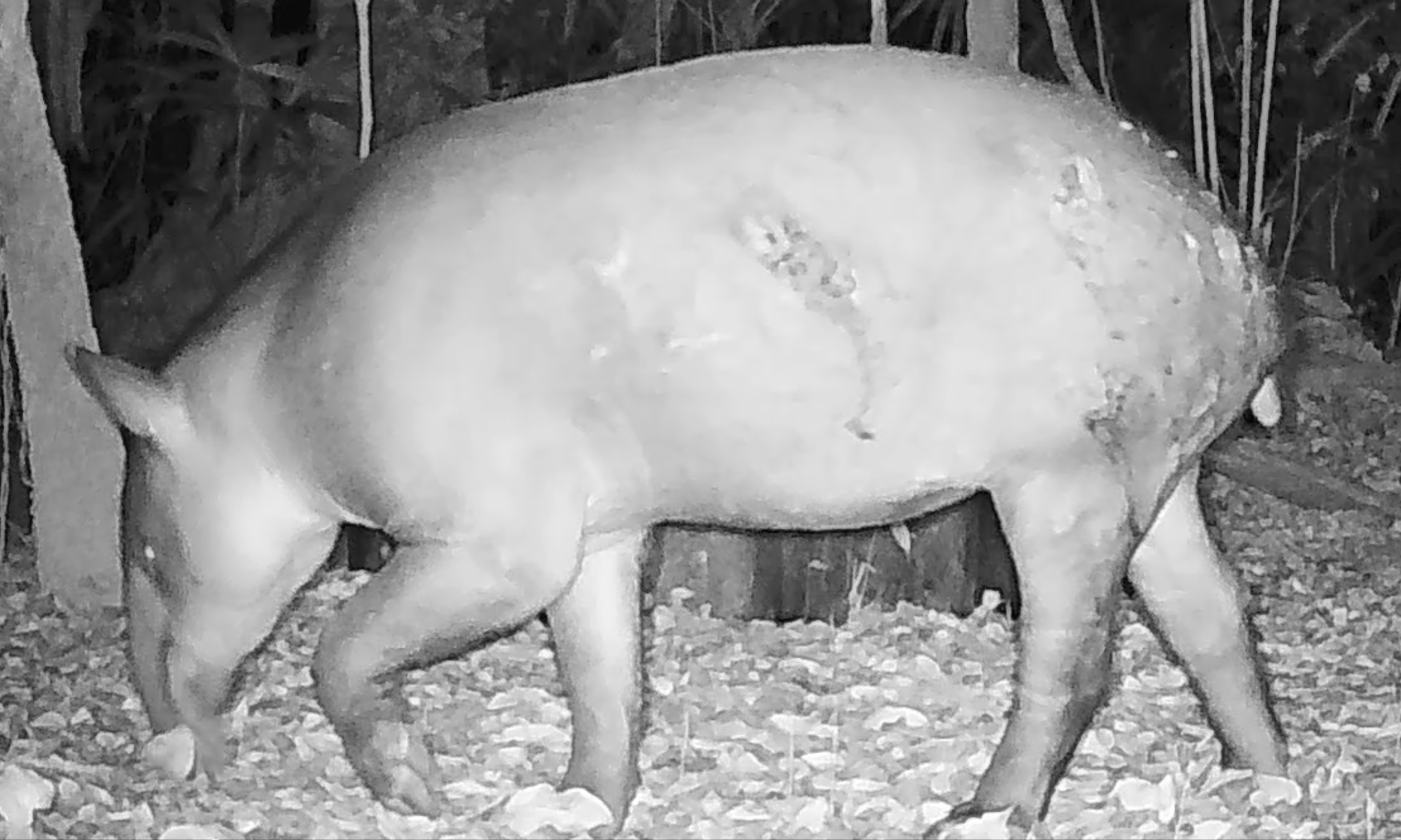
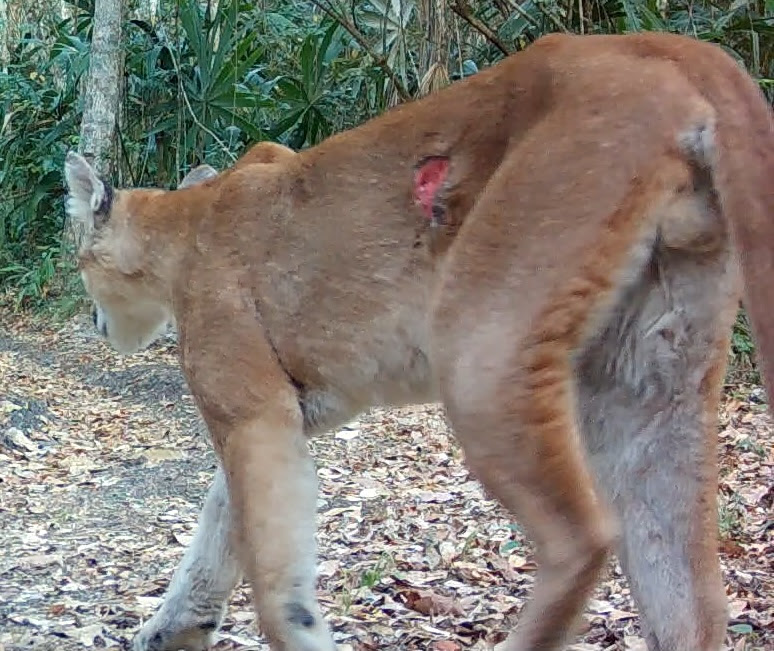
In the latter area, WCS researchers involved with a monitoring program run for eight years have noticed the presence of lesions typical from screwworm maggots on trail camera photos. These observations and confirmed infestations of Costa Rican wildlife triggered the authors to produce this recent paper. Montecino-Latorre said that as cattle are herded illegally across the border in these wild areas, they can easily spread screwworm flies to lay eggs in the flesh of native wildlife.
In many cases, these routes are the same as those used by other smugglers. “Illegal movement is linked not only in some cases with narcotrafficking but also with the destruction of protected areas,” Montecino-Latorre said.
Cattle are an abundant resource for screwworm to lay eggs. Unlike wild creatures, which are often distributed more sparsely across the landscape, cattle are tightly packed and are often kept in large herds.
The cattle industry in this part of Latin America has grown in the decades since screwworm was last seen in the U.S. and Mexico. Before, most cattle farms were relatively small operations with low density and numbers. But today, the activity is massive, making it more difficult to control screwworm.
“Back in the day, the hypothesis was that wildlife was exposed to a lower volume of screwworm flies than they are now,” Montecino-Latorre said. But “[the volume and the densities of] cattle make it a paradise for laying eggs now.”
Fixing the problem won’t be easy, Montecino-Latorre said. But the good thing is, laws already exist to solve the problem. What’s lacking is enforcement to stop illegal wildlife movement, including through protected areas and a crackdown on the corruption involved in cattle ear tags.
If these problems aren’t solved, screwworm may not be the only problem, Montecino-Latorre worries. African swine fever hasn’t yet reached mainland in the Americas, but if it does, illegal animal movement could help it spread more quickly through the region, for example.
“If [Africa swine fever] gets to a farm or an industrial facility, it’s going to create hell—it’s going to be a disaster,” he said. “It’s a high-risk pathogen for food safety.”
Improving wildlife monitoring can also help reduce the spread of screwworm, Montecino-Latorre said. “Wildlife is usually left out of monitoring.”
Jeremy Radachowsky, WCS regional director for Mesoamerica and the Caribbean, said in a press release that this isn’t just a U.S. border problem, a Mexican problem or a Central American problem. “It is a regional biosecurity failure with consequences for ranchers, rural economies, wildlife, public health, food security and taxpayers,” he said. “The same illicit cattle economy destroying forests and Indigenous territories in Mesoamerica is now helping move a dangerous animal-health threat toward North America’s livestock systems and wildlife.”
Article by Joshua Rapp Learn