



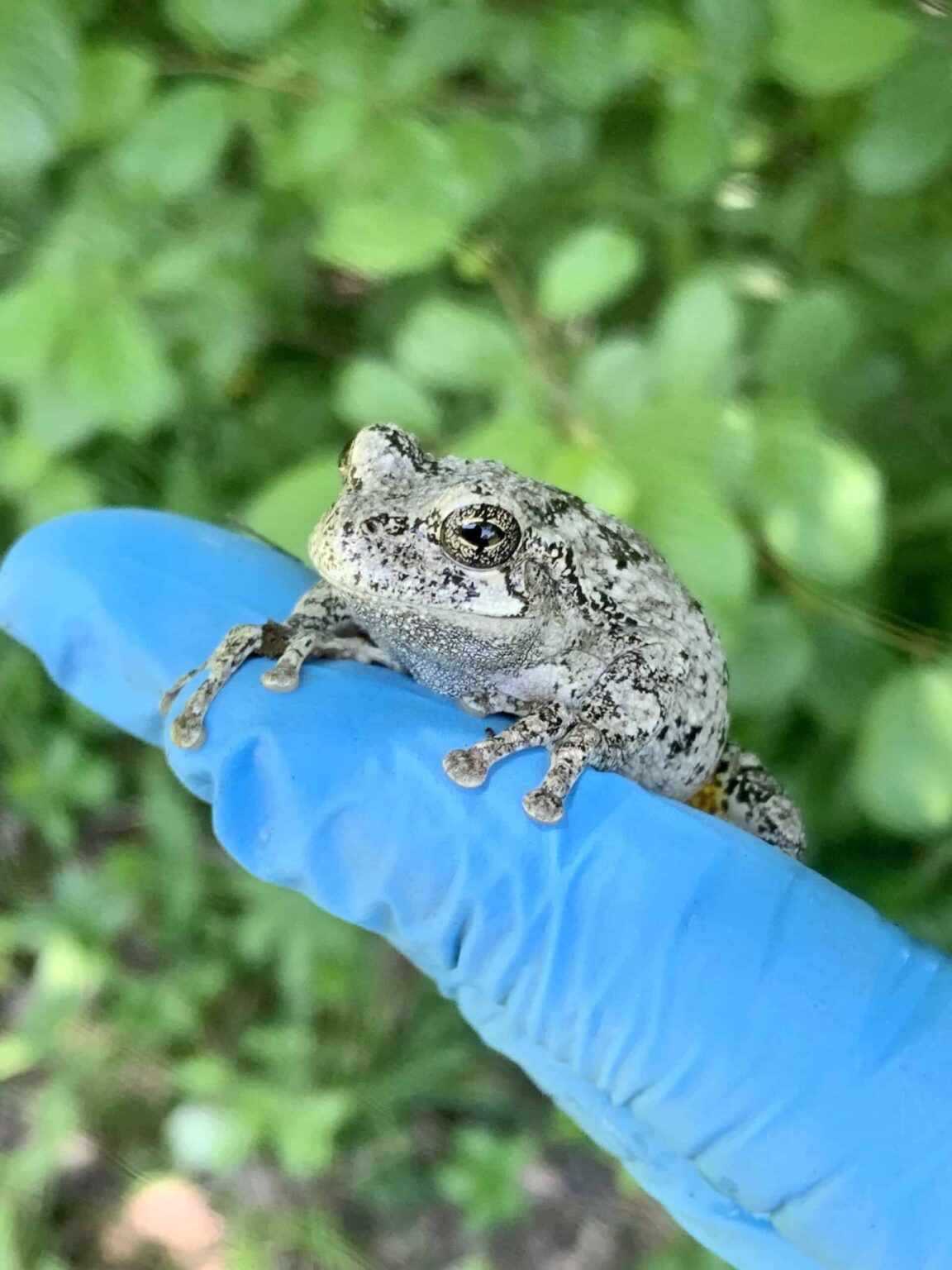
Eastern gray treefrogs use the length of days, not dipping temperatures, as a cue to ramp up their body’s production of antifreeze. But as winters start later and later, this mismatch might put them in an ecological trap.
“The changes in the seasons that are historically tied to changes in temperature are increasingly becoming mismatched,” said Troy Neptune, an ecologist at the Cleveland Institute of Art. And these changes may put some animals in danger.
Certain species of frogs, fish and insects use natural antifreeze chemicals to protect their cells from freezing solid. Eastern gray treefrogs (Hyla versicolor) use sugar to accomplish this feat, storing it in their livers in the form of glycogen as winter nears.
But a study published recently in Journal of Animal Ecology testing the frogs’ production of glycogen reveals that sunlight influences their winter prep. Even though the frogs were kept at room temperature—around 68 degrees Fahrenheit—they accumulated up to 14 times as much glycogen in their livers. With their biological clocks tied to sunlight, treefrogs may be at risk as climate change brings later, milder winters.
Where creativity meets science
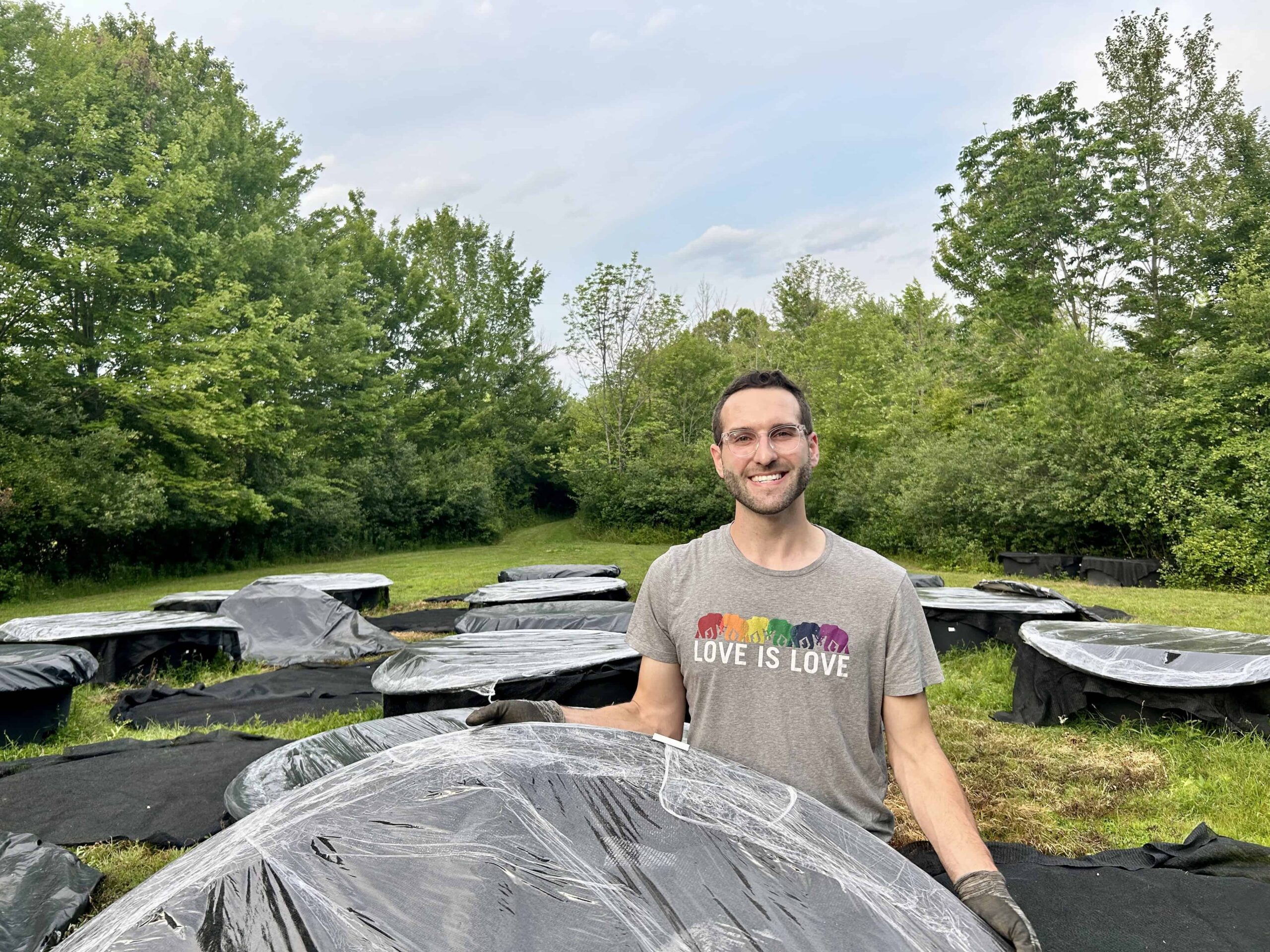
Neptune, who is also a visual artist, brought creative skills to the project, building a custom outdoor experimental setup to manipulate photoperiod, or the length of daylight, as treefrog tadpoles matured into frogs. Neptune, who uses the pronoun they, used mesocosms, which are large tanks kept outside that serve as an in-between for lab- and field-based experiments, allowing scientists to keep as close to a natural setting as possible. The tanks also had snails, aquatic insects, decomposing leaves and water chemistry similar to natural ponds. “The biological realism that comes from working in the field is super important,” they said.
But the tanks also allowed Neptune, who uses the pronouns he/they, to manipulate the amount of light reaching the growing tadpoles. They went to the field each evening and covered the tanks with opaque plastic to mimic sunset, moving the time up a few minutes every day to coincide with the shortening days. They used three light treatments reflecting early, mid- and late season day lengths.
Once the treefrogs began to develop limbs, Neptune transported the adept climbers into the lab for the remainder of the trial, where they continued to expose the amphibians to the light treatments—around late June, late September and early November. At the end of the experiment, Neptune dissected the frogs and analyzed their livers for glycogen levels at the Cleveland Metroparks Zoo.
Under the late season photoperiod, the tadpoles developed more quickly but were smaller. The differences didn’t stop once the frogs finished developing. The frogs exposed to the shortest days had livers three to four times the size of the other frogs, storing up to 14 times as much glycogen. “The frogs that were in the late October to November photoperiod were putting on massive amounts of glycogen in the liver,” Neptune said. This group of frogs was also able to withstand colder temperatures compared to the other two groups. “Every time we looked at something, photoperiod was having an impact.”
An ecological trap
While climate change is altering many parts of the environment, photoperiod depends on the rotation of the Earth around the sun. Because of how predictable the seasons have been in the past, using photoperiod to prepare for winter used to be a smart strategy. But Neptune said this might be leading the treefrogs into an ecological trap: a situation when an environmental change tricks an animal into acting in a certain way that’s damaging to its survival or reproduction.
“If any organism has a strong response to photoperiod that isn’t being overridden by temperature, that can be maladaptive when photoperiod and temperature are no longer well aligned,” Neptune said.

As the frogs are packing on more glycogen while temperatures remain high, they could instead be putting that energy towards muscle development or bone growth, both factors that make them stronger and more likely to survive.
The mismatch isn’t just a lost opportunity to grow bigger and stronger. As cold-blooded creatures whose metabolisms are tied to temperature—warmer weather means a faster metabolism and more energy needed to survive—the chill of late fall is usually a time for “behaviorally chilling out,” Neptune said. But when the temperature stays high, frog metabolisms are still running on the late-summer clock, potentially burning through the energy reserves they need to weather a cold winter ahead. “Do they burn out of resources before the winter even hits?” If these trends continue, Neptune worries the frogs may not have the sugar reserves to make it through the winter.
Just the start
This is just the first step in understanding more about the relationship between frogs and daylight. “This is the strongest evidence of the impacts of photoperiod of frogs, ever,” Neptune said.
There’s still the question of how. Other animals, like humans, use the hormone melatonin to respond to changing photoperiods, which Neptune said might play a role in frogs as well. But there’s a lot of research that needs to be done to understand exactly what’s going on.
For Neptune, it’s an important question to resolve, especially as amphibians across the world are under threat. They’re less concerned about eastern gray treefrogs, which are widely distributed across North America. But other species have smaller ranges and are being affected by additional stressors like habitat loss and disease. Many species are also shifting their breeding timelines due to climate change. “They’re now developing under new photoperiods than what they’ve evolved under,” Neptune said.
Article by Olivia Milloway