


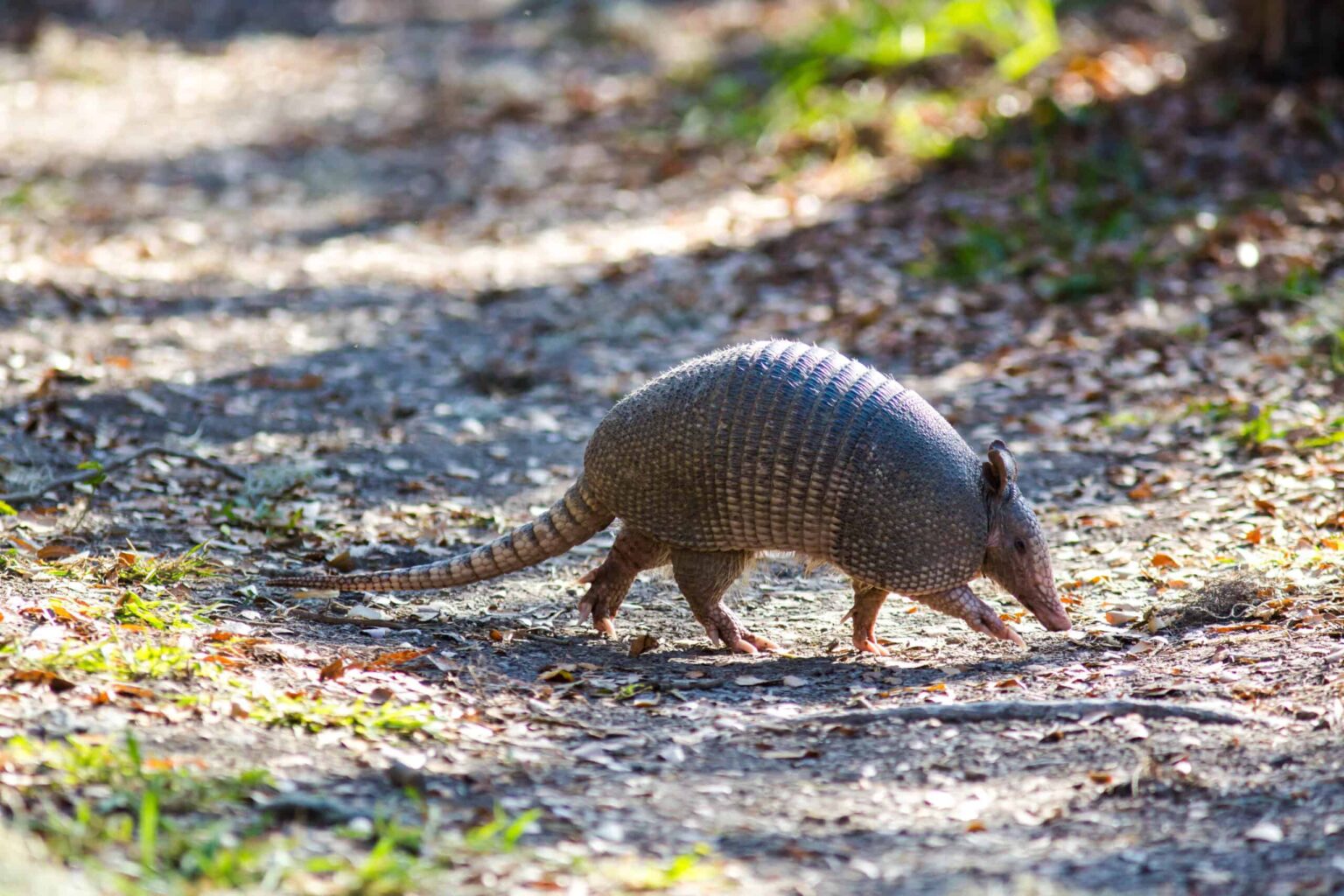
Armadillos are digging their way past manmade barriers and even walking underwater as they defy past predictions and expand their range across the U.S.
Their spread brings new challenges for human-wildlife coexistence in areas unaccustomed to the presence of these ecological engineers. Fears of them spreading disease like leprosy may be overblown, but as ecosystem engineers that build numerous burrows, armadillos cause issues for agriculture and infrastructure. Ecologically, armadillos aerate the soil and produce burrows that other animals use for shelter.
“The arrival of armadillos presents unique management challenges because of their potential, real or perceived, impacts on human health, agriculture and property,” said Anant Deshwal, a professor at Bradley University in Illinois.
First spreading from Mexico to Texas in 1849, the nine-banded armadillo (Dasypus novemcinctus) has been steadily expanding its range northward and eastward. Though their movement is constrained by temperature and precipitation, this rapid expansion has been fueled by changes in climate, land use, and at least one human-assisted release in Florida.
In a new study published in Diversity, Deshwal and his colleagues show that the nine-banded armadillo range has surpassed the limits previously predicted in an ecological limitation study conducted 10 years ago.
Drawing on previous scientific studies, public reports, roadkill data, and observations from hunters and trappers, the authors of this recent work mapped the armadillo’s expanding range. They used environmental data like climate, land cover, elevation and human population density to predict what drives their range expansion.
Extensive range expansion
The analysis confirmed that armadillos are now established in 17 states, and they haven’t stopped yet—the new data show evidence of ongoing expansion. Armadillos now occupy all of Missouri and southern Iowa and have expanded within Kansas, Illinois, Indiana, Kentucky, South Carolina, North Carolina and Georgia. The team also found some occasional reports of the species in Nebraska, Michigan, Ohio and Virginia.
This spread comes with ecological and management implications. Armadillos are considered ecosystem engineers, capable of significantly reshaping environments. They dig large burrows that can disrupt agriculture, infrastructure and gardens.
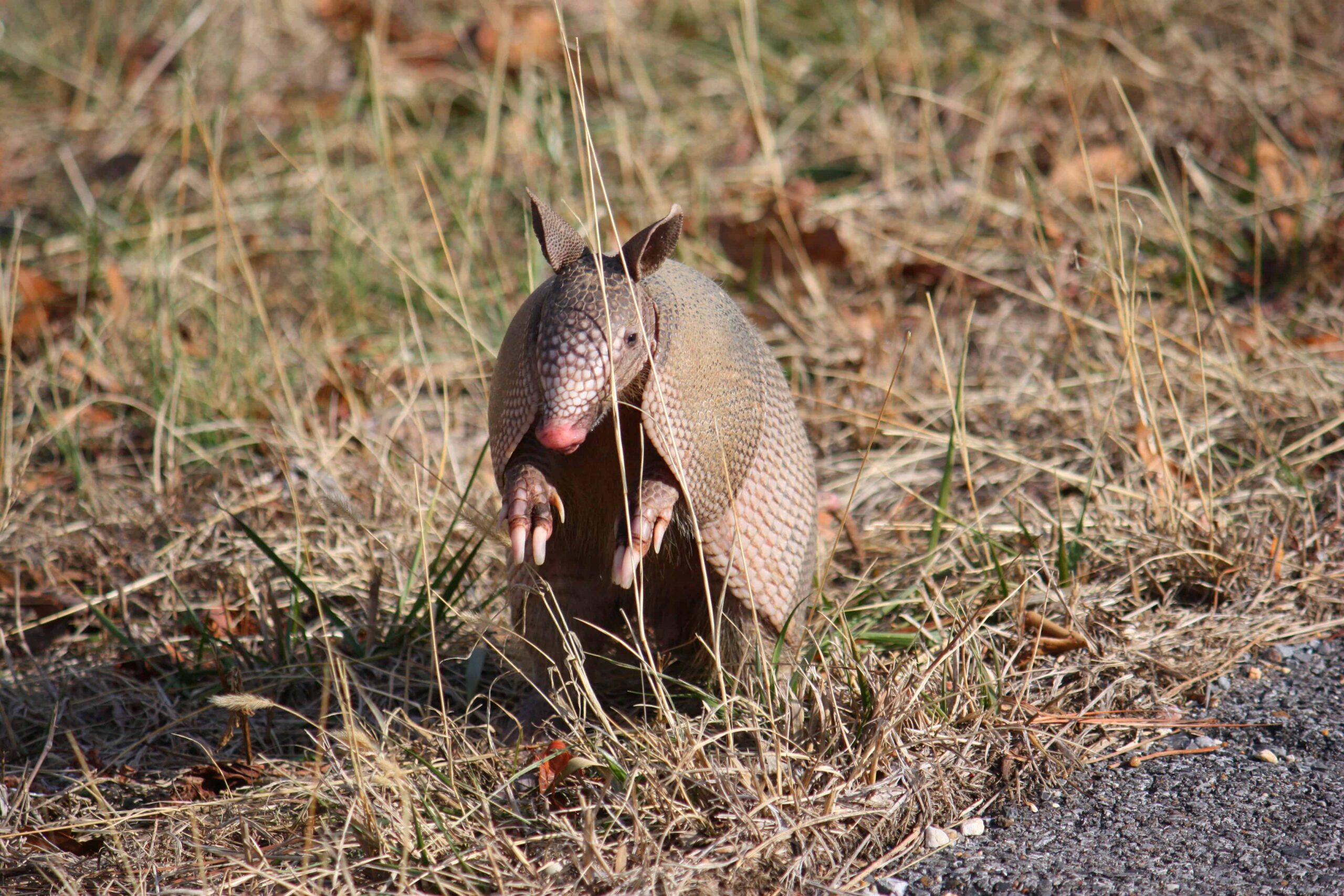
One of the public’s largest concerns is Hansen’s disease, also known as leprosy, which armadillos can carry and transmit to humans. However, according to the U.S. Centers for Disease Control, around 95% of people are naturally immune to the bacteria that causes the disease, making the fears overblown.
Armadillos can also damage lawns, gardens, and infrastructure through their digging and burrowing. In states where they’re newly arrived, wildlife managers are still working to understand how best to respond to the potential damage.
But Deshwal noted that rather than reacting with fear, “we should look to states already coexisting with armadillos to learn how to manage potential conflict.”
“Armadillos are resilient as anything,” Deshwal added. “They can hold their breath and walk for several minutes underwater.” Only major rivers like the Mississippi present a barrier to their movement.
Because habitat type is not a limiting factor, and because their expansion is mostly constrained by temperature and precipitation, their range is expected to continue to expand in the coming years.
“As armadillos keep moving,” Deshwal said, “transparent, science-based public information will be key to easing fear and avoiding sensationalism.”
Proactive strategies and community education may help reduce conflict and support coexistence with these interesting new neighbors, he said.
Article by Kaylyn Zipp