



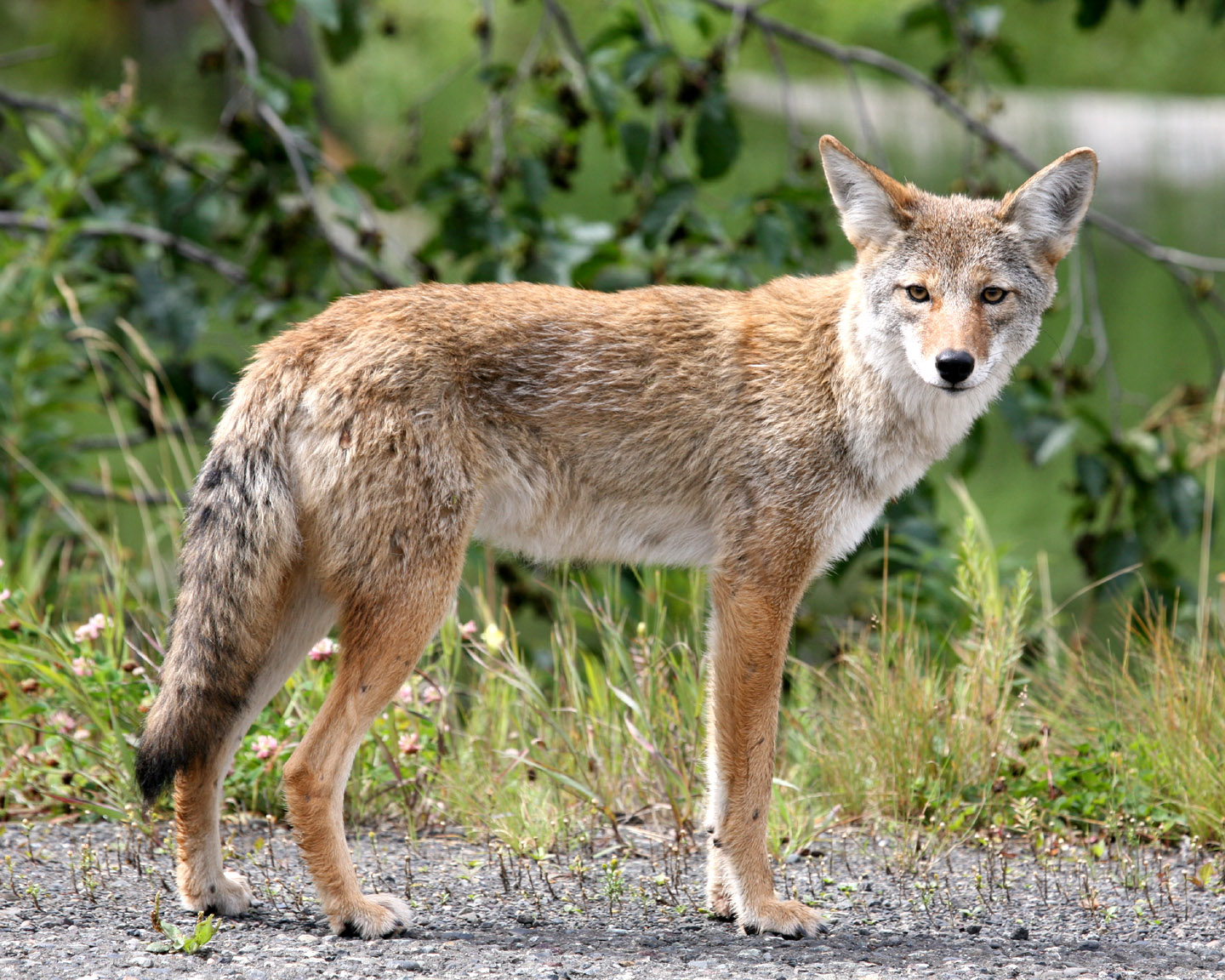
There are over nine times as many coyotes in Seattle as within the same area in nearby wildlands in Washington state. Yet, within the city itself, coyote densities drop in areas where human density is high.
“Density is a really important metric that can affect disease transmissions, human-wildlife conflict and [coyotes’] effects on prey populations,” said Laura Prugh, a professor of wildlife science at the University of Washington.
The high density of coyotes found within the bustling urban center increases the likelihood of conflicts arising between the animals and the city’s inhabitants.
Coyotes (Canis latrans), one of North America’s most widespread mid-sized predators, were historically found in dry, open habitats like the Central Plains of the U.S. Now, they are thriving in a different environment that is quickly growing throughout the country: cities.
“They are kind of a rare example of a species that is really thriving in today’s world, so I think it’s pretty fascinating and wanted to learn more about why they’re succeeding, whereas so many other species are struggling,” Prugh said.
In a study recently published in Environmental Research: Ecology, Prugh and her colleagues set out to measure the density of coyote populations in Seattle, Washington. to compare coyote densities in surrounding wild areas.
Collecting coyote scat: ‘A walk in the park’
To calculate coyote density, Sam Kreling, one of Prugh’s PhD students at the time, and others collected hundreds of scat samples in Seattle as part of a five-year study. Luckily for Kreling’s team, coyotes like to take the easy path in life. “Coyotes notoriously poop on paths. They’re pretty territorial, and they’re also very smart,” said Kreling, now a postdoctoral researcher at Purdue University. “They love using human paths because we’ve created this nice, easy little walking trail, and they’re like, ‘Why would I go walk through a bush when there is this actual trail?’”
This made Kreling’s work a “walk in the park”—literally. “It just involved me walking around with my dog, honestly, in a lot of green spaces in the area and just picking up any scat that I happened to see,” she said.
Other researchers collected more scat in northern Washington state as part of a predator-prey study there.
Coyotes like quieter areas of the city
In the lab, the research team extracted DNA from the scats to identify individual coyotes. Then, they used population models to estimate their density in each study area.
The models revealed striking differences between the urban and wildland sites in Washington. In Seattle, coyote densities were more than nine times higher than in the two sites in the northern part of the state, which were sparsely settled by humans. On the surface, this appears to mean that coyotes are attracted to areas with lots of people—but the pattern changes based on the scale.
Looking broadly across the state, Seattle—a city with hundreds of thousands of people—had more coyotes than surrounding areas with few people. But within the city itself, coyotes tended to avoid areas with the highest concentrations of humans.
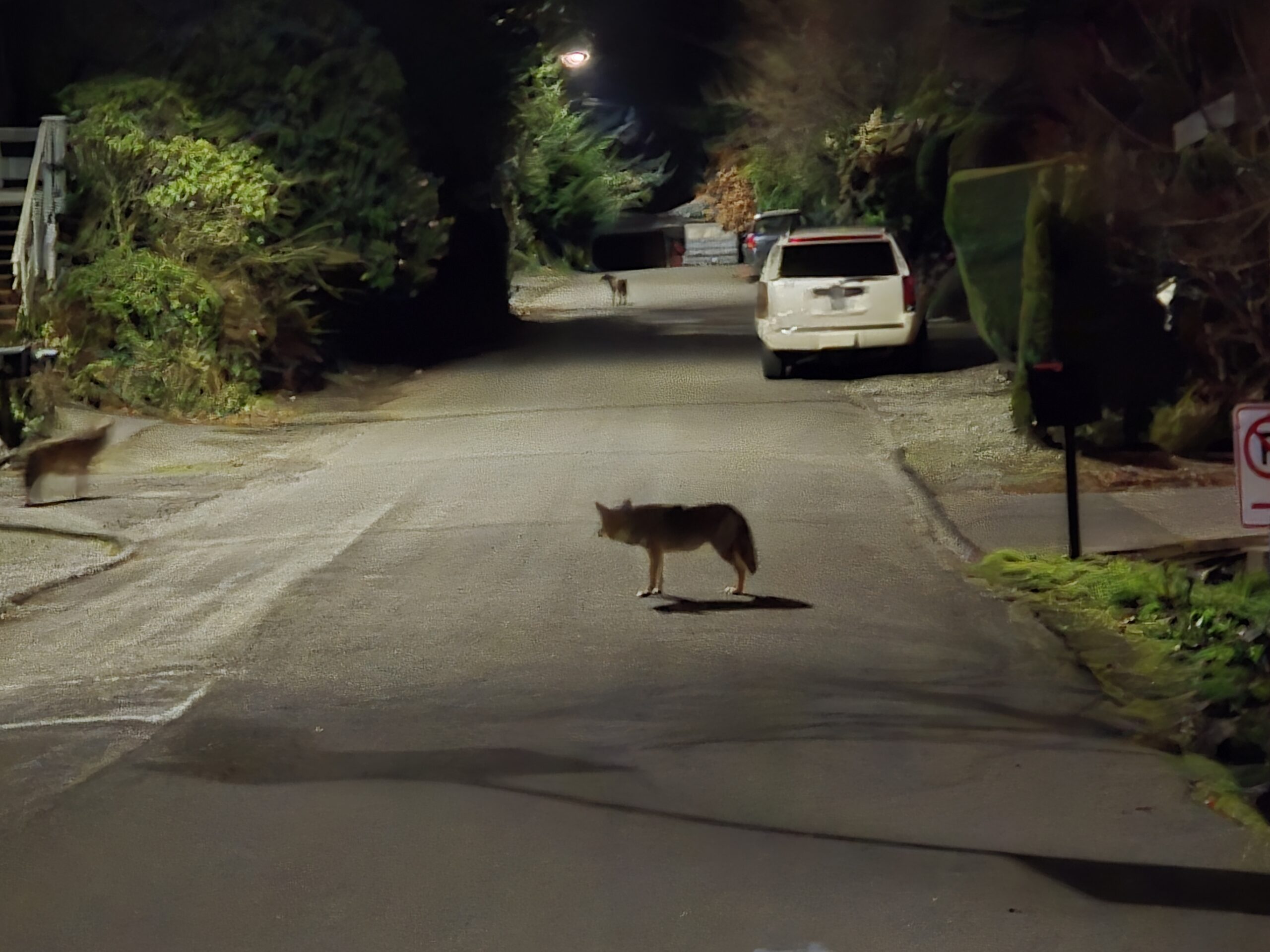
Prugh explained what could be driving this paradox. On the one hand, coyotes seem to benefit from significant changes to the natural landscape caused by humans. On the other hand, coyotes may be negatively affected by the disturbance caused by large numbers of people, making them shy away from the more crowded parts.
It’s not about the money
Prugh and her colleagues explored other factors like income, tree cover and other structures that might affect coyote density in the Seattle area. To their surprise, none of these had effects on coyote density—only human density itself had a negative effect.
Prior studies of wildlife in cities have identified a so-called ‘luxury’ effect, where wealthier neighborhoods tend to have more tree cover and therefore support more wildlife. Coyotes seemed to be an exception to that rule, a result also found by studies in the Chicago and Los Angeles areas.
Two reasons could potentially explain this pattern. For one, a study in the San Francisco area found that people’s attitudes toward coyotes were more negative in wealthier areas, which could mean a lower tolerance for coyotes in those neighborhoods. The second may be rooted deep in coyotes’ biology.
“The whole mechanism behind the luxury effect is thought to be because there are more trees, but coyotes don’t really seem to care about trees per se. In fact, historically, they were found mainly in more open, arid habitats,” Prugh said.
Illegal dumping sites: coyotes’ local McDonalds
In a related study published in People and Nature, Kreling used the same coyote scats collected in Seattle to investigate whether the diets of this highly adaptable species shift with social and economic differences across cities. While extracting coyote DNA from the scat samples to identify them, the researchers also took the opportunity to genetically analyze the types of food contained in each.
Kreling was particularly interested in whether human access to healthy food options was mirrored by coyote diets, since coyotes often feed on human trash or other food sources, like fruits falling from trees in yards. To her surprise, the connection wasn’t very strong—possibly because coyotes don’t necessarily poop where they eat.
There was one notable exception: coyote diets were significantly impacted by reported illegal dumping sites in Seattle.
These illegal dumping sites, reported to the city by locals for things like abandoned mattresses and other waste, were linked to finding more nonnative rats and mice in the coyotes’ diets. “You have more habitat because rats love gross things to go crawl around in,” Kreling said. “Coyotes do a nice service for us in reducing some of those pest populations.”
Finding ways to live with coyotes
Despite their pest-controlling benefits, city coyotes bring issues. Coyotes can spread parasites they pick up from their rodent diet, and they sometimes eat pets.
Kreling’s team couldn’t measure if coyotes in the study were eating any dogs because they couldn’t differentiate the genetic marker of a dog in scat versus the coyote itself. However, they could detect cats and where coyotes preyed more on cats.
“That allows us to work with managers and target those areas for education to help people keep their pets safe,” Kreling said. Her nonprofit, Common Ground Wildlife, aims to do just that. “We’re really not going to get rid of [coyotes],” she said. “We really do have to learn to live with them.”
Prugh’s study, which found much higher coyote densities in the city compared to wild areas, points to the same thing: coyotes are not going away anytime soon. “Being aware that they can reach fairly high densities in urban areas kind of reinforces the need to learn how to coexist with them, and trying to minimize conflicts,” she said.
Article by Fanny Riand