




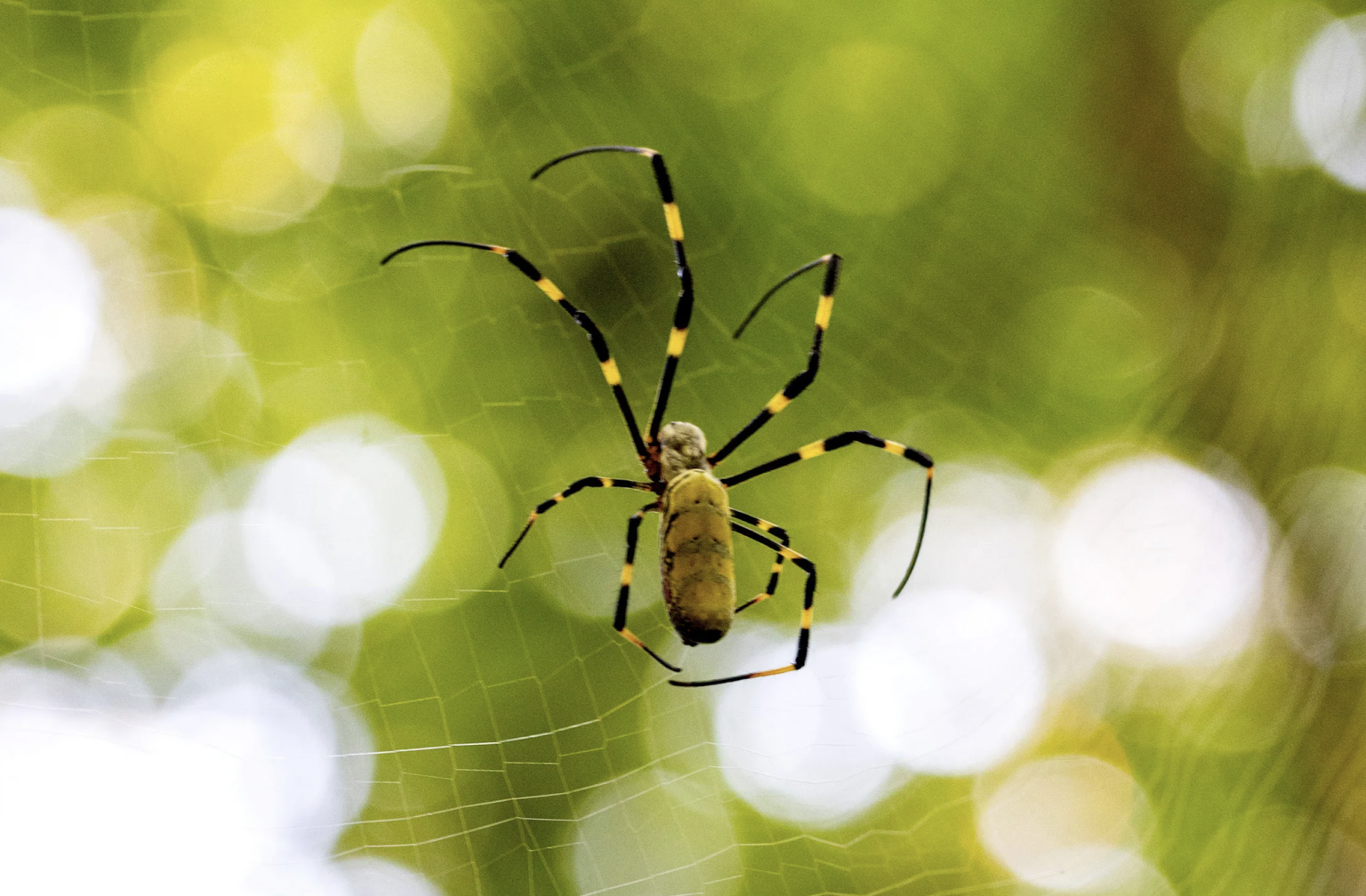
Giant, introduce Joro spiders may not be feeding off the plates of native spiders in Georgia and South Carolina.
New research reveals that these spiders, native to parts of Asia, have dietary preferences that don’t overlap much with native spiders.
Colorful Joro spiders (Trichonephila clavate) are massive—their legs can stretch out larger than the palm of your hand. They were first discovered in Georgia a little more than a decade ago and have since spread through parts of the U.S. Southeast.
In a study published recently in PLOS One, researchers analyzed the DNA of stomach contacts of 200 Joro spiders collected from 33 sites in Georgia and South Carolina. They compared the evidence of these past meals of Joro spiders to those of 140 native orb weaver spiders in those states.
The researchers found a little overlap in terms of the insects the native spiders ate versus what the Joro spiders consumed, but diets largely differed. Joro spiders also aren’t eating monarch butterflies (Danaus plexippus), or really many butterflies at all, as some biologists feared.
“They’re feeding on things that we would consider pests,” said Jason Schmidt, co-author of the study and a professor of entomology at the University of Georgia, in a press release. “A lot of little flies. For the size of the spider, it looks kind of like popcorn.”