


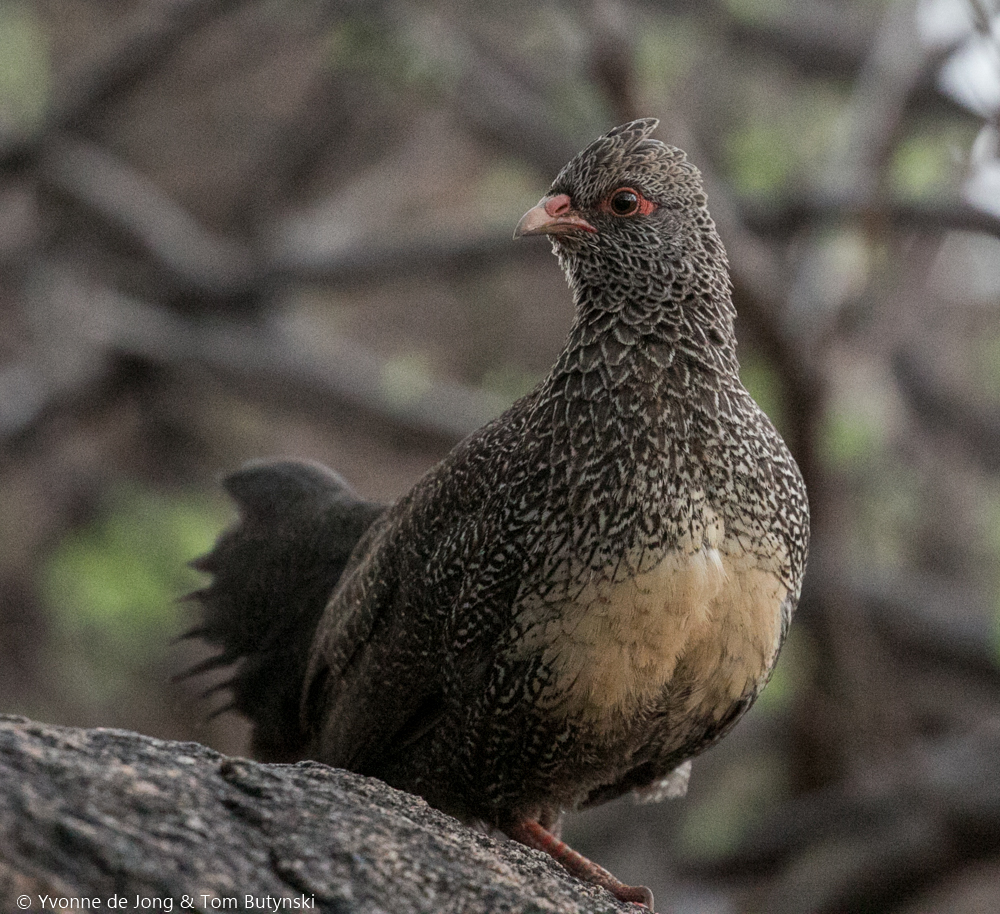
For many small animals in the African savanna, life is a series of decisions as they walk the line between eating or being eaten.
To stay on the right side of the dinner menu, stone partridges (Ptilopachus petrosus) spend their time in recently burned areas with enough shelter to hide from predators—but not so much grass in their way that they can’t find food.
While the recipe for perfect stone partridge habitat is not too much but not too little fire, in many areas throughout the birds’ range there’s an inconsistent mix between fire suppression and illegal burns. This pattern might make it challenging for the birds to find their footing.
Finding a partridge in a grassland
Stone partridges, ground-dwelling game birds similar to bobwhite quail (Colinus virginianus), have mastered disguising themselves in sparse vegetation. They’re commonly hunted, and in many cases poached, for subsistence hunting and traditional medicine.
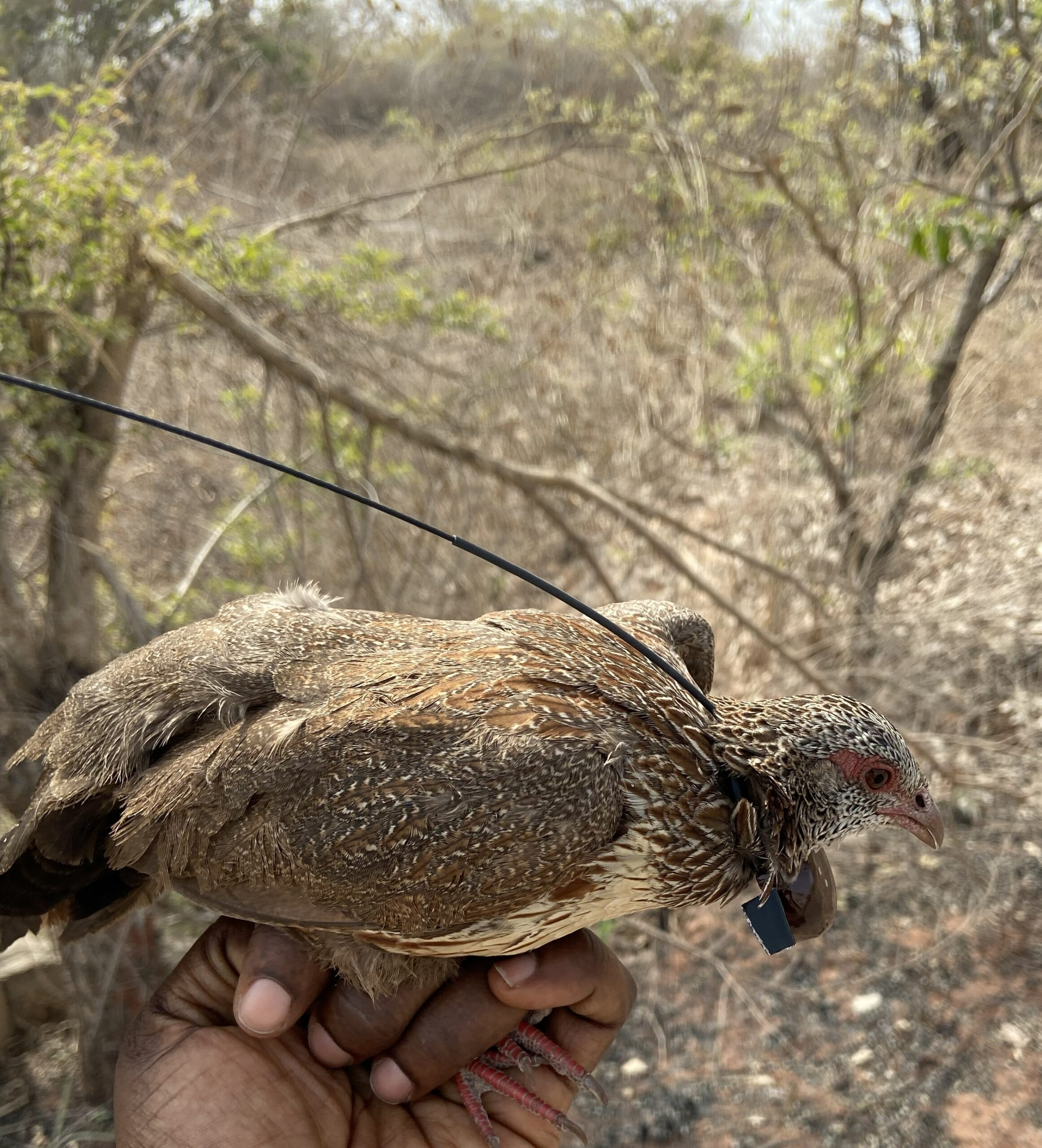
“They’re very cryptic,” said Nigerian researcher Nguvan Agaigbe, a PhD candidate at Oklahoma State University and TWS member. “They’ll hide until you get right on top of them—then they take to flight.”
Agaigbe has long been interested in understanding the role fire plays on wildlife. “If I was a bird who goes out feeding and trying to escape predators, and suddenly I come home and everything is gone—what do I do?” she wondered.
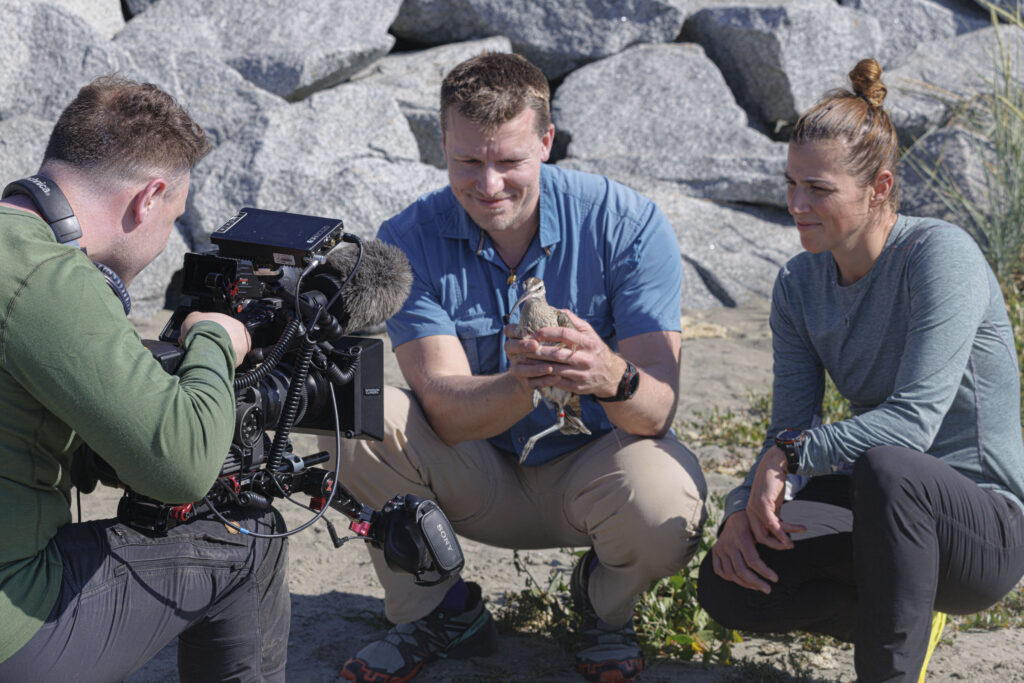
Her curiosity brought her to Nigeria’s Yankari Game Reserve, a more than 2,200 square-kilometer protected area renowned for wildlife. Using radiotelemetry, she monitored the birds for two years during the nonbreeding season when the animals were dedicated to foraging. She recently published her findings in The Journal of Wildlife Management.
But first, she had to find the small birds in thousands of acres of grasslands. Agaigbe spoke with park rangers, looked for the namesake rocks the birds like to perch on and then, just listened. The birds broadcast unique calls across the savanna that crescendo in loudness and pitch.
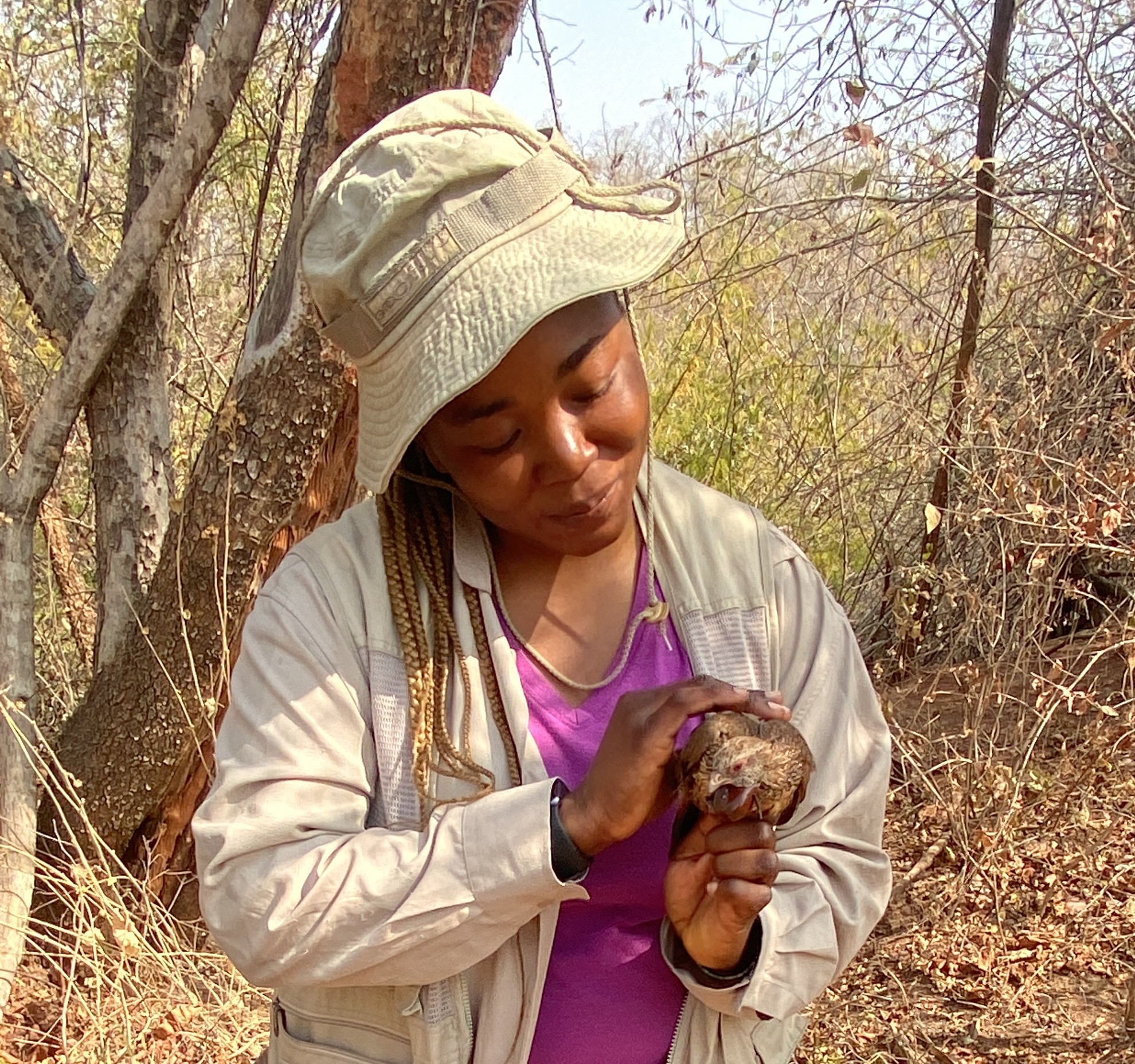
She gave each bird a necklace-style radio transmitter and used them to track the birds over the next two years. She thought the recently burned areas would be too charred and open for stone partridges, but she found the opposite.
“We found that the birds selected for recently burned areas,” Agaigbe said. The stone partridges tended to be in areas burned within the last two years. Tall grass is hard for such a small bird to wade through, and a recent fire clears the way. They also chose shrubby vegetation over trees where predators like raptors could lay in wait.
The trend reversed if a fire was particularly severe, though. “Fire creates more visibility,” she said, and unless you’re a grub, stone partridges are prey on the savanna, not predators. They’re hunted by other birds, hyenas and even poachers. “It’s always a trade-off,” she said. “You’ve got to eat something and try not to die.”
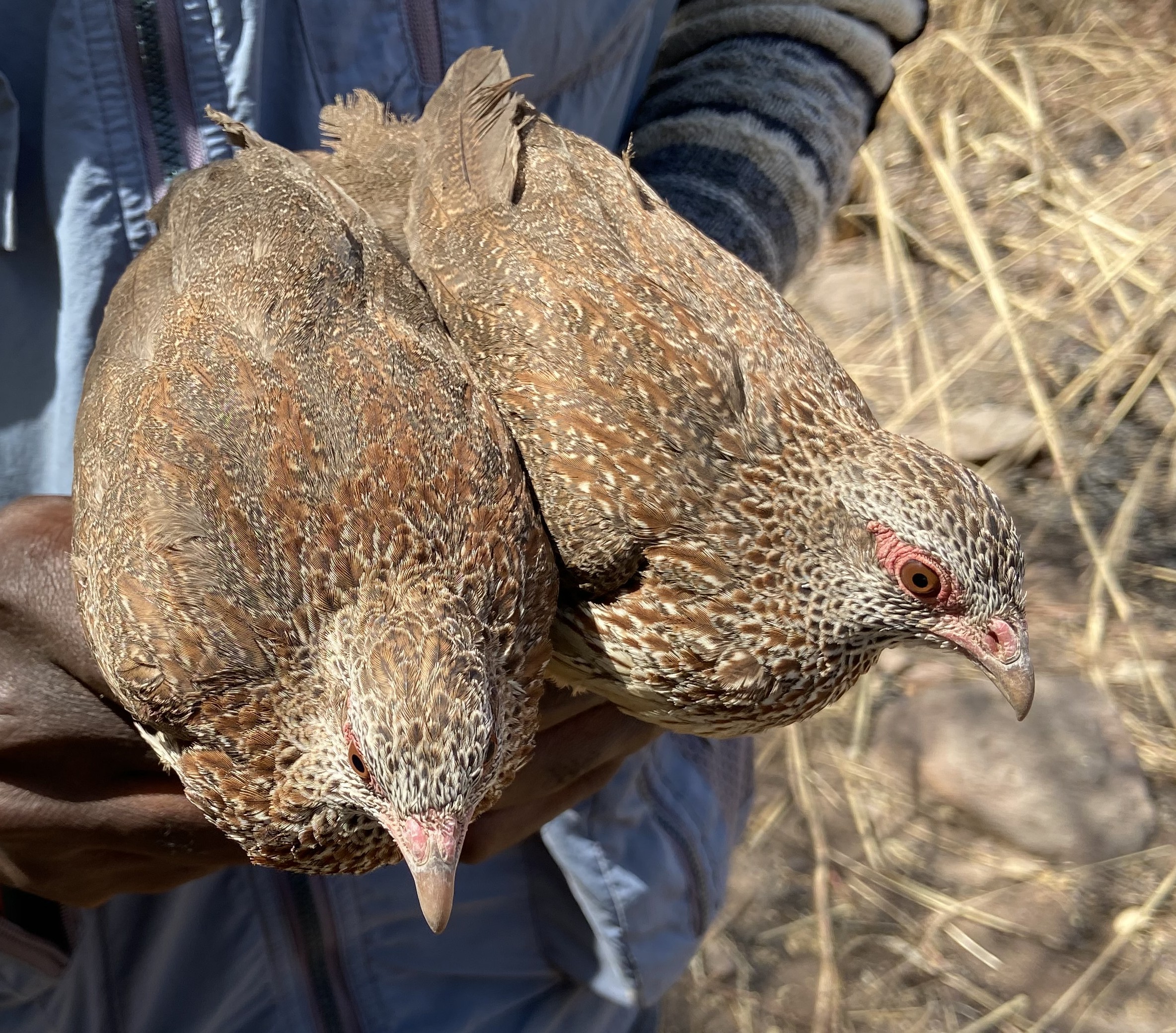
Low-severity fires also cleared the way for the birds while keeping some of their favorite hiding places. “They loved the areas with tussocks,” Agaigbe said. They can both find food and hide within these dense bunches of grass.
They also selected for areas with leaf litter on the ground where they could find food. Like their close relatives, chickens, they like to peck in the leaf litter where they’re foraging.
The savanna sees fire and the savanna sees rain
Agaigbe thinks that if she carried out the study in the breeding season, the results would perhaps be different. During this time, the ground-nesting birds might prioritize protection of their young over easy foraging.
This highlights the importance of using fire as a wildlife management tool. “When you use fire, you’re trying to create heterogeneity within the habitat,” Agaigbe said. Burning different areas over time creates a diverse landscape where wildlife can choose where they want to live.
The current challenge in Yankari is indiscriminate fires that poachers set to flush wild game. The poachers can interrupt the fire regime so carefully managed by park staff.
“In Yankari, well-planned prescribed burns can help maintain habitat diversity, while indiscriminate fires, particularly those set by poachers, should be minimized,” Agaigbe said. While their study didn’t evaluate specific fire management strategies, she said that a mosaic of both burned and unburned areas will likely benefit stone partridges along with other savanna wildlife.
But even after a harsh fire, green is always just a few clouds away. “All it takes is one good rain and then everything changes,” Agaigbe said.
This article features research that was published in a TWS peer-reviewed journal. Individual online access to all TWS journal articles is a benefit of membership. Join TWS now to read the latest in wildlife research.
Article by Olivia Milloway