

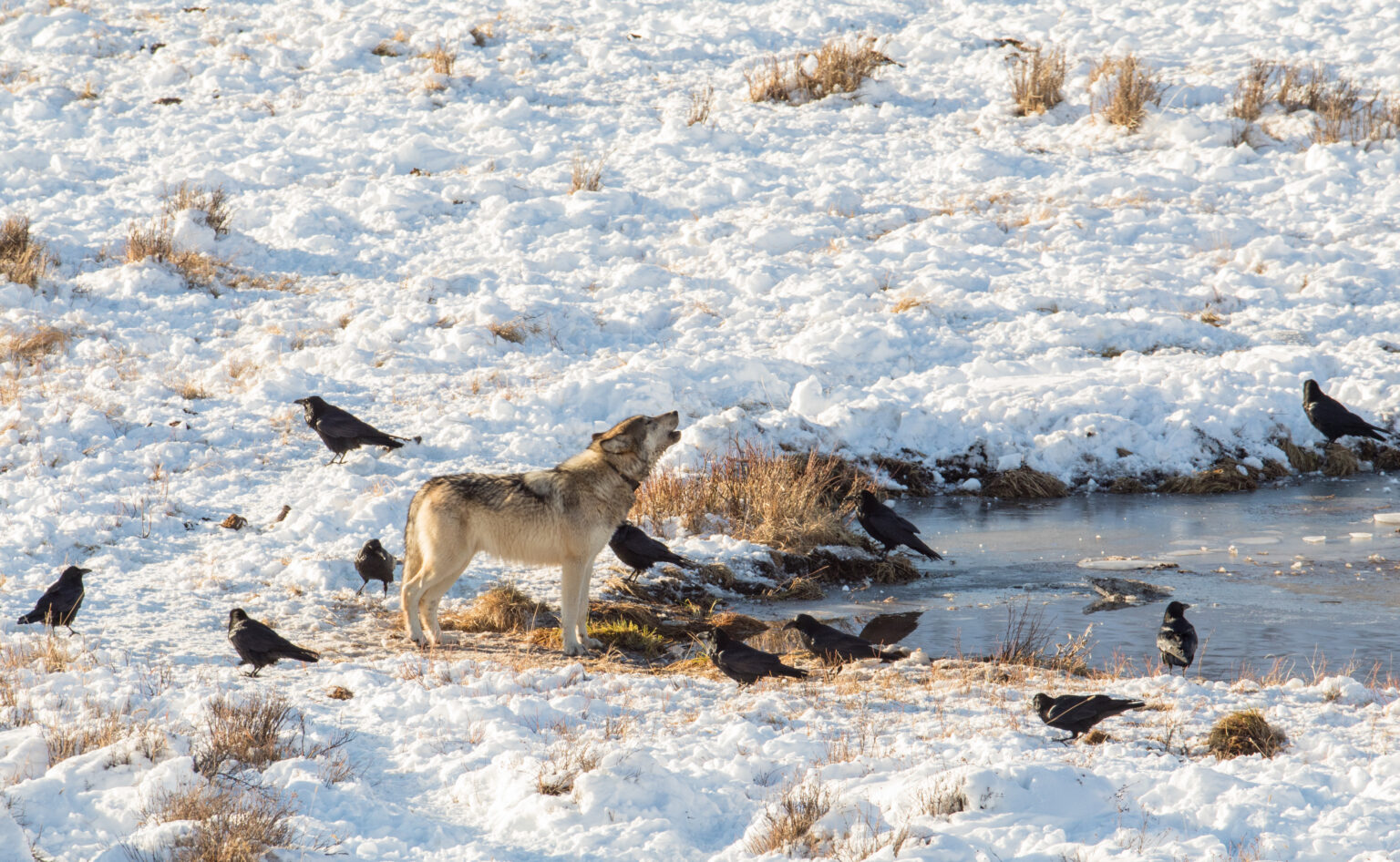
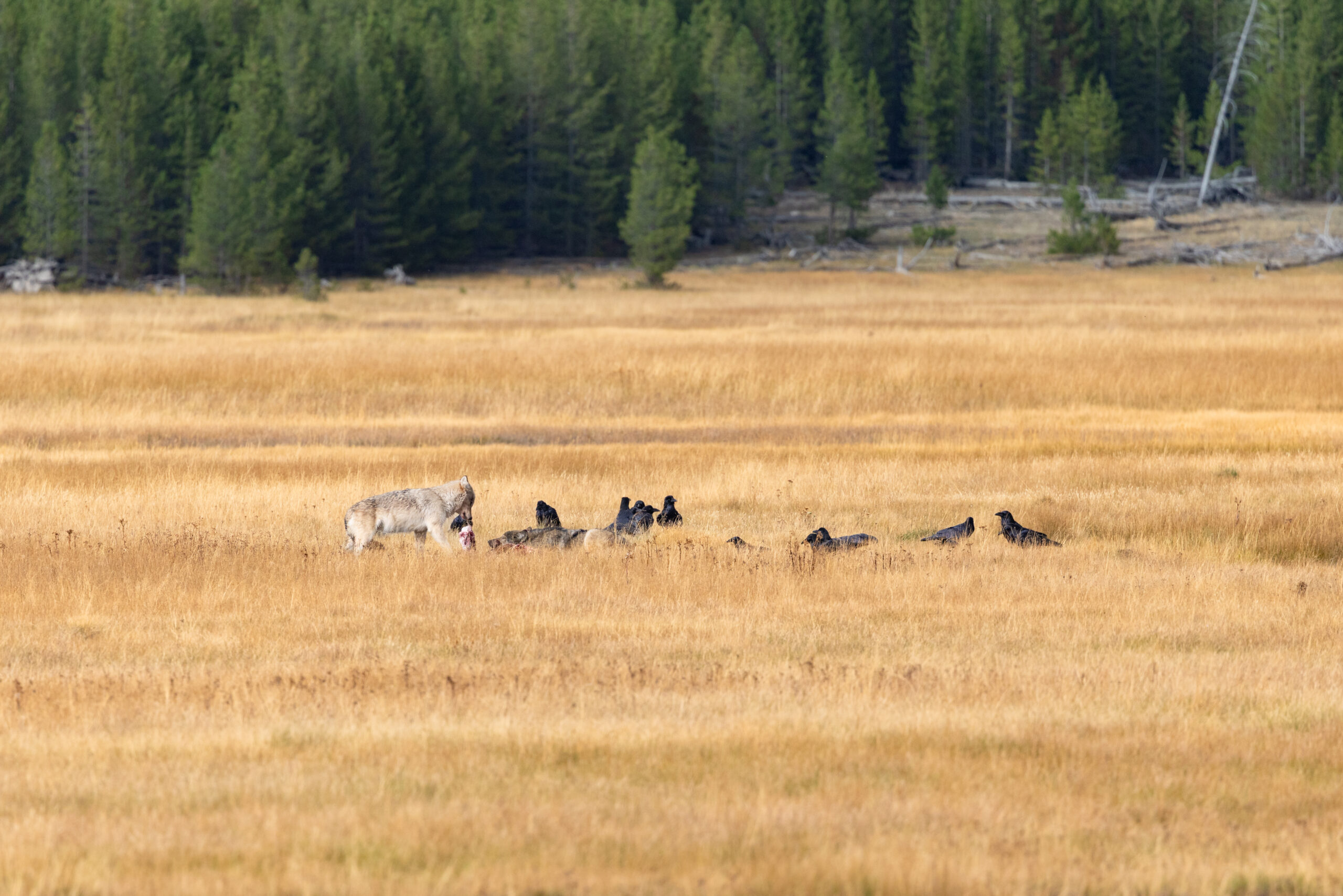
If you’re lucky enough to see wolves in Yellowstone, you know that ravens are never far away. Scientists thought that the cunning corvids followed hunting wolves so they could get an easy meal. But new research tracking ravens revealed a more surprising and sophisticated tactic: memorizing and returning to common wolf kill sites.
“Our hypothesis was they would follow wolves, but then it turns out they don’t,” said Matthias-Claudio Loretto, a researcher at the University of Veterinary Medicine’s Research Institute of Wildlife Ecology in Vienna, Austria.
Researchers had known for decades that ravens (Corvus corax) associate with wolves (Canis lupus) during the winter as a way to find food. Ravens arrive at fresh kill sites sometimes within minutes.
The idea that ravens follow wolves made sense to Loretto: wolf packs kill about every two to three days in the winter, a season where it’s hard for ravens to find food. So, they spend their days following wolf packs, waiting for the perfect moment to swoop in and pick off the carcass.
Ravens often interact with other species. Loretto had documented them stealing food from wolves in a game park in Austria. In the wild, he’s even seen ravens tugging on the tails of wolves to distract them from a carcass.
But he needed a place to test his hypothesis, ideally an area where scientists were already studying wolves with GPS collars. “Everyone said, ‘Go to Yellowstone,’” Loretto said.
Outsmarted by bird brains
Ravens are highly intelligent, and consequently, difficult to capture and work with. The team had to first trap ravens in order to fit them with GPS backpacks. But fooling a raven to enter a trap is difficult, if not impossible. They managed to trap the birds through ambush: using a remote-controlled device that launched nets at the birds from a distance. “Often they escaped anyway,” he said.
But he said this problem-solving is also part of what fascinates him about working with the species. He’ll make a plan, but when the ravens respond unexpectedly, he has to pivot.
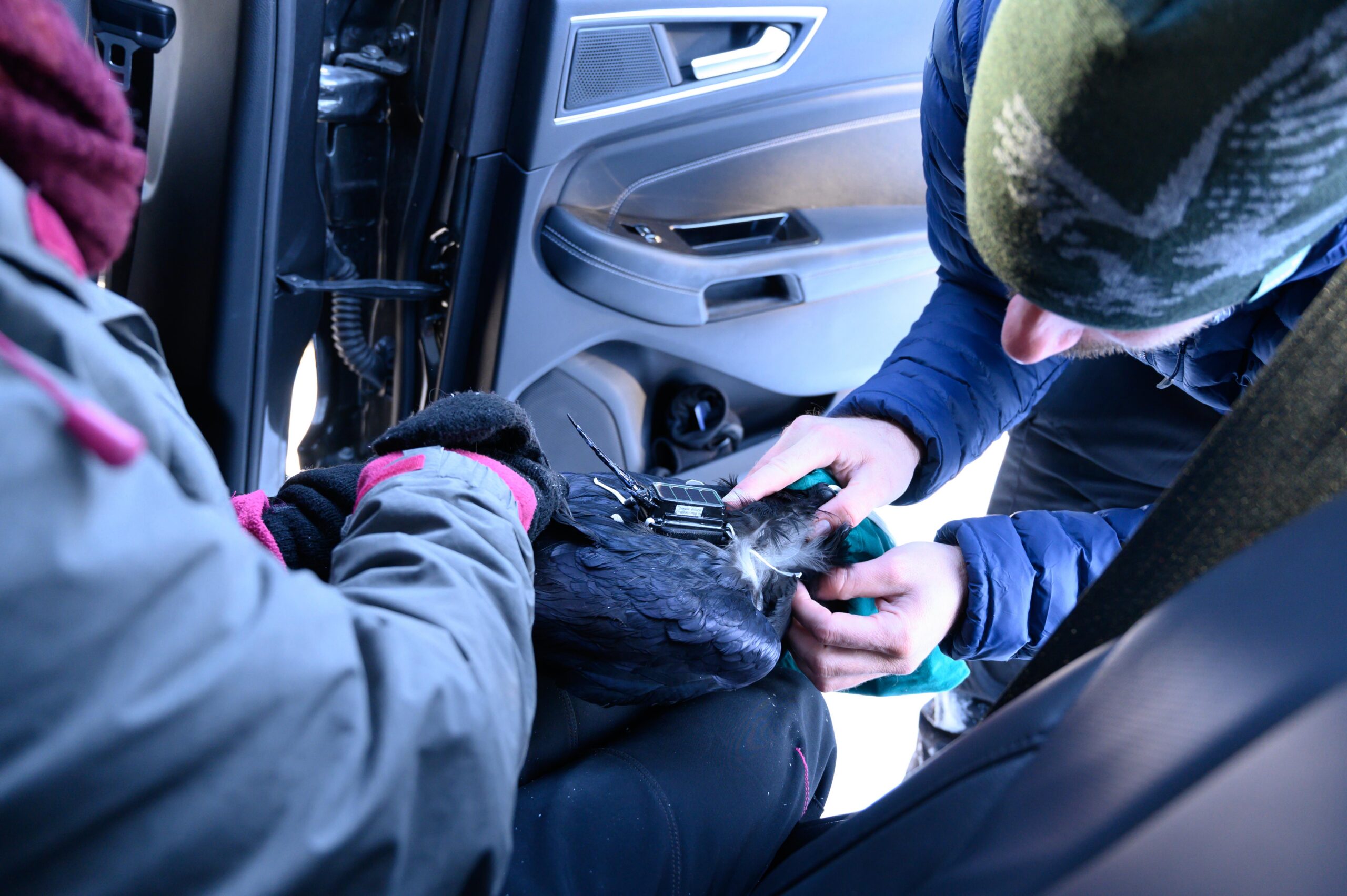
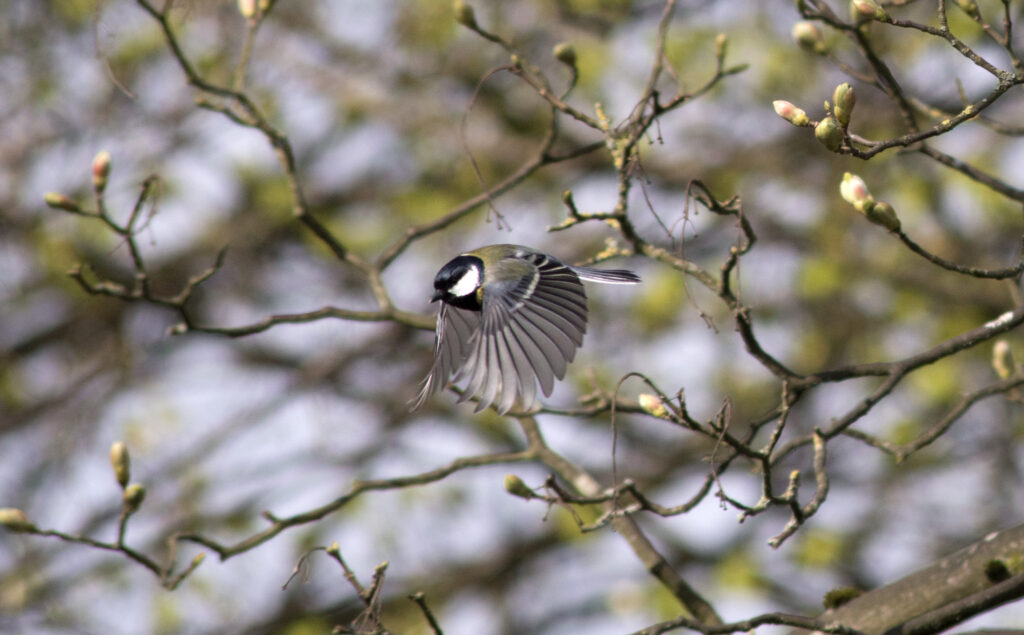
After fitting the ravens with GPS backpacks, shown in the photo above, Loretto could now monitor each individual bird’s movements. While he expected to see the ravens following the wolves’ GPS tracks, he found a different pattern that he published in a new paper in Science.
Ravens might follow wolves for a kilometer or two but lose interest and fly dozens of kilometers away. But the birds were still able to locate the wolves’ next kill. “Yellowstone is pretty big,” he said. But for ravens, Yellowstone is one large, connected landscape sprinkled with potential food.
With all his experience with ravens, Loreto wasn’t too surprised his hypothesis was wrong. “Of course they don’t do what we expected them to do,” he said. “That’s the interesting thing—they’re really not so easy to predict.”
There were many ravens that traveled up to 150 kilometers to a wolf kill site that wasn’t there the day before. This looked just like a flight that a raven would make to a man-made food source like a dumpster or landfill.
Loretto believes that the birds could anticipate where they’d find food. “They know where the landfills are,” he said. “But equally, it seems they just know where wolf kills are abundant.”
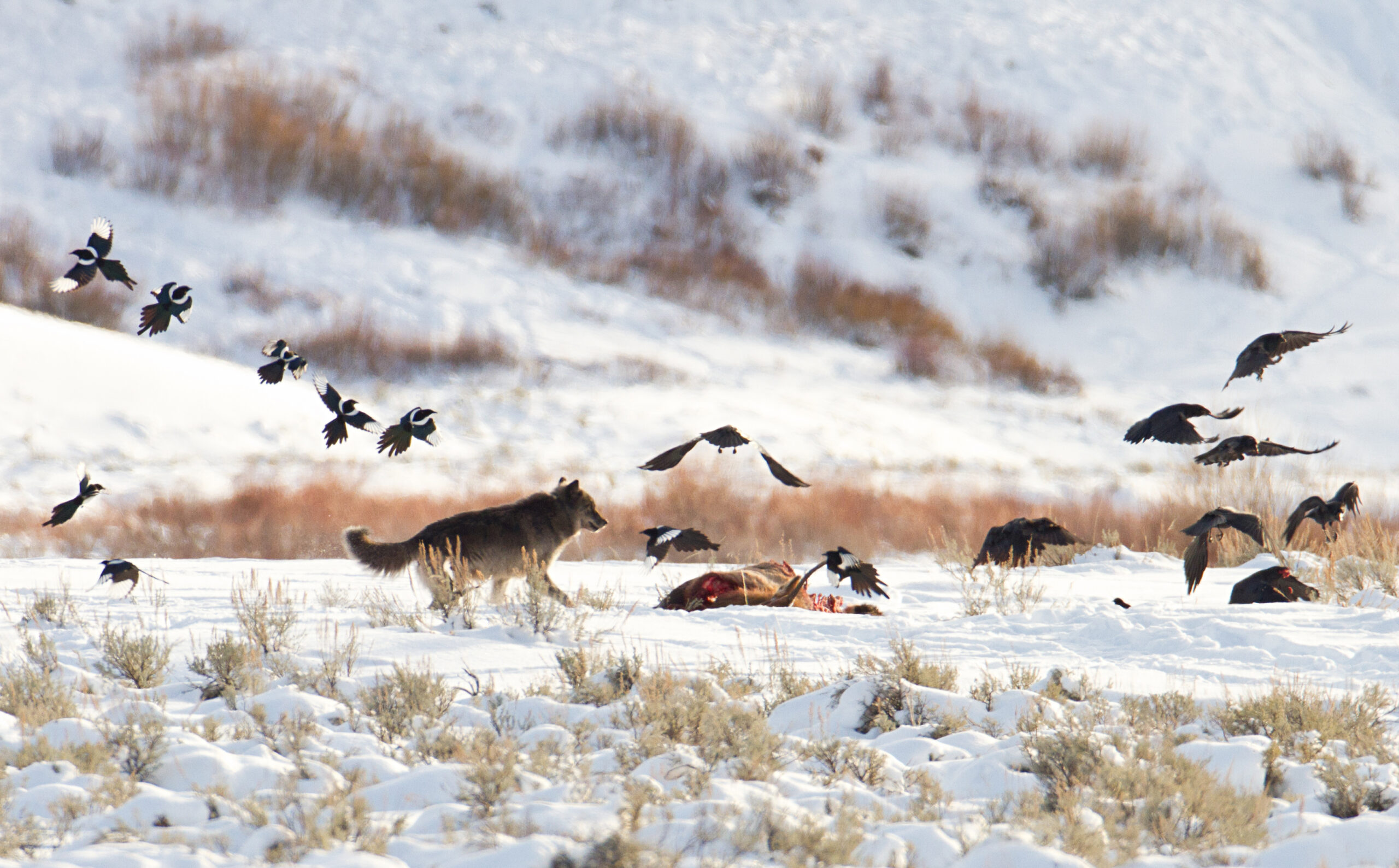
In the winter, wolves are more successful in parts of the park, such as open areas where deep snow can accumulate. These areas also had large numbers of ravens at wolf kills.
The opposite was true, too: if the wolves got lucky and killed an animal where they didn’t usually, fewer ravens found the carcass.
Loretto said that other species like magpies might do this as well. Sometimes, they’re the first birds Loretto sees at a wolf kill—even before ravens.
Dumpster diving
Loretto also found something surprising, but less exciting, in his study. Many ravens, even within Yellowstone National Park, rely on human-made food sources like landfills, sewage ponds or restaurant dumpsters outside the park’s boundaries.

During the winter, when food was scarcer, ravens flew up to 115 kilometers away to landfills or French fries. “The distances they cover on a daily trip are remarkable,” he said. “And at the same time, a bit disappointing that even this huge national park isn’t big enough.”
He said the tourism numbers in Yellowstone are going up every year, so he assumes that the amount of trash—and food for ravens—will only increase each year.
If more trash supports more ravens, Loretto said, other native species they prey on, like sage grouse (Centrocercus urophasianus) and tortoises, could be hurt. Ravens often predate the eggs and young of these species.
While there are many lethal control campaigns to limit raven numbers, Loretto thinks that reducing their access to food is the best way to manage the birds.
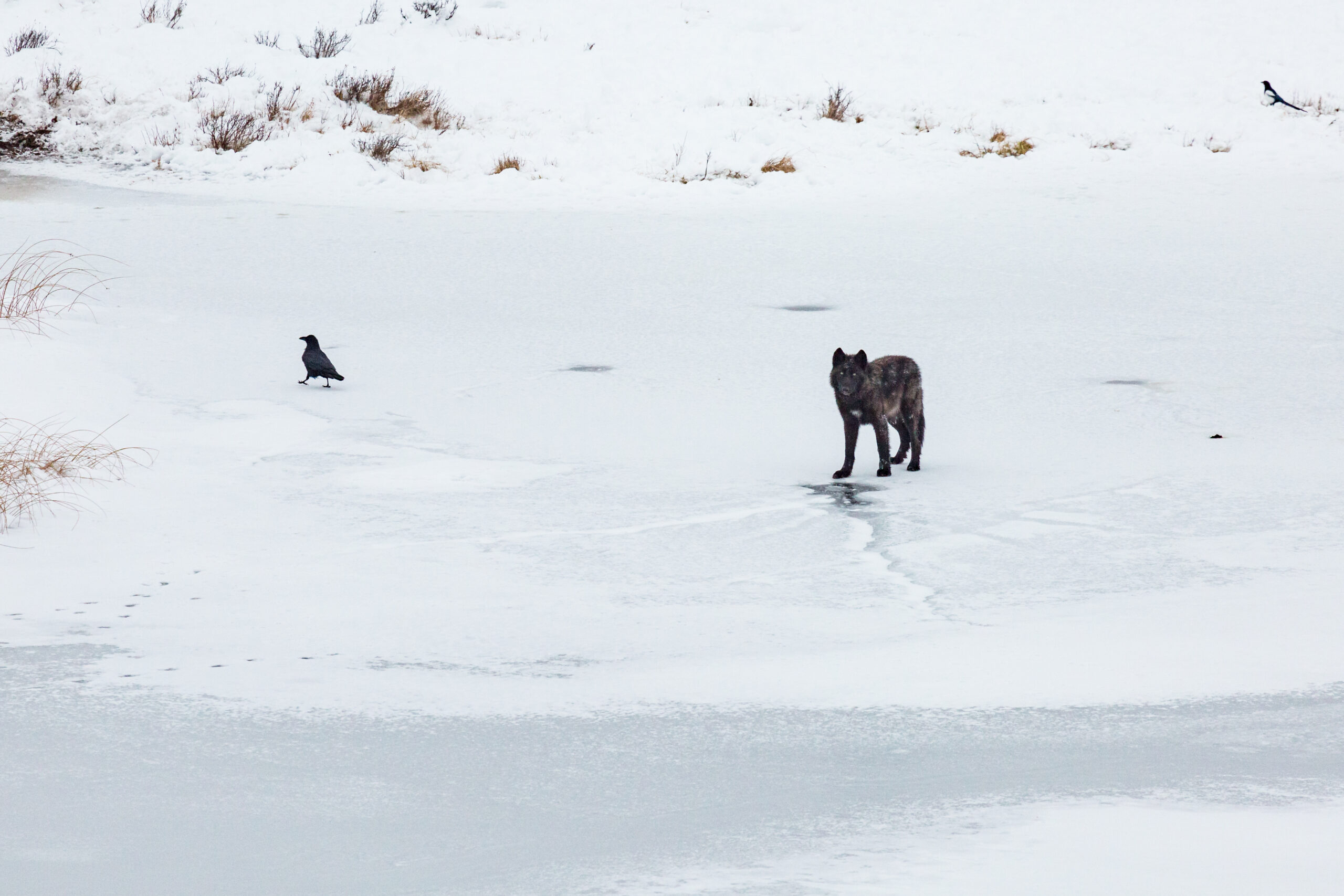
This photo essay is part of an occasional series from The Wildlife Society featuring photos and video images of wildlife taken with camera traps and other equipment. Check out other entries in the series here. If you’re working on an interesting camera trap research project or one that has a series of good photos you’d like to share, email Olivia at om*******@******fe.org.
Article by Olivia Milloway