Members of The Wildlife Society have voted for Karl Martin as the new vice president after the 2026 election results have been tallied.
Angela Fuller was elected as the Northeast Representative, while Terry Riley was elected as the Central Mountains and Plains Representative.
The Wildlife Society would like to congratulate all candidates who ran for a position this election cycle, including Budd Veverka, Scott Williams and Adam Ahlers.
Read more about our incoming VP and Council members below.
Karl Martin
 It is with great enthusiasm, a deep commitment to our profession and strong sense of humility that I submit my name for the position of Vice President of The Wildlife Society (TWS). Having been an active member of TWS for over three decades I have seen firsthand how TWS serves an essential role for professionals and students with a focus on wildlife science, research, management, communications, professional development, and advocacy. TWS has always been my go-to professional association benefiting me as both a student and professional. Being vice president is an opportunity for me to serve this amazing organization by supporting students, professionals, and the natural resources that we have committed to research, manage, and conserve.
I have a long-standing record of service at the chapter, section, and parent society. Notably, I served as the North Central Section Representative to the TWS Council (2010–2013), President of the Wisconsin Chapter of TWS (2007–2008) and Associate Editor for the Journal of Wildlife Management (2003-2005). My contributions have been recognized through my selection as a TWS Fellow in 2015 and Wisconsin receiving the TWS Chapter of the Year Award during my tenure on the executive board.
The vision for TWS should address both long-standing and emerging challenges facing the sound management and stewardship of our wildlife resources in a rapidly changing world. These challenges are evident in the unprecedented pressures many of our wildlife colleagues face regarding their employment, professional qualifications, and the work to which they have dedicated their careers.
At the same time, rapid advances in artificial intelligence present both significant opportunities and new challenges. AI has the potential to transform how we learn, conduct research, educate, and manage wildlife resources and how TWS functions as an organization. Of course, vision must be grounded in fiscal reality and TWS is not immune to those challenges.
As a grassroots, member-driven organization, it is essential for TWS Council to continue providing strong support for our student and professional members while simultaneously advancing strategic initiatives in four key areas:
- Governmental advocacy and support for our members, policies, and priorities.
- Membership diversification and growth, and expansion of member services.
- Diversification of funding sources, with a particular emphasis on philanthropy and grants.
- Thoughtful development of policies and practices related to the Internal and external use of artificial intelligence and emerging technologies.
In a time of rapid change, TWS must be both strategic and innovative to effectively serve the profession. Our grassroots foundation makes collaborative leadership essential, and our leaders must actively seek opportunities to engage members in addressing the critical issues facing wildlife professionals today.
Thank you for your time and consideration of me for the position of TWS Vice President. I’m honored to be considered for this important position, and I look forward to the possibility of continuing my service to TWS.
Angela Fuller
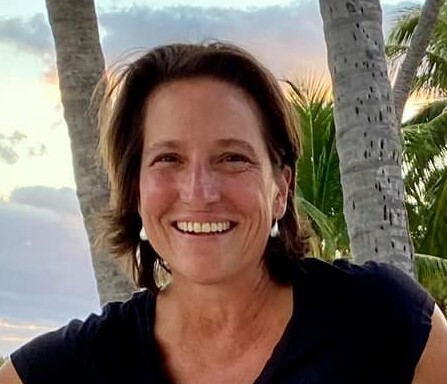 My motivation to serve The Wildlife Society comes from gratitude and commitment. For more than two decades, TWS has shaped my career, community, and sense of purpose as a wildlife professional. After three years serving on Council, that commitment has only deepened. I have seen firsthand the dedication of our members and the opportunity we have to strengthen TWS’ impact for both people and wildlife.
During my first term, I served as Chair of the Visionary Processes Committee and as member of the Strategic Plan Implementation committee (among other committee roles on council). These roles have given me a comprehensive view of how TWS functions, from big-picture strategy to the daily work that supports members. They have also positioned me to help guide where we go next. I am energized by the Society’s momentum as we become more inclusive, more forward-thinking, and better positioned to lead the profession during a time of unprecedented uncertainty and rapid ecological and social change.
My leadership approach is grounded in decision science. I focus on clarifying problems, defining objectives, and working collaboratively toward transparent, evidence-based solutions. This mindset helps teams navigate complexity and make thoughtful, strategic, durable choices about the future of TWS.
If elected to a second term, I will continue to lead with purpose and be a thoughtful voice for members in the Northeast. I will help advance a strong, adaptive, and welcoming society that supports and prepares the next generation of wildlife professionals and strengthens our collective impact on wildlife conservation.
Terry Riley
 I believe there is an untapped wealth of knowledge available through the experiences of wildlife habitat managers. One area of expansion that TWS might consider is providing a method of tapping into those practical experiences to share with the profession. At one time I thought the Wildlife Society Bulletin was going to provide that venue, but in my opinion it continues in a different direction.