



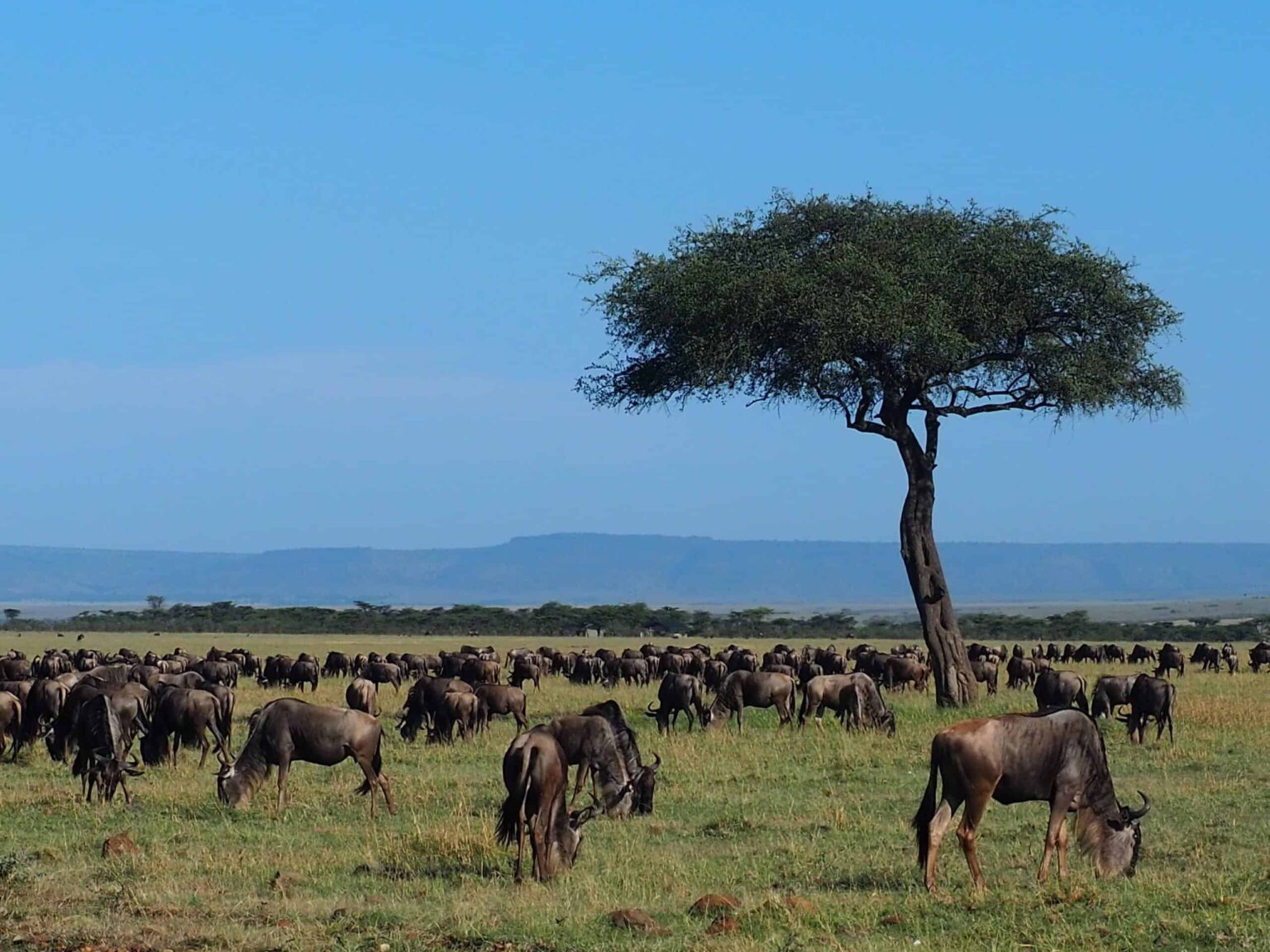
Fences and other human-made barriers are leading to the collapse of a wildebeest migration route in Kenya’s Greater Mara Ecosystem. New maps published in the Atlas of Ungulate Migration by ecologists at the Smithsonian National Zoo and Conservation Biology Institute have revealed that wildlife connectivity is being severely curtailed in large natural areas in western Kenya, on the northern end of the Serengeti. “Over the past 10 years, the Mara ecosystem has undergone profound changes and offers a warning to other grassland ecosystems facing similar human pressures,” said Jared Stabach, a Smithsonian ecologist who built the maps, in a press release. These barriers don’t only impact blue wildebeest (Connochaetes taurinus), but other ungulates as well. When these migration routes are lost, they aren’t easily regained as animals learn these paths over generations. The lost of ancestral routes could also make it harder for ungulates to find vital resources in times of scarcity, carrying population level effects.
Read more at Smithsonian’s National Zoo & Conservation Biology Institute.
Article by The Wildlife Society