







Overabundant suburban deer are more likely than those in urban areas to test positive for the parasite Toxoplasma gondii, a finding that could have human health implications for those eating deer meat.
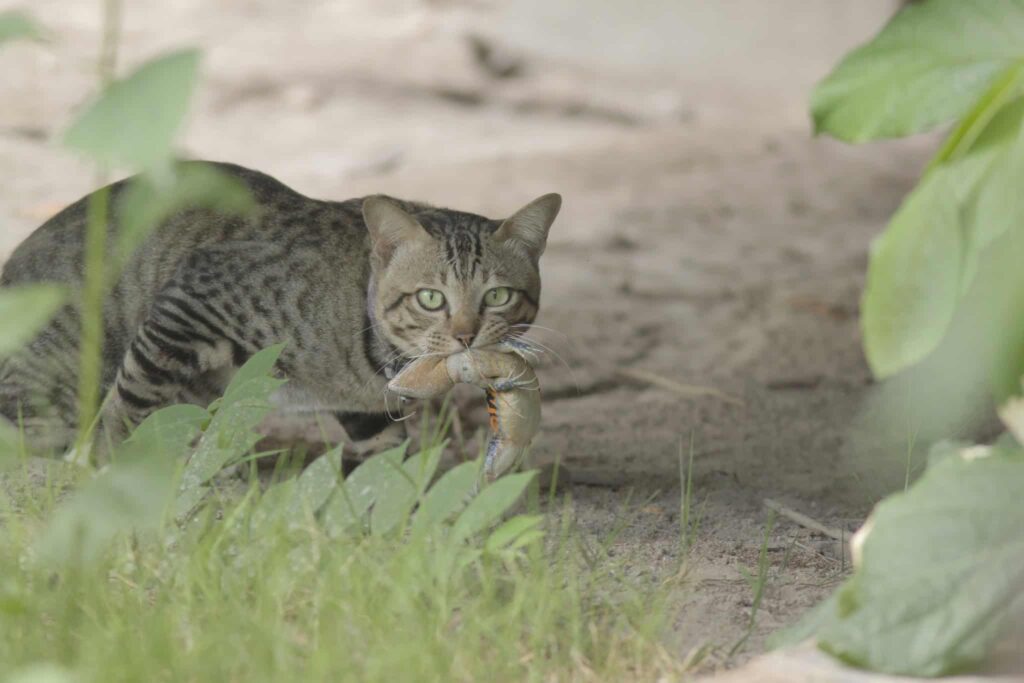
Toxoplasma gondii, known as the “mind control” parasite, moves quietly between species, influencing their risk-taking behavior. Carried by cats and other felines but picked up by secondary hosts like white-tailed deer (Odocoileus virginianus), the parasite can potentially spread to new areas and hosts.
Cities push wildlife and domestic cats into closer contact, potentially spreading the parasite and increasing infection rates. Deer are also overabundant in New York. As a result, Onondaga County has a program that culls deer and donates the meat to people who are food-insecure.
“If the parasite is present, this raises a possible One Health concern—human health is closely tied to the health of animals, plants and the shared environment,” said Jason Luscier, a professor at Le Moyne University and author of the work published in Pathogens. “It became clear we could use these culls as an opportunity to collect blood samples and better understand exposure in the populations and public.”

Luscier and his coauthor, Emily Ledgerwood, a fellow professor at Le Moyne College, expressed concern about the potential for Toxoplasma gondii in the donated meat because, if not cooked correctly, it could make people sick.
To test whether the deer had been infected with Toxoplasma gondii and to use urbanization as a proxy for contact between cats and deer, researchers ran blood from the culled deer through a lab test. The test looks for Toxoplasma gondii antibodies, immune system particles that form after an animal is exposed and remain in the blood for a while afterward. When the blood is combined with Toxoplasma gondii, a clot forms at the bottom of the test tube if the deer was not exposed. However, if the deer was infected, the antibodies would combine with Toxoplasma gondii, creating a mixture that is spread throughout the test tube. The strength of the response tells Ledgerwood how recently exposure occurred. Ledgerwood and Luscier then compared Toxoplasma gondii infection rates in deer from a suburban county in upstate New York and an urban county on Long Island.
The results showed that white-tailed deer in Onondaga County, the more suburban area, were more likely to test positive for Toxoplasma gondii and had stronger antibody responses than those in Suffolk County. The findings shocked the researchers, who are still exploring the drivers behind them, which could be due to how the samples were obtained. The Onondaga samples were from open, county-wide harvests, while the Suffolk samples came from controlled park hunts, which may have impacted the results. They also found that deer density was unlikely to affect contamination levels.

Between December 2021 and March 2022, deer culls across Onondaga County provided 2,373 pounds of venison, or roughly 9,492 meals. “The high prevalence of Toxoplasma gondii suggests we should be guiding people on how to cook venison properly,” Ledgerwood said. “People can prevent illness if they know how to cook venison properly and understand that preservation methods that create jerky do not eliminate the risk of infection.” Ledgerwood suggested a pamphlet about proper cooking practices may help.
Although it is not large enough to stop a car on its own, Toxoplasma gondii may be able to cause a car crash. Toxoplasma gondii tends to be higher in roadkill animals because it leads to riskier behavior. Suffolk and Onondaga Counties consistently lead New York State in animal-related crashes. Stricter monitoring of Toxoplasma gondii in deer involved in car crashes may highlight additional factors that cause car crashes and may compound with the influence of urban environments on deer behavior.
“Parasites are evolutionarily brilliant,” Lusicer said. “However, that parasite ended up causing changes in behavior and spreading through hosts—it’s amazing!”
Article by Kaylyn Zipp