
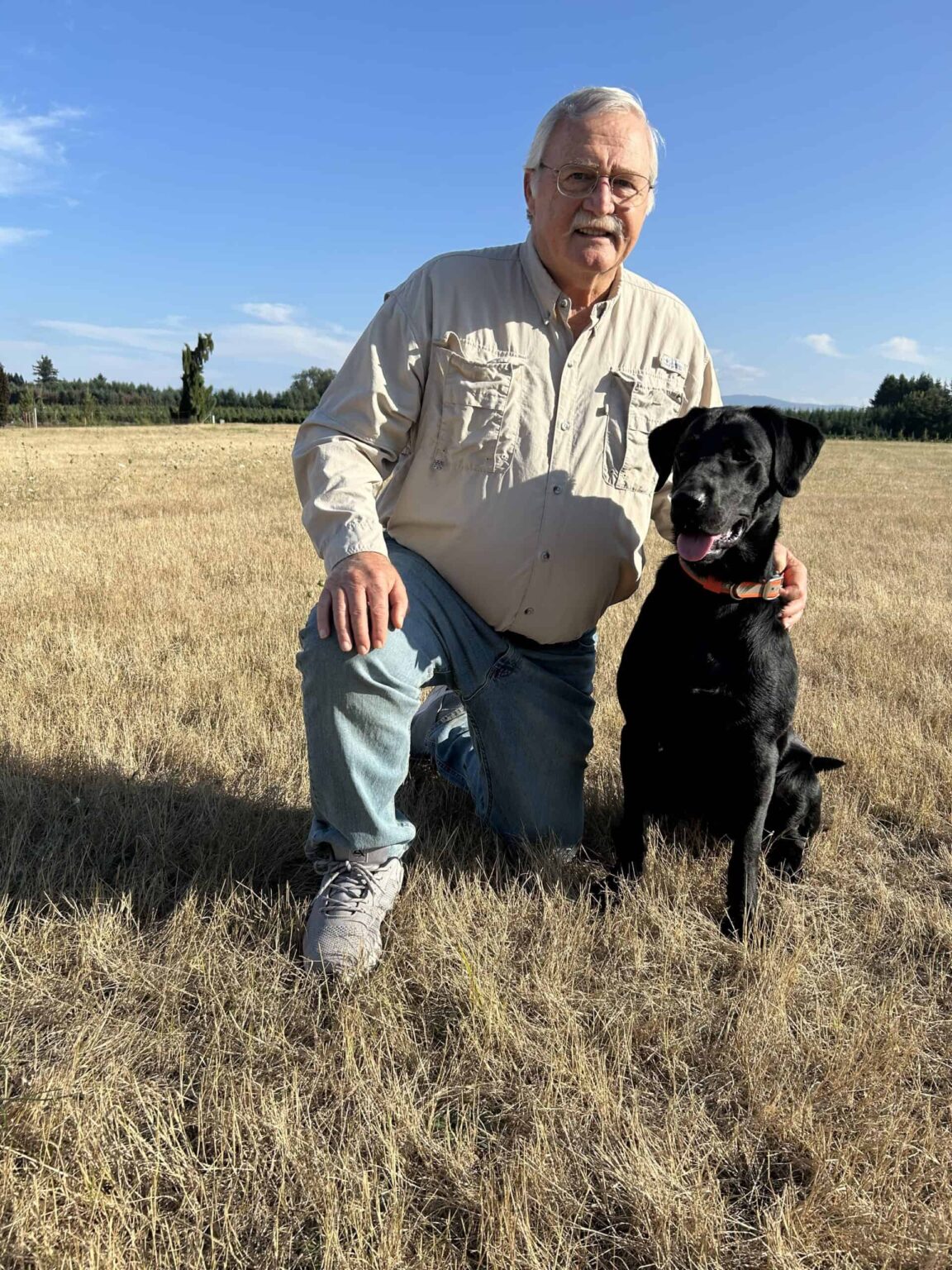
After decades of groundbreaking work in the ecology of large mammals and inspiring a new generation of wildlife biologists, Terry Bowyer has won the 2025 Aldo Leopold Memorial Award.
Now retired to the foothills of the Cascades in northwestern Oregon, Bowyer has spent over four decades as a wildlife biologist at Unity College in Maine, the University of Alaska Fairbanks and Idaho State University.
Bowyer is the recipient of the 2025 Aldo Leopold Memorial Award, the highest honor bestowed upon wildlife biologists by The Wildlife Society. The award recognizes wildlifers’ lifetime contributions to the field.
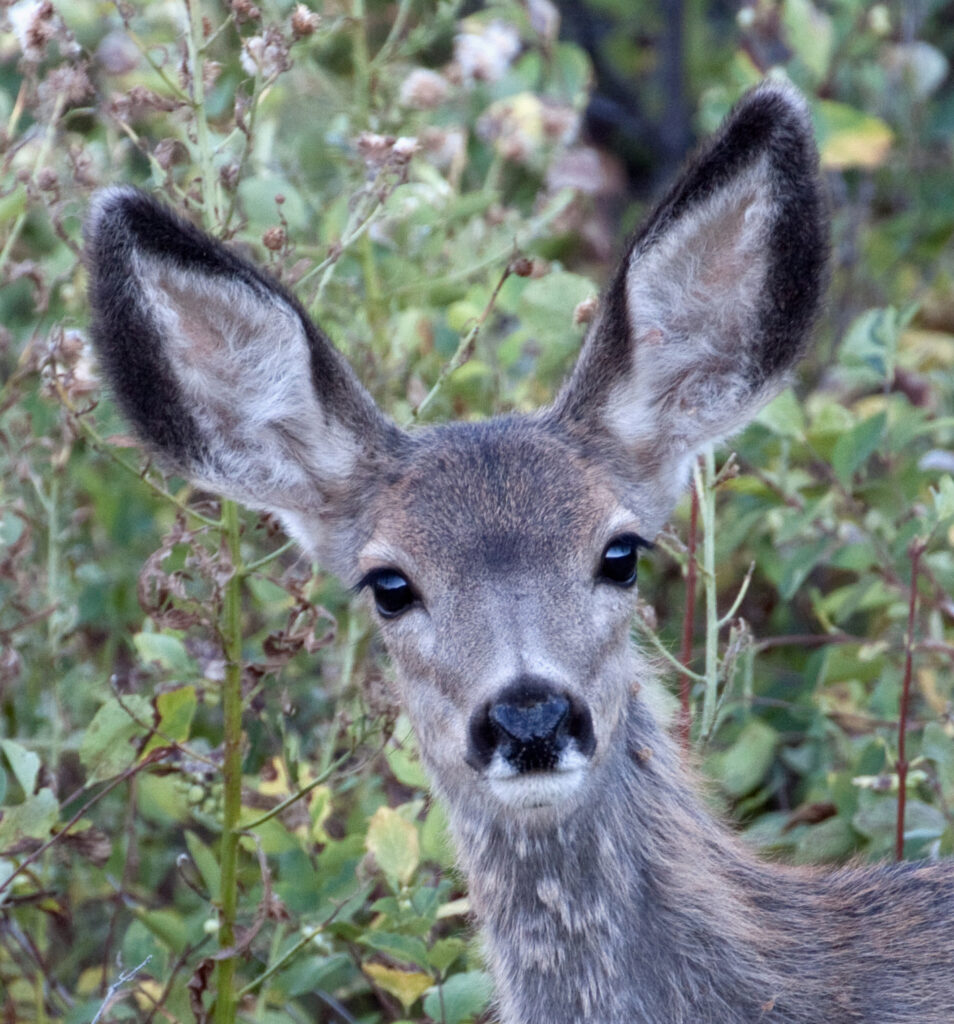
Bowyer, who is 77, is originally from Southern California and grew up in Ojai, a small town in the Topatopa Mountains, hunting mule deer (Odocoileus hemionus) and California quail (Callipepla californica) with his dad. At Humboldt State University, Bowyer studied wildlife management and graduated in 1970.
After a stint in the Army Reserves during the Vietnam War working as a combat medic and X-ray technician, he decided to go back to school to study wildlife biology. “I spent a lot of time in dark rooms and wanted to be outside again,” he said.
Throughout his career, his primary focus was on sexual segregation—the differences between sexes in wildlife. “We’re still not managing wildlife populations as best as we might because we don’t recognize the different needs between the sexes,” he said. “For example, understanding habitat needs of females during the critical reproductive period has a lot to do with survivorship of young,” he said. He recently published a book that digs into the topic.

His main focus has been on ungulates—he’s studied every North American ungulate except the collared peccary. He has also worked on a range of carnivores and mesocarnivores with his students.
But Bowyer hasn’t only focused on understanding animal behavior and wildlife management. He’s also studied the effects of the Exxon Valdez oil spill on a marine population of river otters (Lontra canadensis) in coastal Alaska. For this work, he collaborated with a biochemist to develop biomarkers that became an industry standard for documenting exposure to oil. “Scientists need to be collaborative to really be effective,” he said.
He has also held leadership roles in TWS, including president of the Maine Chapter, the Alaska Chapter and the Northwest Section.
Helping the next generation
Of everything he’s done in his career, Bowyer said he’s most proud of his students. “I’ve been really lucky in having superb students,” he said.
“Many of these students have themselves gone on to make important contributions to wildlife science and management,” wrote James Sedinger, a foundation professor emeritus at the University of Nevada Reno, and a TWS Fellow, in his nomination letter for Bowyer. “ I count at least eight university faculty among Terry’s former graduate students and postdoctoral fellows, which, by itself, is a major contribution to the wildlife profession.” He noted that other students have become conservation leaders, and one was even an editor of Wildlife Monographs.
He has also worked toward gender equity in the wildlife profession, said former graduate student Kelley Stewart. Stewart is a TWS Fellow, former representative to the Western Section and a professor at the University of Nevada, Reno. “A very important contribution of Dr. Bowyer’s is his support of women in the wildlife profession,” Stewart wrote in her nomination letter. “After starting families, several of Dr. Bowyer’s women graduate students, including myself, would not have remained in science without his strong support and guidance at that point in their careers.”
For Bowyer, gender equity has always been intentional. When he was an undergraduate, three out of the more than 300 students were women. “They were told the only space for them in wildlife was as illustrators,” he said. “A lot of us began to question that model.”
Bowyer is especially honored to be recognized as continuing the legacy of Aldo Leopold. “No one can read A Sand County Almanac without being inspired,” he said. “And to have your name mentioned in the same breath as Aldo Leopold,” Bowyer paused, “it’s a surprise.”
Bowyer recommends that students pursuing a career in wildlife spend as much time in the field as they can to understand the nuances of animal behavior and, above all, to follow their hearts. “If you’re following what you’re interested in—that’s the key to success.”
Article by Olivia Milloway