

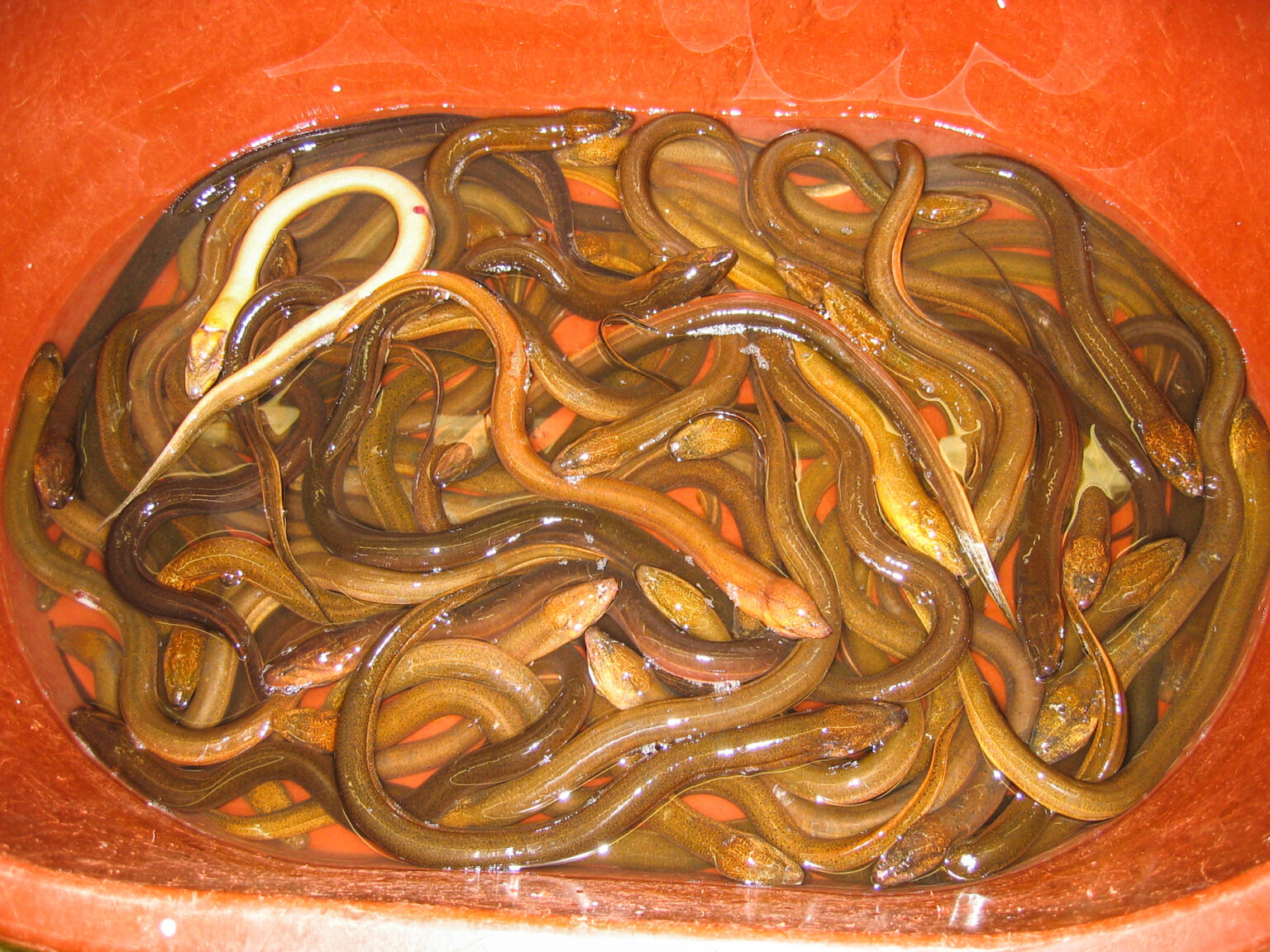
Invasive swamp eels that escaped from breeding ponds or were released by fisherman as bait in South Florida are systematically wiping out native amphibian species in the Everglades.
“There has been about a 75% decline in amphibian abundances [in the Everglades] in the last 30 years,” said Hunter Howell, who spent his PhD at the University of Miami working on the conservation of Everglades reptiles and amphibians.
The invasive swamp eels, which were only introduced a little over a decade ago, will be difficult to control, spelling problems for native species, Howell fears.
The Asian swamp eel (Monopterus albus) is considered a delicacy in parts of Asia, Howell said, which may be part of the reason why it was introduced in the first place. The invasion likely began in Taylor Slough, a drainage area in southeastern Florida near the city of Homestead in the years leading up to 2012. Howell said that Asian swamp eels likely escaped from or were released from backyard fish breeding ponds in the area. “We’ve known about Asian swamp eels for some time,” Howell said.
The eels quickly began to spread out from the Homestead area, likely traveling through levies and canals that authorities use for flood control and water management in the region.
Over the same period, native amphibians began to precipitously decline. An earlier paper published in 2023 found that swamp eels caused a “complete ecosystem collapse” by knocking native fish and crayfish down by 85-93% in the Everglades, Howell said.
“If you don’t have these small fish and crayfish in the Everglades—that’s what all the native birds, fish and amphibians are consuming,” he said.
The largest amphibian survey of the Everglades
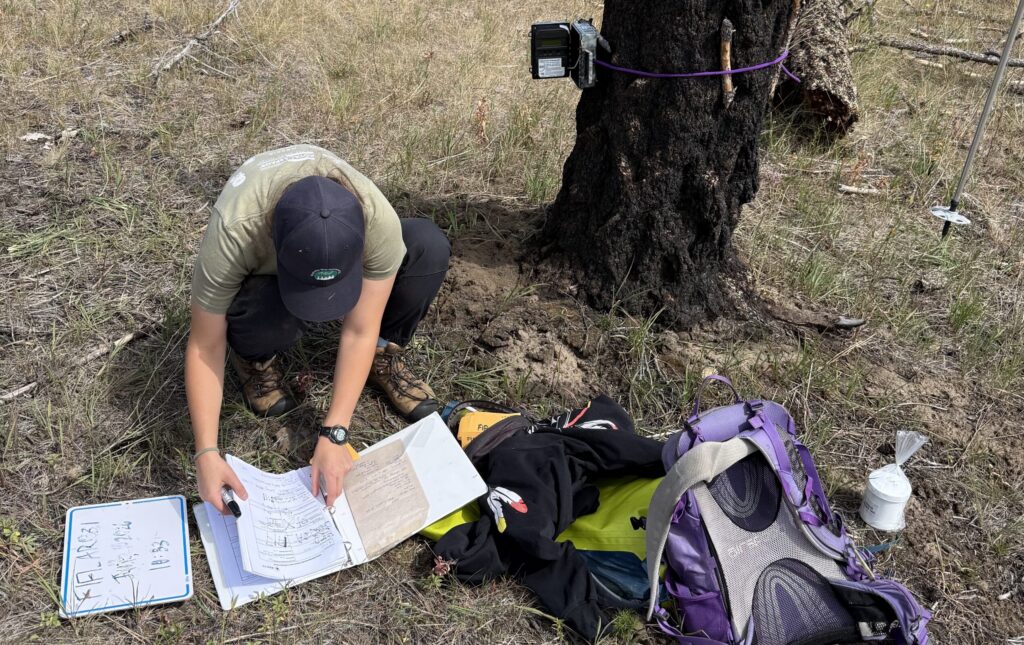
In a study published recently in Freshwater Biology, Howell and his colleagues also began tracking the state of Everglades’ amphibians through a massive undertaking that involved sampling across national parks, water conservation areas and wildlife refuges. During his PhD work at the University of Miami when he conducted this work, Howell trekked through the Everglades by boat, helicopter and foot. He set baited traps, conducted visual surveys and recorded sounds at 30 sites across an area the size of Delaware.
Every day for two months, he spent time setting and checking traps in the area. He saw bobcats (Lynx rufus) and invasive Burmese pythons (Python bivittatus) and once bumped over an alligator (Alligator mississippiensis) in the water—and it bumped him back. “That was pretty scary,” Howell said. At night, he could sometimes hear the mating bellows of adult male alligators around him. Once, the team trapped a four-foot alligator in one of their amphibian traps—it was a struggle to release the animal. Other times, he had to wade through chest-deep water while looking at gators around him. All of these experiences resulted in the most geographically complete amphibian survey ever conducted in the Everglades, Howell said.
Since nobody had conducted such surveys to this extent in the past, the team couldn’t compare the state of amphibians across the region relative to previous years. However, other long-term monitoring conducted by Everglades National Park staff and Florida International University researchers has shown an estimated 74-84% declines in amphibian abundances in the past three decades across the park and an adjacent water conservation area.
They also found that amphibians—particularly more aquatic ones—dropped in numbers the closer they were to Taylor Slough, ground zero for swamp eel introduction. In Taylor Slough, itself, they didn’t capture a single amphibian in the marsh—not even a tadpole. Compared to parts of the Everglades farther north, where “the frog calls give you headaches” because they ring so loudly and numerously, Howell said, Taylor Slough was nearly silent, except for the calls of tree-bound amphibians, like squirrel tree frogs (Dryophytes squirellus), green tree frogs (D. cinereus) and invasive Cuban tree frogs (Osteopilus septentrionalis)—it’s hard for eels to climb trees.
Southern leopard frogs (Lithobates sphenocephalus), a once-common genus according to prior studies conducted in Everglades National Park about 20 years ago, were undetected within Everglades National Park during his surveys. “They went from the most common species to basically not persisting in 20 years,” Howell said.
In areas that had more swamp eels outside of Taylor Slough, tree frogs and large salamanders like greater sirens (Siren lacertina) and two-toed amphiumas (Amphiuma means) were nearly the only species that persisted. But Howell said that it’s likely that the eels will still compete with these large salamanders as they target the same food niche, potentially causing future extirpations.
The team didn’t see a single Everglades dwarf siren (Pseudobranchus axanthus belli) in their surveys. “I think that’s one of those subspecies that could easily just blink out of existence,” Howell said. “We know basically nothing about them.”
Models reveal extent of swamp eel effect
The team also ran models to determine what was causing differences in the abundance and community composition of native amphibians. They included possible factors, including water level changes over time, soil nitrogen and phosphorus levels, the spread of diseases like chytrid or ranavirus, pollution and other human-caused problems. While some of these factors played a role in declines, the biggest predictor of declines was the presence of swamp eels.
“Once you include the swamp eels [in the model], none of that matters anymore,” Howell said. “And it’s not even close,” he added—swamp eels had more than twice the impact of any other factor.
Due to differences in nutrient levels that wash into the vast wetlands from the north, many aquatic species were already more abundant in the north compared to the south. Howell said the impact of swamp eels is exaggerating this effect, with low amphibian abundance in the south and larger numbers in the north. But he worries that swamp eels will soon make it up to these amphibian strongholds—they have been confirmed all the way up near Tampa already, he said.
Other than sounding the alarm, Howell is unsure of what can be done to stop the eels. Part of the reason they are so successful lies in their biology. Whereas other invasive species have eventually been controlled naturally by dry periods that occasionally hit South Florida, Asian swamp eels can basically breathe air, unlike most fish. They can cross dry land, and in very dry periods, they burrow into the mud, which may help them persist when water dries up. “They’re incredible creatures—it just sucks that they are here,” he said. “Controlling an invasive species in a system like this is basically impossible.”
Article by Joshua Rapp Learn