




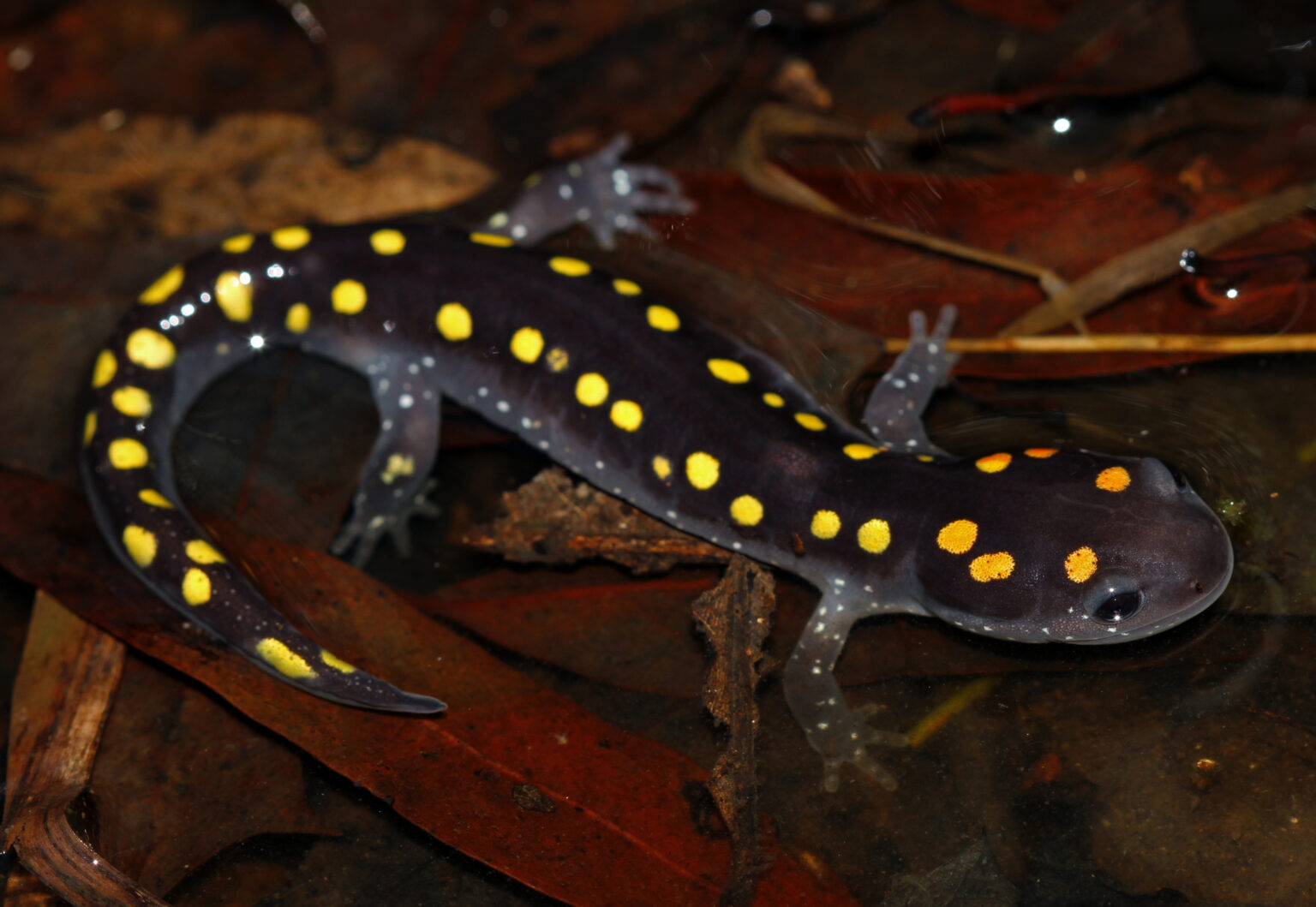
Scientists are asking people to be alert as they investigate a new deadly pathogen killing native salamander species. The pathogen, originally found in nonnative salamanders sold as pets, causes abnormal shedding, skin lesions, sluggishness and a decreased appetite. It has a death rate of 35-55%. During laboratory trials, two native species—the spotted salamander (Ambystoma maculatum) and eastern newt (Notophthalmus viridescens)—developed signs of illness after exposure to contaminated soils and water during laboratory trials. Currently, scientists don’t know if exposed animals carry the disease without exhibiting signs of it or if it impacts other animals. While no known wild animals have yet been infected, people are encouraged to report any symptoms through Partners in Amphibian and Reptile Conservation’s Herpetofaunal Disease Alert System.
Read more at Partners in Amphibian and Reptile Conservation.