





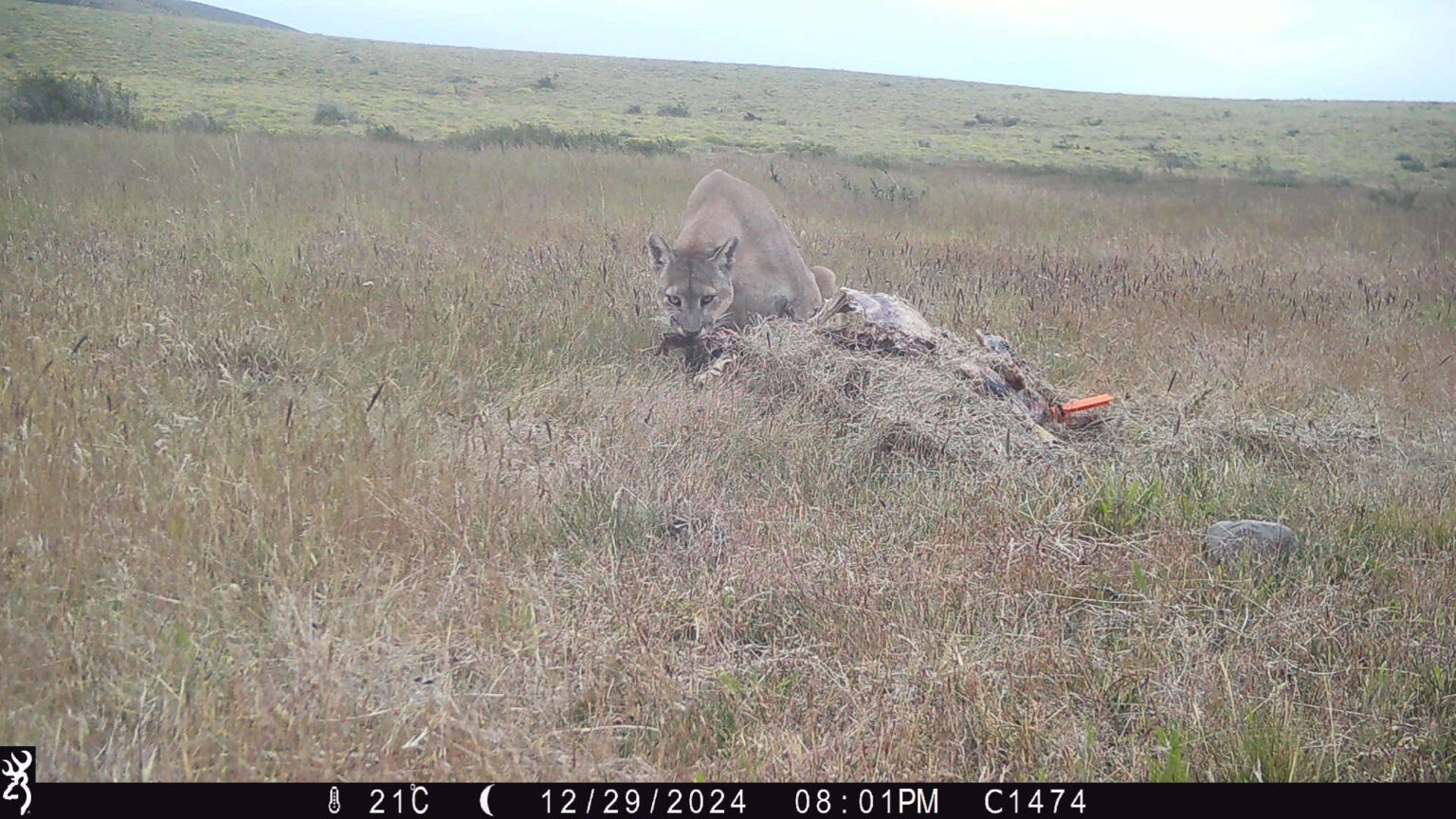
Paulo Corti spent two years leaving carcasses out on the landscape of southern Chile to determine the difference between a killer and an opportunist.
The difference is important when tracking the eating habits of pumas, especially when it comes to determining whether they are really killing a given rancher’s livestock or just swooping in to scoop up the remains of sheep that died from some other cause and caching it.
“They can be prosecuted and considered guilty for this mortality,” said Corti, a professor of wildlife management and conservation at the Universidad Austral de Chile.
While people typically don’t consider pumas (Puma concolor) scavengers, these large cats are opportunists as much as they are predators—a chunk of dead meat is a chunk of dead meat. When ranchers blame pumas for killing an animal that they really only scavenged, it can lead to deadly consequences for the predators—in Chile, ranchers will kill pumas in retaliation if they think their livestock is in danger. Scavenging could also lead to misattribution in cases where ranchers are compensated by government programs for livestock depredation.
Corti and his colleagues had been studying scavenger ecology in Torres del Paine National Park, Pali-Aike National Park and sheep ranches nearby the parks in southern Chile as a way of tracking disease in the landscape. In 2023 and 2024, in the southern hemisphere’s late spring, the team placed dozens of sheep carcasses they got from a local slaughterhouse on four ranches. Some of these ranches are massive—one is more than 40,000 hectares. They monitored these carcasses using trail cameras, visiting the sites every day in person as well to monitor what had happened. “It was a lot of work, a lot of walking,” Corti said.
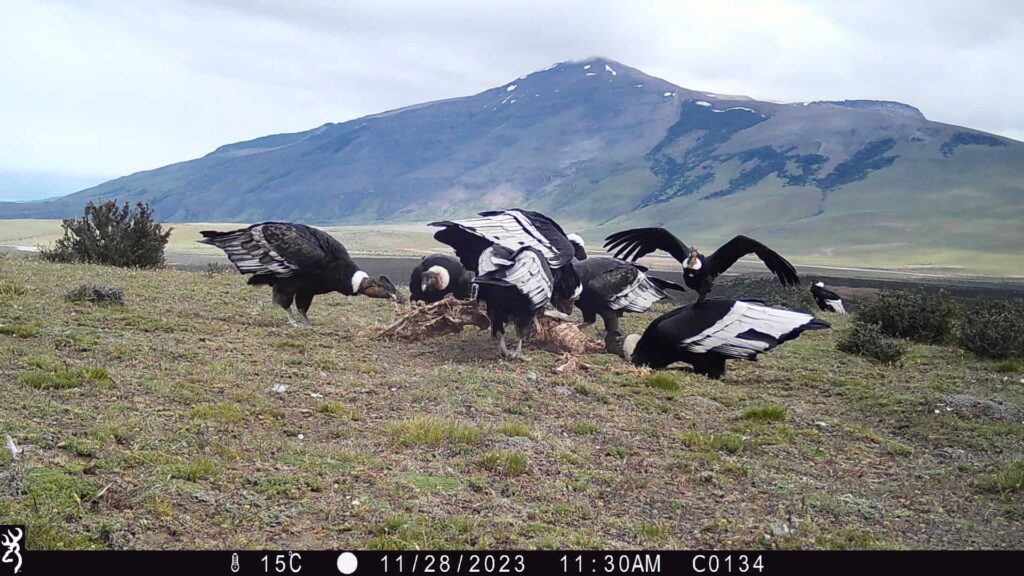
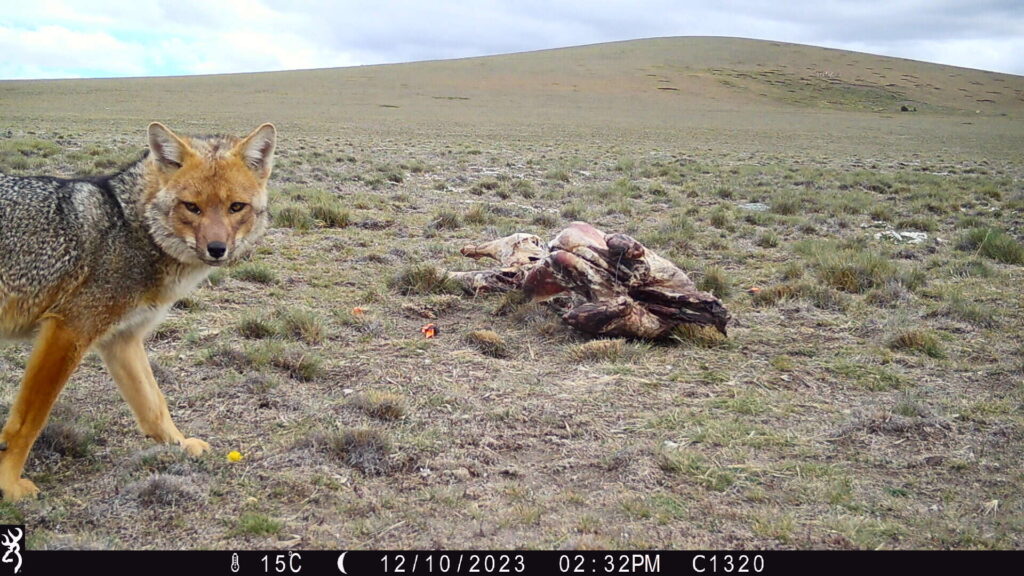
The original intention was to monitor how quickly scavengers cleaned up the carcasses. Species like the Patagonian fox (Lycalopex griseus), the Andean fox (Lycalopex culpaeus), the Andean condor (Vultur gryphus) and various raptors routinely stopped by for meals. When condors arrived, it was more like fast food. “When they discover a carcass, it’s gone in half an hour,” Corti said.
But pumas also joined in the buffets—they visited carcasses in 138 separate events.
Hidden evidence
Except for a couple of times, pumas usually weren’t the first to show up—it took them an average of 13 days to first visit a carcass. When the big cats did arrive, other scavengers quickly cut their escape. While the sheep remains were tied down to keep them in front of the trail cameras, the researchers found that in some cases, the carcasses had been wrenched free and moved, often at night or early in the morning. In other cases, they were partially buried in grass and other vegetation.
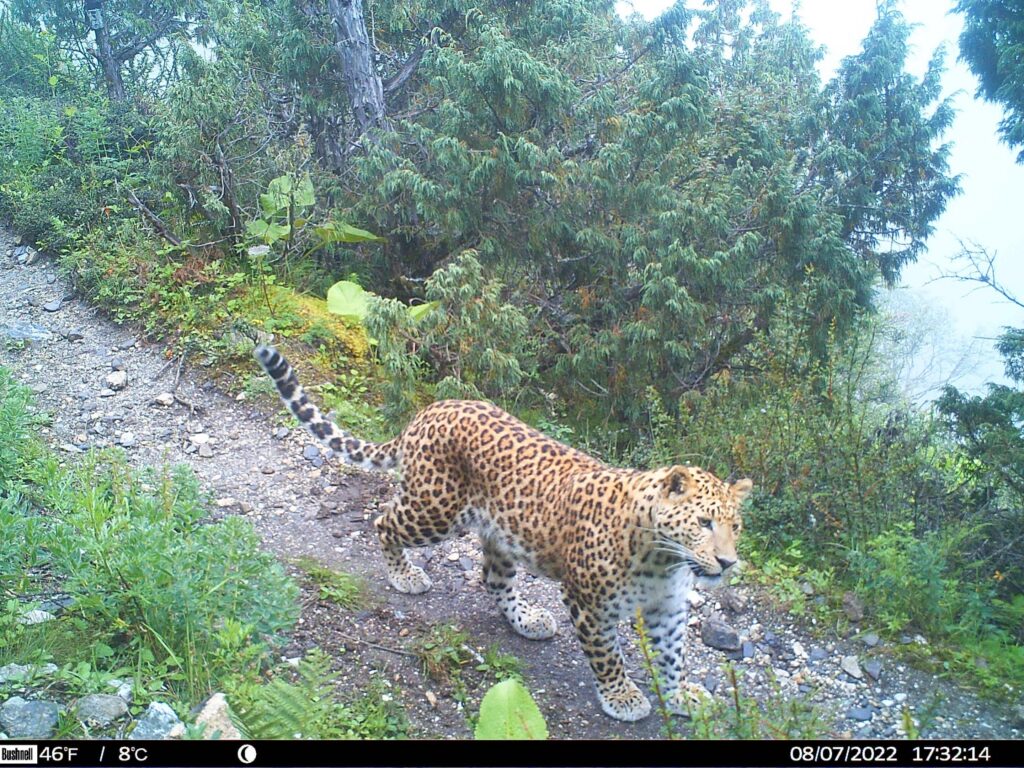
As mentioned in research published recently in Animal Conservation, a review of the trail cameras revealed that pumas were the culprits in these cases. Three times during the research, pumas cached the carcasses, either in front of the camera or elsewhere. Thirteen times, they moved the carcasses but didn’t cache them.
Pumas in this area are among the largest in the world. “They can reach 90 kilos,” Corti said. Typically, they prey on native guanacos (Lama guanicoe), but on ranches neighboring the national park, ranching often displaces guanacos. “The guanaco is also considered a competitor of the sheep,” Corti said. As a result, if pumas wander too far from the wilder areas, they have been known to prey on livestock—partly because there are not usually many native guanacos around.
But sheep—the main livestock ranchers keep in this area—can die from other causes like disease. Feral or free-ranging dogs are also sometimes at fault. Ranchers keep them to protect the sheep from other predators, but sometimes dogs themselves attack the sheep. In fact, the trail cameras revealed domestic dogs at some of the sheep carcasses.
“People tend to accuse the large predators, but when you check the real data, domestic dogs are responsible for a huge amount of the livestock predation,” Corti said.
If pumas come across these carcasses killed by other creatures, they are likely to take advantage of a free meal.
Ranchers in this part of Chile persecute pumas when they lose animals, but Corti said this research shows that a meal doesn’t always equate to a kill. “If ranchers misinterpret scavenging as depredation, it could inflate perceptions of livestock loss to pumas, exacerbating the perceived conflict and therefore the pressure for implementation of management actions such as lethal control efforts,” Corti and his colleagues said in the paper.
Since pumas occur widely across continental America, Corti said there are implications for the way that puma predation is modeled as well. “[Caching scavenged remains] can happen everywhere in the cougar distribution range,” he said.
As a result, he said that the protocols for determining whether a puma killed a colt, sheep or other livestock should be adjusted, with a better focus on forensics.
Ranchers and wildlife managers also might want to take measures to reduce the likelihood of the big cats scavenging in some cases, thereby lowering the risk of attacks on their livestock. Injecting carcasses with chemicals that induce nausea could be one strategy, he said.
Educating ranchers about puma behavior might also help reduce conflict. And reducing unnecessary persecution of pumas can help these areas maintain a healthier, working ecosystem, Corti said. In southern Chile, for example, they prey on nonnative species like the European hare (Lepus europeus), which eats native plants and has other negative effects on the ecosystem.
“Ranching is important for the economy and for food security,” Corti said. But having a healthy ecosystem is important for livestock as well. “The health of the ecosystem is essential to keep them producing food.”
Article by Joshua Rapp Learn