





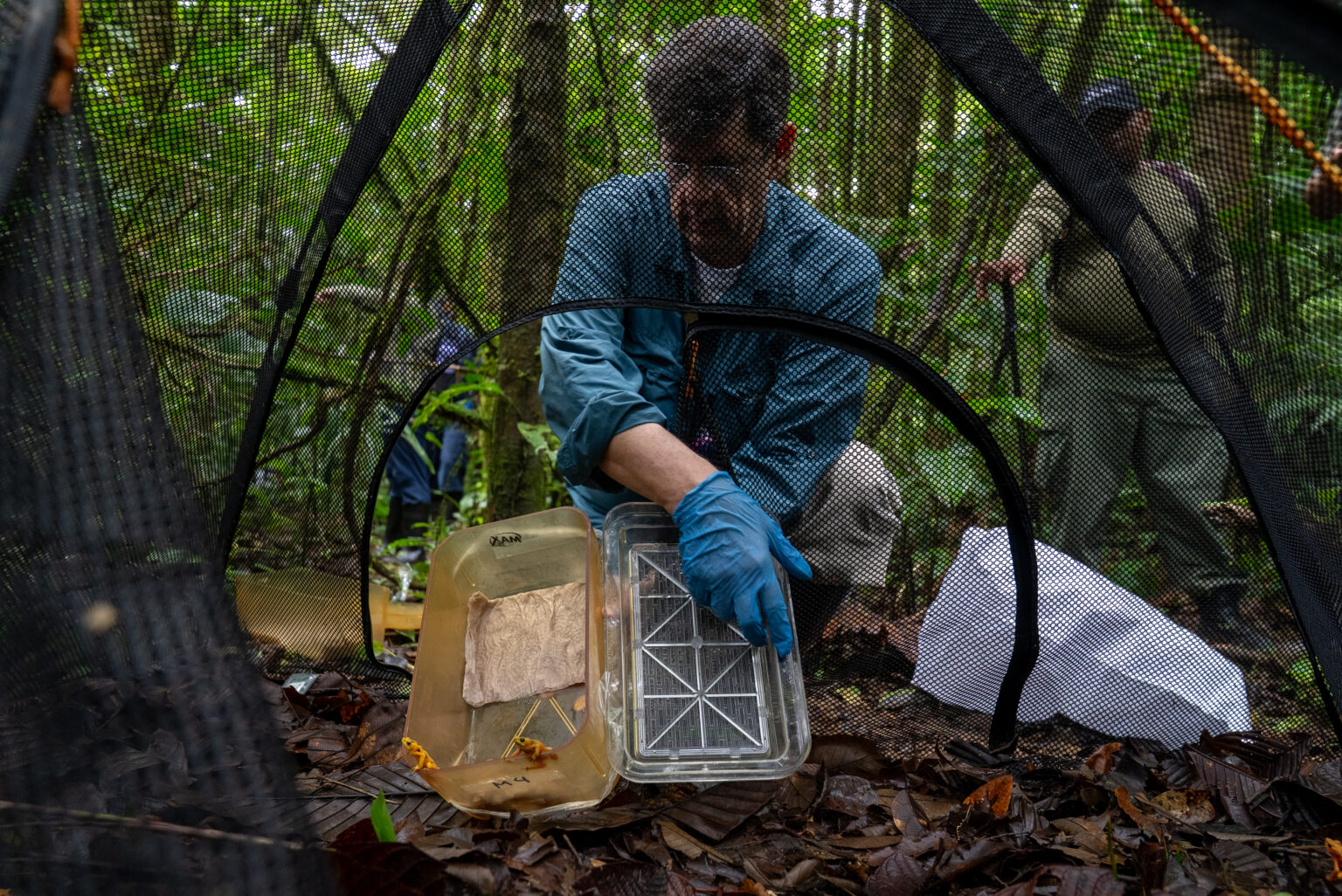
A symbol of Panamanian national pride that disappeared nearly two decades ago might soon be back in the wild. The Panamanian golden frog (Atelopus zeteki) is considered extinct in the wild due mostly to the devastation caused by chytrid fungus when it arrived to Central America in the 1980s. The last Panamanian golden frog was seen in the wild in 2009. Over the last two decades, Brian Gratwicke of the Smithsonian’s National Zoo and Conservation Biology Institute and collaborators at the Panama Amphibian Rescue and Conservation Project (PARC) and partnering zoos have bred the animals in captivity. Now, the team is tracking the captive bred amphibians released into the wild to see how they respond to chytrid fungus. Scientists put 100 frogs in mesh outdoor pens in the forest to protect them from predators. The frogs spent three months in the pens and about 70% of them died from chytrid fungus, but despite the high deathrate, researchers are optimistic about what they’ve learned about the disease. “This project was designed to see what would happen if we put these golden frogs back into a wild situation, just to kind of understand what are the disease dynamics, and how do these frogs regain their skin toxins,” Gratwicke said in an interview with Smithsonian magazine. The majority of the surviving frogs were fully released into the wild after the study. The researchers plan to use these results to inform the future of Panamanian golden frog reintroduction, as well as the rewilding of other species decimated by chytrid fungus around the world.