

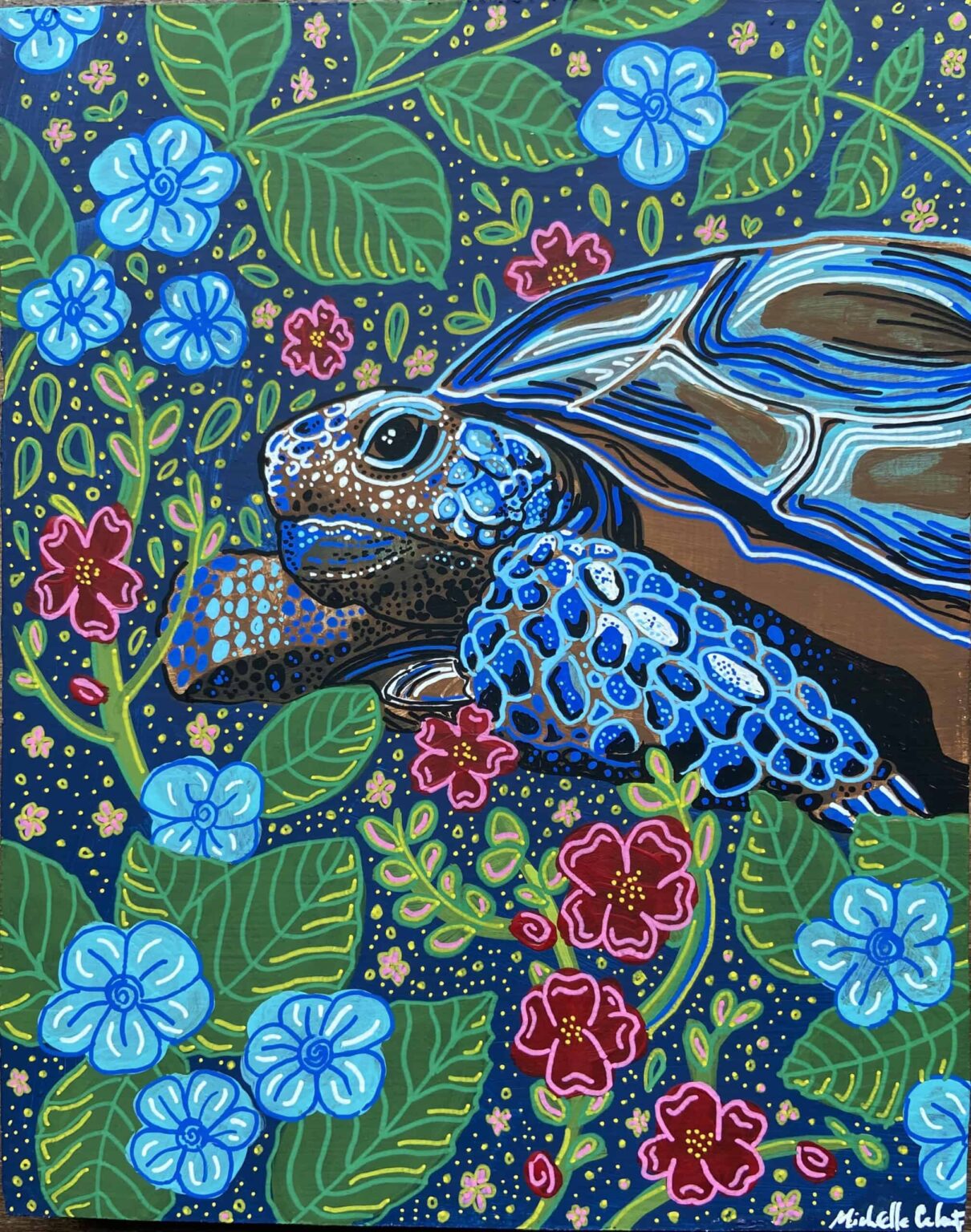
In one scene, an indigo snake weaves around a monarch butterfly, gopher tortoise, pitcher plants and flowers, with the flames of a prescribed fire behind.
In another, flames burn on the ground below the impervious trunk of longleaf pine trees as red-cockaded woodpeckers vocalize around it.
These two art pieces helped Michelle Colbert win The Wildlife Society’s 2025 Jay N. “Ding” Darling Memorial Award for Wildlife Stewardship Through Art.

This award was created to be a lasting recognition of the heritage established by Jay N. “Ding” Darling—an artist and prominent figure in the conservation movement as well as the first recipient of TWS’ Aldo Leopold Memorial Award—to promote wildlife and habitat conservation through art.
Colbert contributed artwork to commemorate ongoing conservation efforts in the Conecuh National Forest in Alabama—an area focused on restoring a native longleaf pine ecosystem.
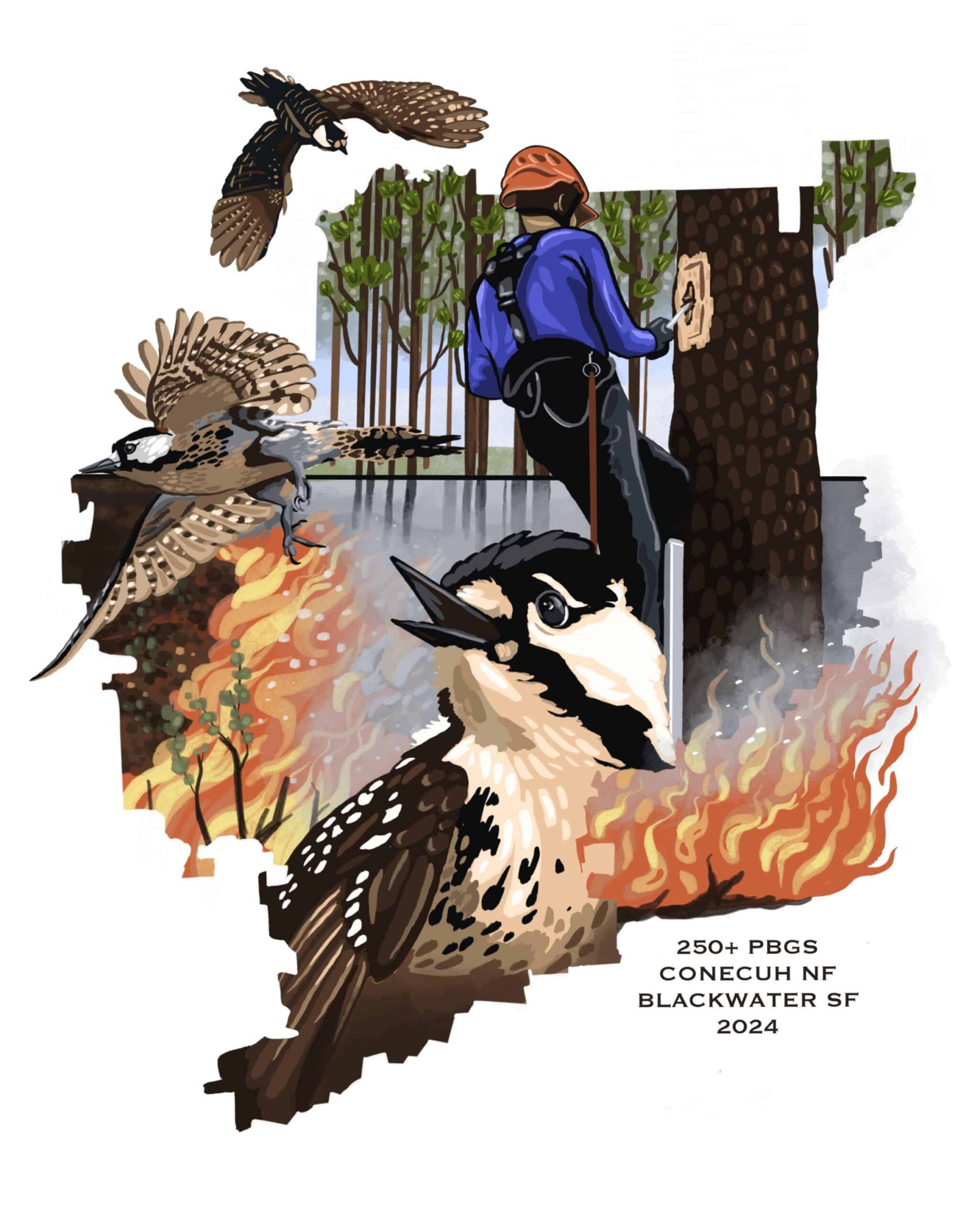
Her piece “250+ PBGs, Conecuh NF, Blackwater SF, 2024” depicts how wildlife managers saw success in recovering the population of red-cockaded woodpeckers (Leuconotopicus borealis) to 250 potential breeding groups in Conecuh National Forest and bordering Blackwater State Forest. This represented the shared species recovery plan target for the two forests, reached almost three decades before the target.
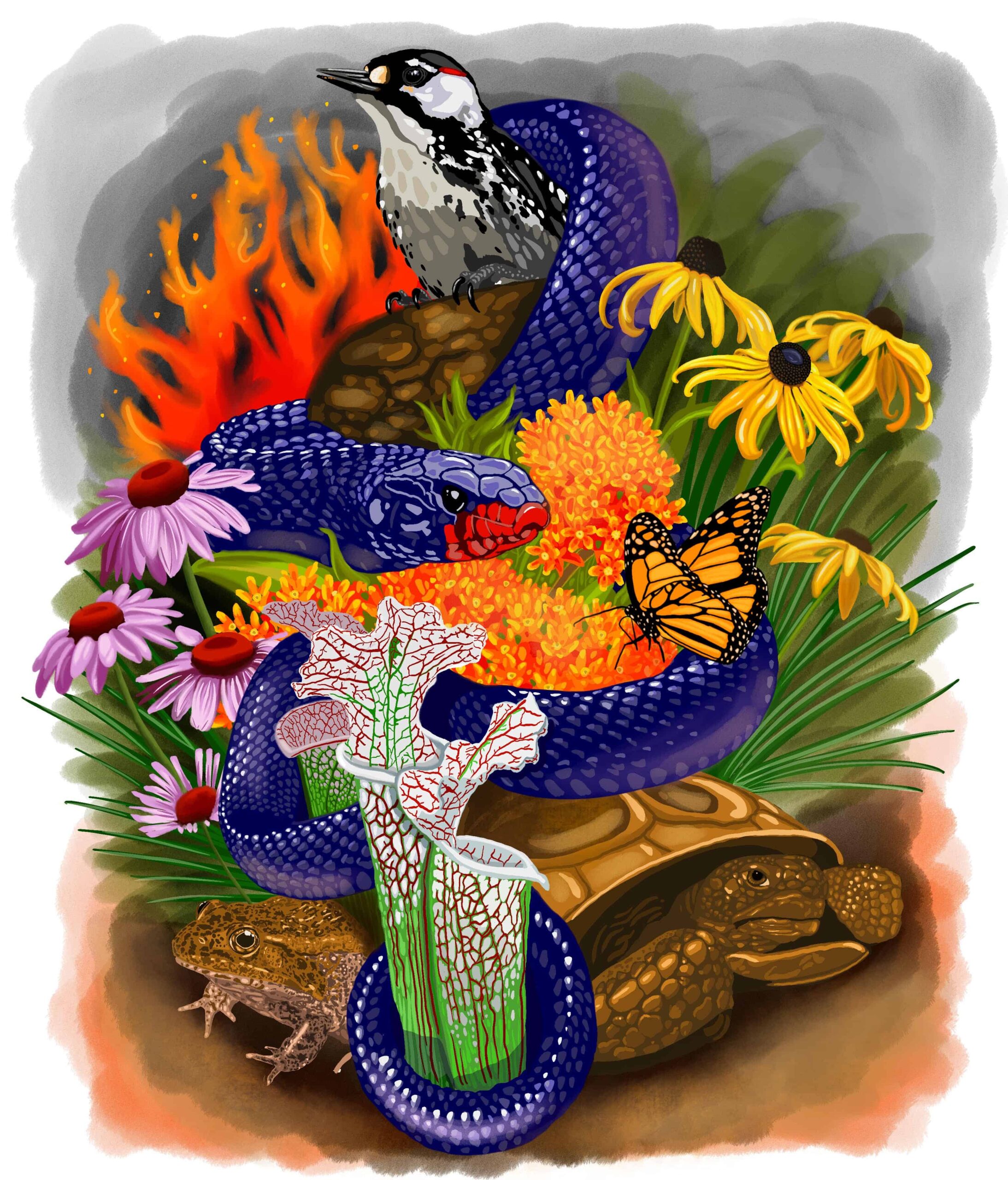
Her piece “Emperor of the Forest” depicts multiple elements of a healthy longleaf pine ecosystem, including a gopher tortoise (Gopherus polyphemus), gopher frog (Lithobates capito), eastern indigo snake (Drymarchon couperi), pitcher plants and fire.
This work reflects wildlife management success in reintroducing hundreds of federally threatened indigo snakes into Conecuh. This success includes recaptures of released indigo snakes, documented breeding and the first confirmed wild-born indigo snake in Alabama in more than 60 years.
“When I was contacted by wildlife biologists to create both the indigo snake and the [red-cockaded woodpecker] pieces, I wanted to convey a sense of history and a rich narrative,” Colbert said. “I did research and worked with biologists to really understand why these species are so important ecologically and how we take steps in supporting their conservation. I think that marriage of design and scientific understanding really resonated with passionate individuals in the field of conservation.”
Derek Colbert, a Certified Wildlife Biologist® who works with the U.S. Forest Service in the Conecuh Ranger District, praised the artist in his nomination letter. “Michelle’s talent for capturing conservation efforts and achievements through her unique artistic style has undoubtedly helped take our conservation message to another level,” he said. “It’s one thing to hear about the environment, wildlife and work that goes into conservation; it’s another to see it and be able to take a piece home with you.”
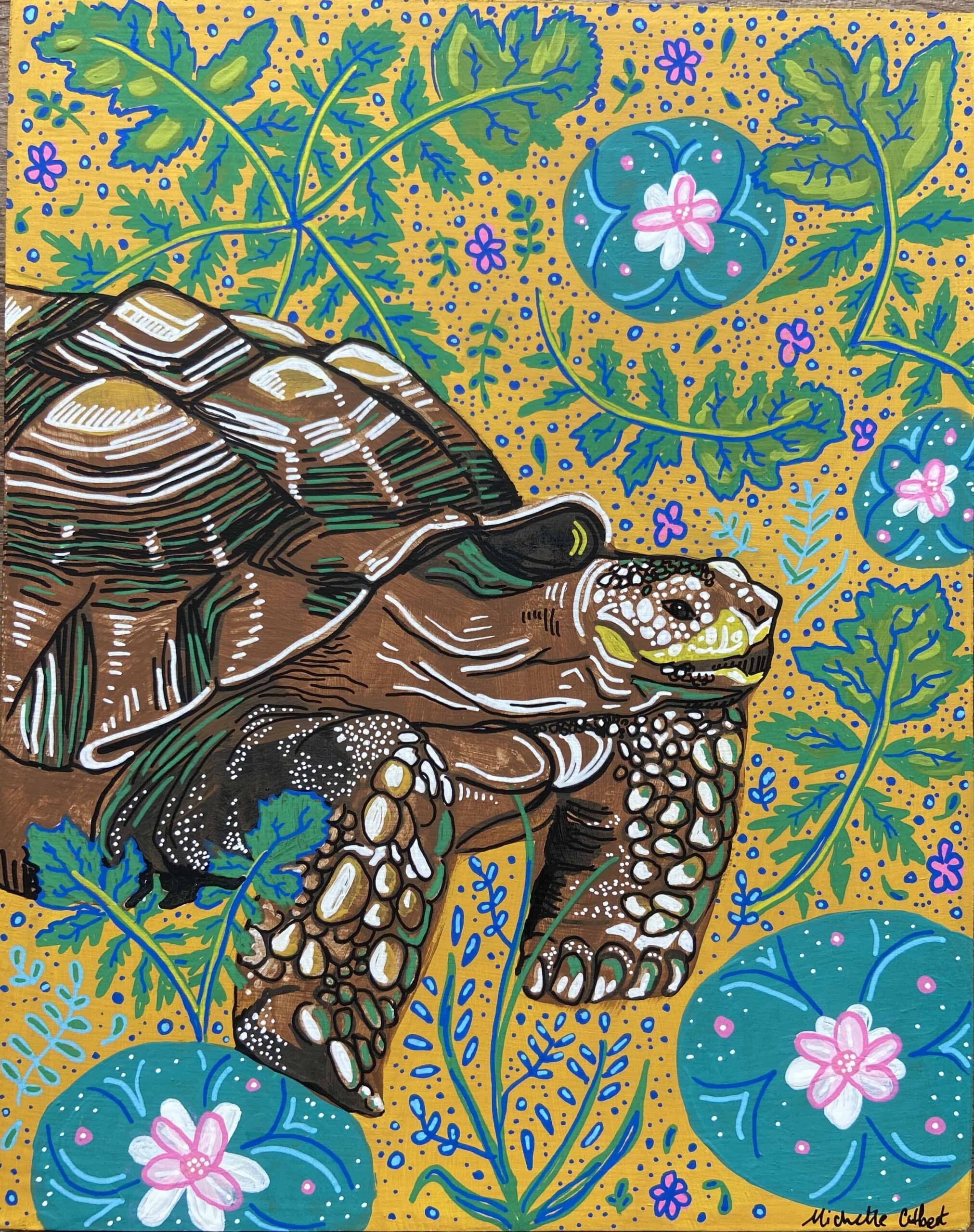
Vernon Compton, the director of the Gulf Coast Plain Ecosystem Partnership, which formed to protect biodiversity in the area and to increase buffers around military reservations, said that Colbert’s work is a “difference-maker” in his nomination letter. “I’ve seen the way adults and children are drawn to Michelle’s work and, from listening to them, have been able to see how her art not only educates, but inspires,” Compton wrote. “Future supporters and champions of wildlife stewardship may begin their journey of a lifetime of conservation support as a result.”
For the artist Colbert, her work is all about connectivity, whether that means connections between keystone species and native plants or negative connections with invasive species. “We should be sensitive to those connections as well as our human connection when representing nature in a deeper way,” she said.
Article by The Wildlife Society