


When scorching summer temperatures hit, humans crank up the air conditioning, go for a swim or visit their favorite ice cream shop.
Large mammals in the Greater Yellowstone Ecosystem don’t have the same luxuries, but they take a similar strategy: visiting different places. As climate change brings increasing summer temperatures, new research shows that an animal’s environment—more than their physiology—influences how they respond.
“These behavioral changes are a potential first line of defense that these populations have against increasing temperatures, which is encouraging,” said Justine Becker, a TWS member and researcher at Montana State University.
In a new study published in Ecosphere, Becker and her colleagues analyzed nearly two decades of GPS location data from nine species of animals in the Greater Yellowstone Ecosystem and surrounding areas to see if large mammals change their behavior in response to increasing temperatures—and if they do, what factors enable them to do so.
Avoiding the doldrums of summer
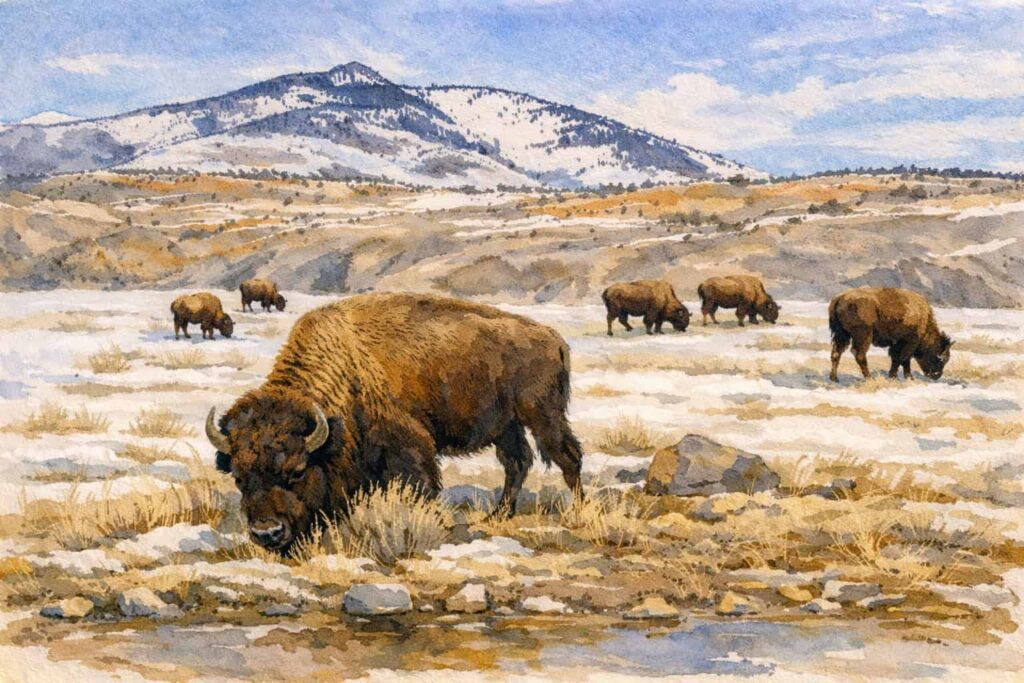
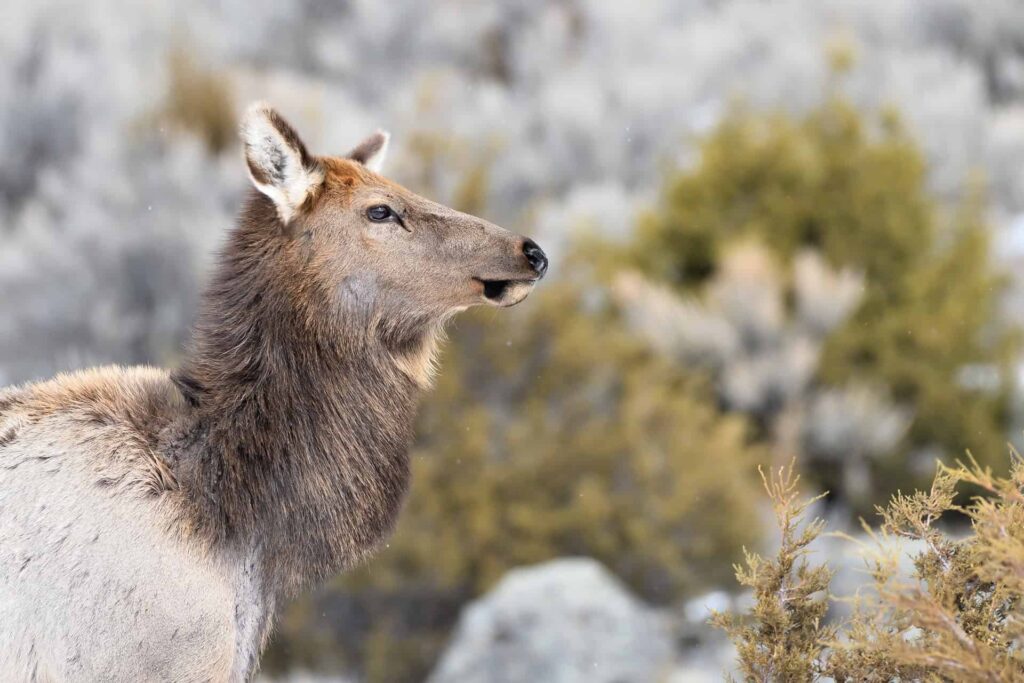
Becker and her team analyzed the data from nine species and subspecies of both herbivores and carnivores, including Rocky Mountain bighorn sheep (Ovis canadensis canadensis), American bison (Bison bison), North American cougar (Puma concolor cougar), Rocky Mountain elk (Cervus canadensis nelsoni), Shiras moose (Alces alces shirasi), mountain goat (Oreamnos americanus), Rocky Mountain mule deer (Odocoileus hemionus hemionus), American pronghorn (Antilocapra americana americana) and gray wolf (Canis lupus).
The team wanted to know how three different factors influenced the animals’ abilities to change their behavior to adjust to heat: species-level life history traits like body size and diet, the intensity of the temperature changes and the animal’s environment.
Becker didn’t find any significant link between life history traits or intensity of temperature change and behavioral changes. Rather, what explained a species’ ability to alter its behavior was the type of environment it was in. How many different types of habitats available to an animal was the best predictor of how much they changed their behavior in response to increasing temperatures.
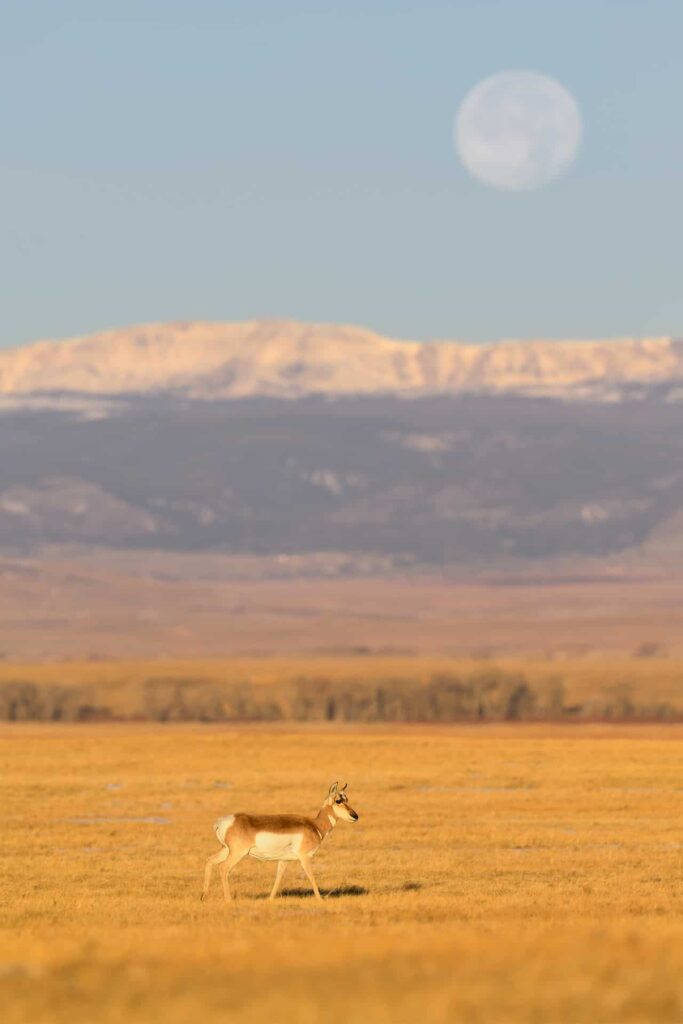
It’s all about how much the animals are moving regularly in their day-to-day compared to their movements during times of high temperatures. When an animal lives in an environment with lots of different habitat types, their daily routine likely includes moving between these patches. But for animals who live in habitats with less variation, they tend to stay in the same environment during normal temperatures. “That’s where we saw a larger change in their behavior,” Becker said.
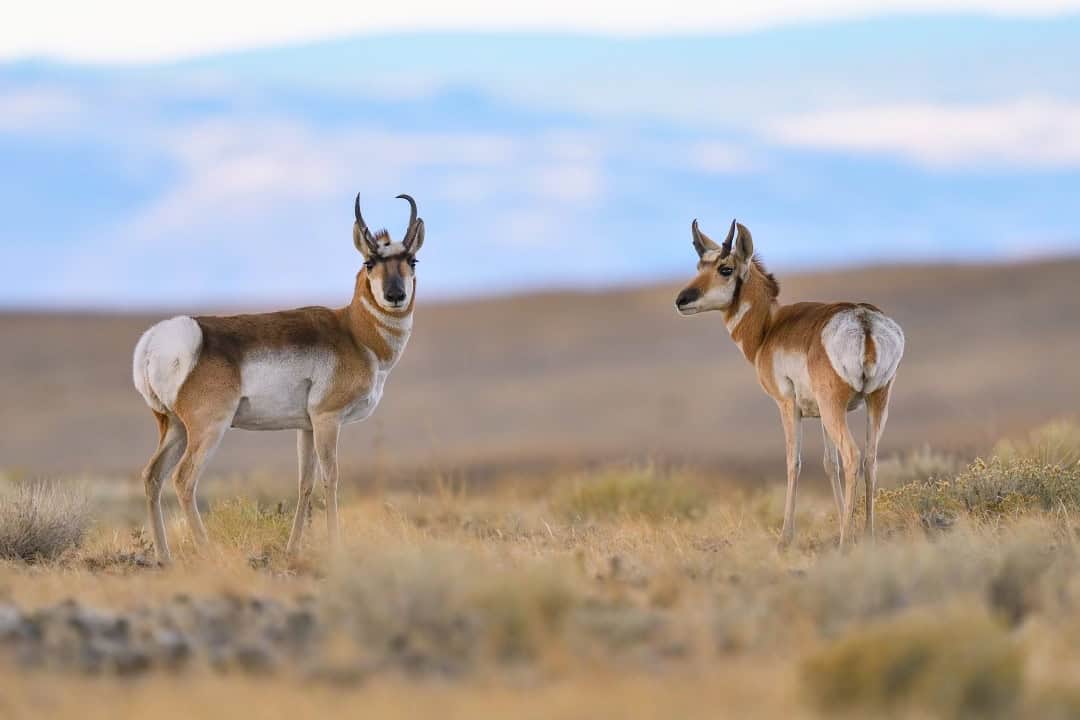
One population where Becker saw this clearly were the pronghorn in Wyoming’s Shirley Basin, a sagebrush prairie landscape. Trees and running water are few and far between. For the most part, pronghorn stick to the open areas, munching on forbs and sagebrush. But when it gets too hot, Becker said “they may have to seek out those areas in the landscape like creek beds where there are larger trees and shrubs to find relief in the shade.”
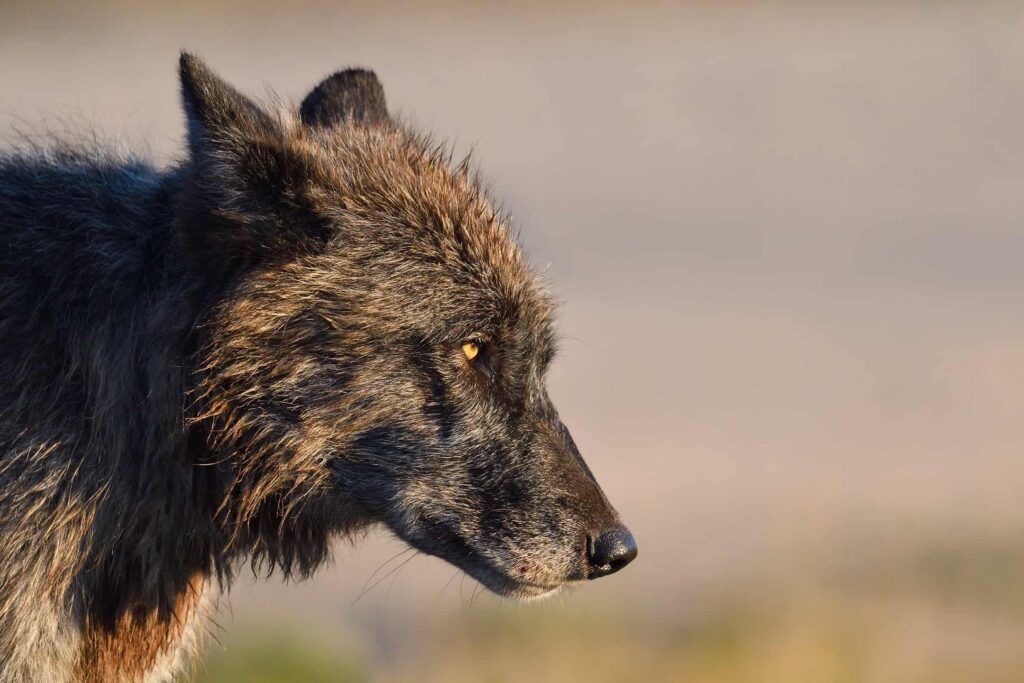
Cougars, on the other hand, showed the least amount of behavioral plasticity. “While they changed their behavior, it was to the smallest extent,” Becker said. Because they’re large carnivores, it’s likely they’re less sensitive to higher temperatures than the herbivores, who generate a lot of heat when digesting plants. They also typically prefer varied environments that likely provide relief when the weather gets hot.
A climate resilient future
Some species like moose (A. alces) have developed unique behavioral adaptations to regulate their temperatures. Unlike other species of ungulates, moose aren’t able to sweat, so they typically spend a lot of time standing in water or wet areas to cool down.
But evolution happens over eons and the climate is changing quickly. “Our study suggests that one thing managers can do for not just one species, but the whole guild of large mammals in the Rocky Mountains, is protect and promote habitats where there are options for these animals to shift between different habitat types depending on the environmental conditions,” Becker said.
While the temperature changes weren’t catastrophic, each of the study populations showed a response to increasing temperatures. “These results suggested an optimistic message that [the animals] do have the ability to adjust their behavior and can do so across a diverse group of species,” Becker said.
But the animals also need access to varied habitats, year-round. Wildlife crossings, fence mitigation and public-private partnerships are all important strategies to improve habitat quality and connectivity.