




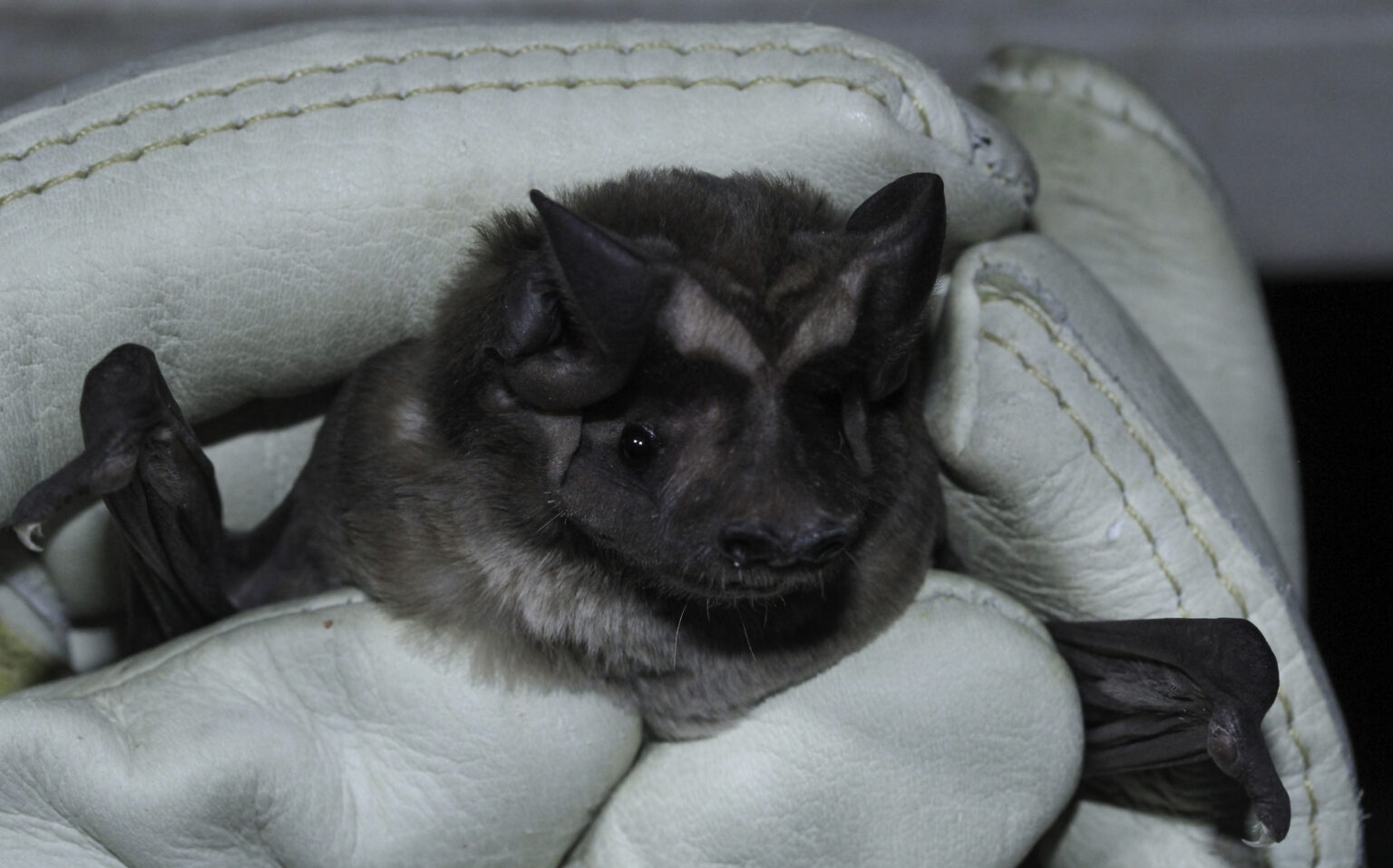
The Florida heat can be brutal. Now, imagine you can’t find a home and are offered a small, wooden box with no air conditioning. That’s a choice offered to the Florida bonneted bat (Eumops floridanus), one of the state’s most at-risk species. In new research published in the Journal of Mammalogy, scientists have found that specialized, temperature-regulating bat boxes can attract bats and help them thrive. Scientists from the University of Illinois Urbana-Champaign set up three types of artificial roosts, or bat boxes, in southern Florida and monitored them for 18 months to see who moved in. On month 16 of the 18-month study, one male Florida bonneted bat settled down into a box. Then, a little over a year after the study concluded, a harem colony—a male with multiple females—was started in the same box. Even though bats only successfully colonized one box, scientists said the study still led to some interesting findings. For one, it showed that an alternate bat box model, called a rocket box, could be a better option for attracting the Florida bonneted bat. The boxes are about a meter long and provide a range of temperatures, letting bats choose where they’d like to settle. The model also included a water jacket, a simple technology using vacuum-sealed water bags that keep the boxes from getting too hot or too cold. The last time the scientists counted, there were 17 Florida bonneted bats in the box. That’s a lot, the researchers said, given that in 2022, the whole population of this species was estimated between the low hundreds and low thousands. “That’s actually a pretty good chunk of those bats moving into our box,” said Reed Crawford, a postdoctoral researcher at the University of Illinois.