




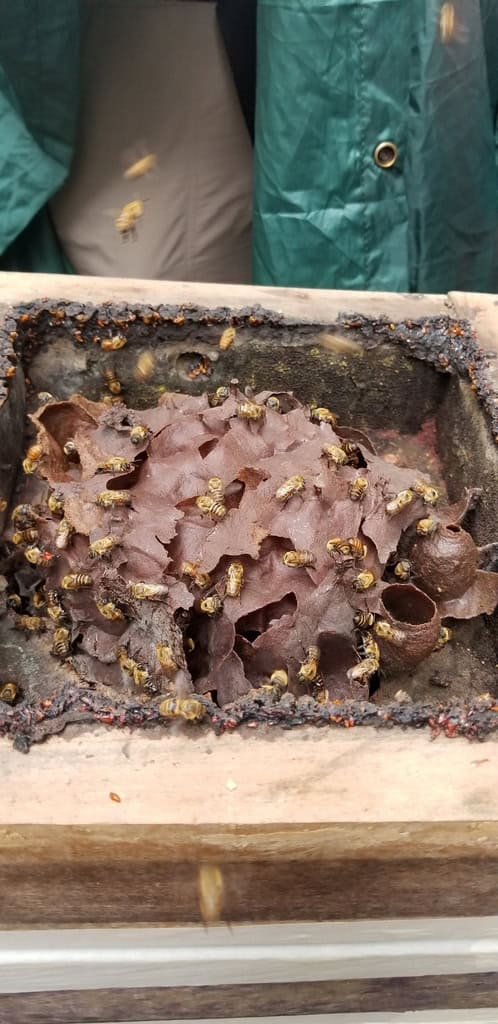
In parts of the Peruvian Amazon, municipalities have passed ordinances to recognize native stingless bees as rights-bearing entities. The rights have been bestowed on stingless bees such as Melipona eburnea, Tetragonisca angustula, Melipona illota and Melipona grandis, keystone species responsible for pollinating approximately 80% of Amazonian flora. Stingless bees are threatened by deforestation, invasive species, pesticides and climate change. The Peruvian municipalities of Satipo and Nauta approved the ordinances, which will give the bees and their ecosystem inherent rights to exist and thrive; to help maintain healthy populations; to live in a healthy habitat free from pollution; to have ecologically stable climatic conditions; and to regenerate their natural cycles. Significantly, the bees were also given the right to be legally represented in cases of threat or harm, allowing for immediate action on issues threatening their existence. “The Neronto (Melipona eburnea) has much work to do. For us, it is vital for society and for Indigenous Peoples,” said César Ramos Pérez, president of EcoAshaninka, an Indigenous association representing native communities in the region that was part of the initiative.
The ordinances are creating a buzz globally. Petitions are calling on the Peruvian government to make the law nationwide, and the move has drawn a swarm of interest from groups in Bolivia, the Netherlands and the U.S. who want to advocate for the rights of their own wild bees.
Read more at the Earth Law Center.
Article by The Wildlife Society