





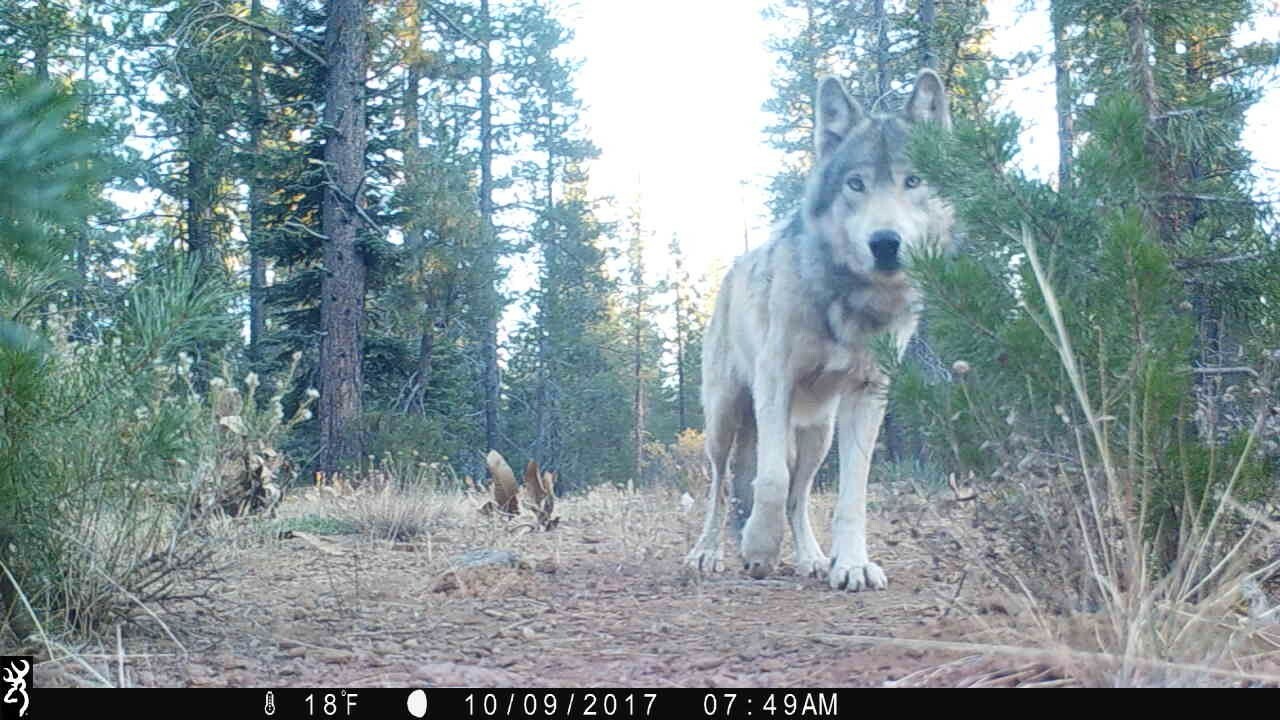
New research analyzing the scat of wolves in California has revealed that cattle is the main dish on their menu.
“These results revealed that wolves in California’s human-modified landscape primarily satisfy their caloric requirements through livestock consumption, underscoring the considerable challenges posed by coexistence of wolves and humans within the state,” said the authors of the study published recently in PLOS One.
The team found evidence of cattle in 72% of the scat samples they analyzed. Meanwhile, mule deer (Odocoileus hemionus)—native, wild prey of gray wolves (Canis lupus)—were only found in 45% of the samples.
Wolves dispersed naturally into California from Oregon after decades of absence relatively recently. But in Northern California, the animals encountered landscapes depleted of large populations of native prey, like elk (Cervus canadensis) and deer, which are found in places like Montana, Wyoming and Canada. As a result, researchers believe they rely more on livestock, which are abundant in Northern California. “If you want to have these animals on the landscape, you know, you have to start kind of building back the full ecosystem,” said Neil Carter, a researcher from the University of Michigan who studies wolves but was not involved in this recent study.
As a result of this finding and recent attacks of wolves on cattle, wildlife officials have allowed sheriffs in parts of the state to haze wolves using rubber bullets, paintballs, pepper balls and harassment techniques to keep the predators from livestock.
Listen to the podcast about wolf scat analysis on NPR’s Shortwave, and read about the new hazing measures in The Sacramento Bee.