



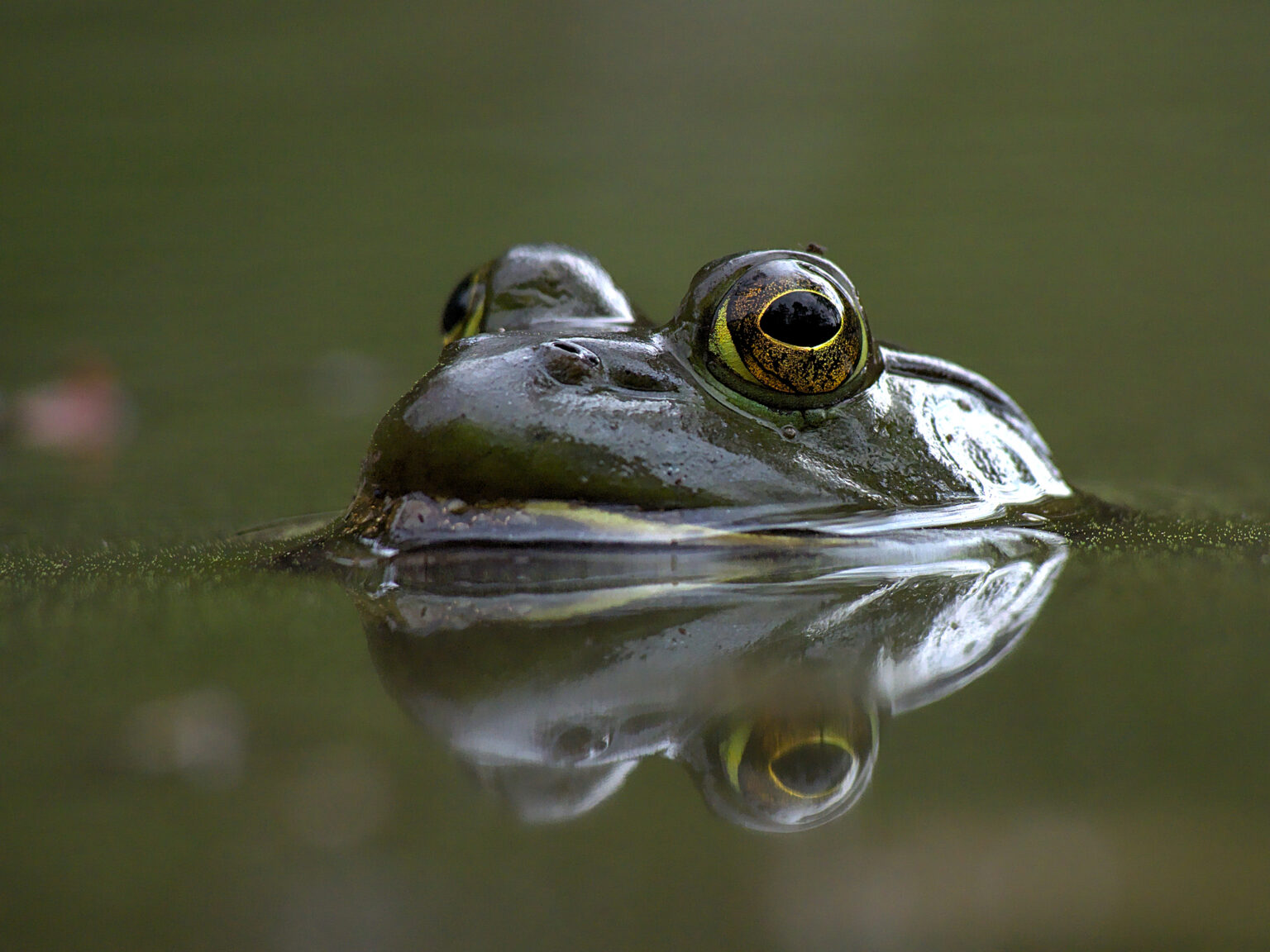
American bullfrogs may be the world’s most well-traveled amphibians. New research shows that while in Brazil, the species picked up a unique strain of a deadly fungus—and helped it spread around the world.
The chytrid fungus Batrachochytrium dendrobatidis (Bd) has caused the decline or extinction of over 500 species of amphibians around the globe. Bd infects amphibians’ skin, and since the animals breathe through this organ, the infection is often fatal.
Bd has a long and puzzling history. While scientists knew something was killing amphibians at an alarming rate in the 1970s and 1980s, it wasn’t until 1999 that scientists identified Bd as the culprit. But the pathogen has been around for much longer. The oldest known case of Bd is from a museum specimen collected in Bolivia in 1863.
In 2012, scientists identified another strain of the fungus in Brazil’s Atlantic forests and aptly named it Bd-BRAZIL. When Bd-BRAZIL popped up on the Korean peninsula, some researchers concluded that it must have originated from Asia. But the story was long from settled and has since become the topic of a heated scientific debate.
New research published in Biological Conservation links the origins of Bd-BRAZIL to its namesake country—and the global bullfrog trade. “Bd-BRAZIL emerged here in Brazil, and now we’re exporting it to other countries,” said Luís Felipe Toledo, a researcher at the State University of Campinas in the state of São Paulo, Brazil.
The out-of-Asia hypothesis
When scientists first discovered Bd-BRAZIL, they knew it was special. It was genetically different from the global panzootic lineage, Bd-GPL—the strain responsible for worldwide declines.
“Just like COVID-19, we have different strains of Bd,” Toledo said. While they’re still the same species, the strains have different virulence, characteristics and genetic fingerprints. “Some strains are more lethal, some are less.” Bd-GPL tends to be more lethal, with local strains being less so.
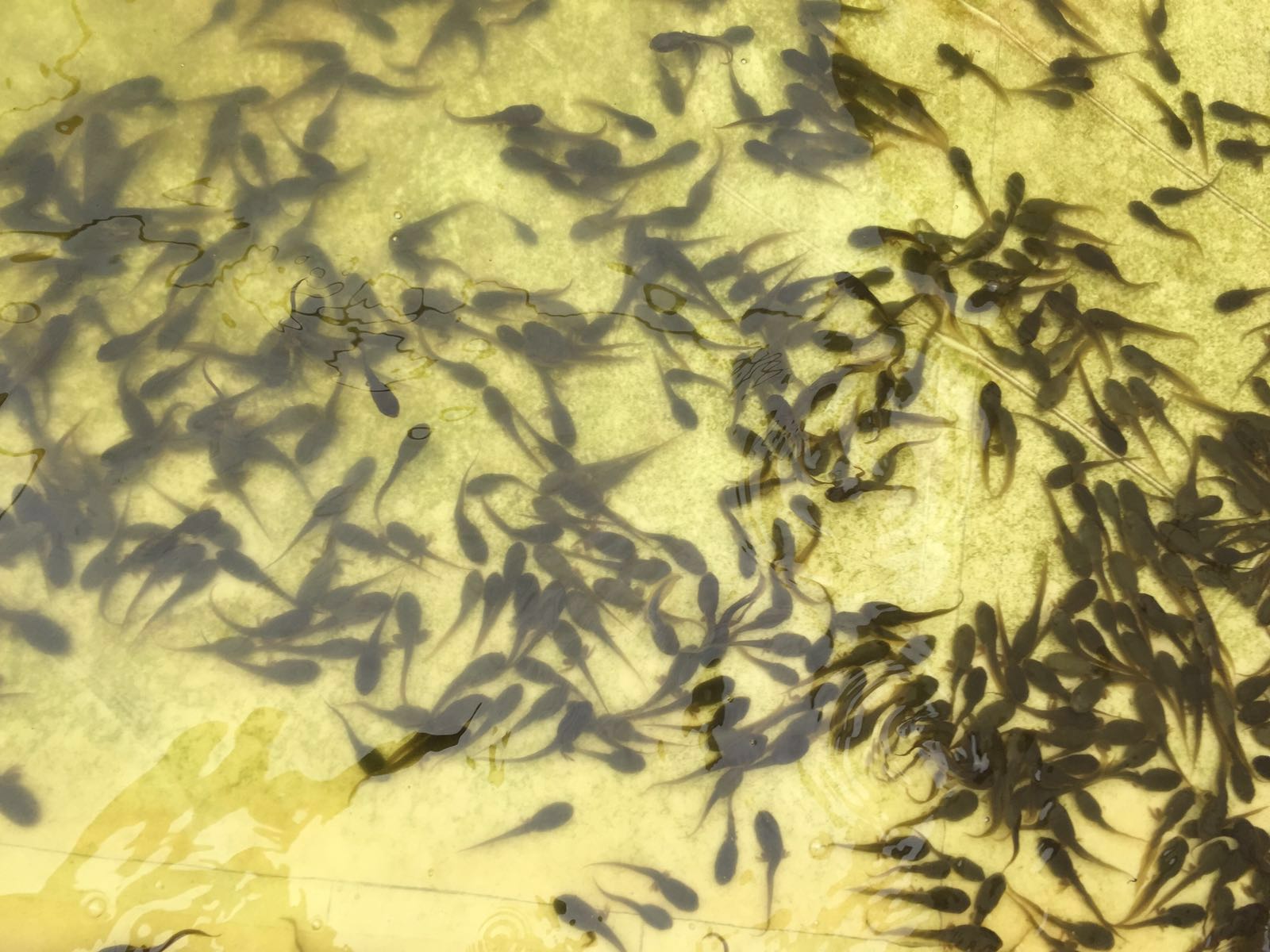
Then in 2018, a large group of researchers, including Toledo, released a paper in Science. Through complex genetic analyses, the group determined that Bd-GPL originated in Asia, likely between 50 and 120 years ago. The paper also hypothesized that Bd-BRAZIL originated in Asia and then made its way to Brazil through the global bullfrog trade.
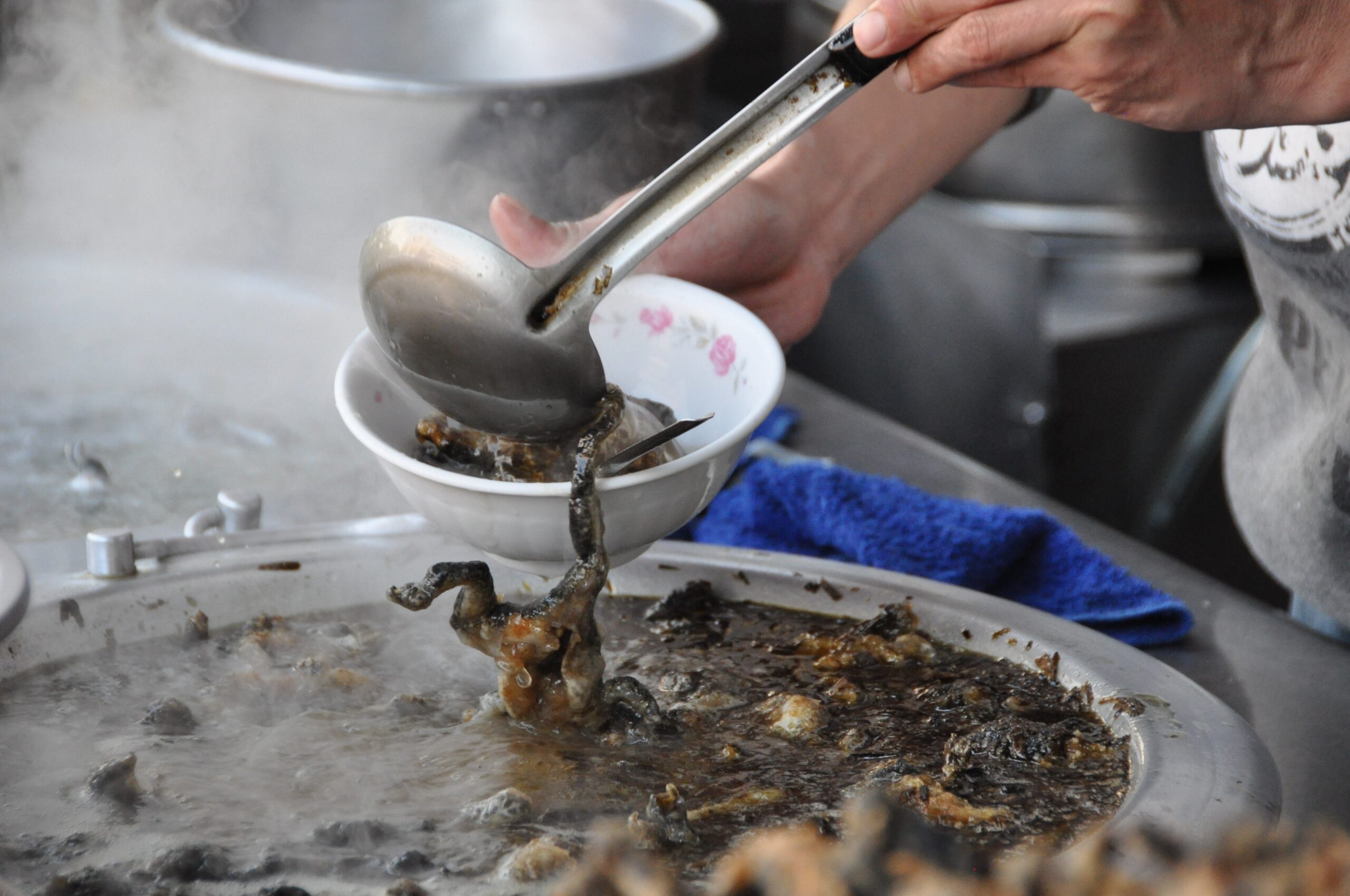
Surprising to some, frog legs are considered a delicacy in many parts of the world, including Europe, Asia and the United States. The strong jumping legs of the North American bullfrog (Lithobates catesbeianus) are the chef’s pick for the dish. The frog is native to the eastern United States and Canada but has been introduced to South America, Europe, Asia and western North America. Raised in cramped farms, diseases like Bd can quickly spread through the amphibians.
Though Toledo was a coauthor on the paper, he was never fully convinced of the out-of-Asia hypothesis.
Disease detectives
There were a couple of things that convinced Toledo that Bd-BRAZIL emerged from the country’s Atlantic forests. For one, they found Bd-BRAZIL in 10 species of frogs, many without clinical signs of disease. This suggests that as this strain of the fungus coevolved with Brazilian amphibians, they were able to develop some resistance.
But perhaps the most convincing piece of evidence came from museums.
The researchers looked at 2,280 amphibian specimens from museums around the globe. The team found Bd-BRAZIL in museum specimens from the country going back to 1919. Meanwhile, American bullfrogs first arrived in the country around 1935, years after the first known Bd-BRAZIL positive specimen. “It was impossible to import Bd in a bullfrog shipment because we didn’t even have bullfrogs [at that point],” he said.
Another part of Toledo’s investigation focused on bullfrog trade routes. Buyers in Europe, for example, only take frozen frog legs, whereas buyers in the U.S. want live frogs. Toledo said that frozen, processed frog legs are much safer because there’s little to no chance of spreading Bd.
This isn’t the case for live frogs. Toledo and his colleagues have found Bd-BRAZIL in two places outside of Brazil: a live frog market in Michigan in 2009 and a bullfrog farm in South Korea in 2014. “That was the first clue that Bd was not from Asia, but from Brazil and exported to Asia through the international frog leg market,” Toledo said. Bullfrogs only ever leave, not enter, Brazil nowadays. Because they’re a common invasive species, there’s no need for the country to import more. But it’s a major producer for the frog leg market in other countries. “We didn’t find any evidence that Bd-BRAZIL was transported from Asia to Brazil,” he said.
Fighting the fungus
The good news is that where it’s found outside of Brazil, Bd-BRAZIL is restrained to farming operations or invasive species and rarely infects native species. Bd-BRAZIL is less virulent than Bd-GPL and, so far, hasn’t taken a toll on native species outside of Brazil.
The findings also don’t dispute that the strain most responsible for the global amphibian decline, Bd-GPL, originated around a century ago in Asia. Nor does it explain how Bd-GPL arrived in South America in the first place. Studies have shown that Bd can be transmitted over long distances in fog and rainwater. Midges that specialize in sucking amphibian blood can transmit Bd, among other diseases.
But Toledo said there was a bit of resistance to his paper. “People don’t like to change the ongoing hypothesis,” he said. But the history of Bd research has been one of constant changes in ideas.
Bruce Waldman, an ecologist at Oklahoma State University who wasn’t involved with the study but was a coauthor on the 2018 paper establishing the out-of-Asia hypothesis, said that the new paper presents “strong evidence” of a Brazilian origin of Bd-BRAZIL that was then spread around the world by the bullfrog trade. Past evidence, like the genetic diversity of Bd in Asia, has been used as evidence to support the Asian origins of the pathogen. “However, recent studies are pushing back the timeline of documented Bd infections across multiple continents, complicating a simple origin narrative,” Waldman said.
For Toledo, the most important practical information is knowing what strains are in what areas so scientists can better focus conservation efforts. Frogs can be infected with more than one strain of Bd at once. And understanding more about where a pathogen has been and how it spread can help predict where it’ll go in the future. The research also identified routes and hot spots of disease transmission that Toledo hopes will help make the largely unregulated bullfrog market safer.
Toledo said you never know how your research might be useful until you complete it. “We are still learning the story of this fungus and how it spread all over the world.”
Article by Olivia Milloway