



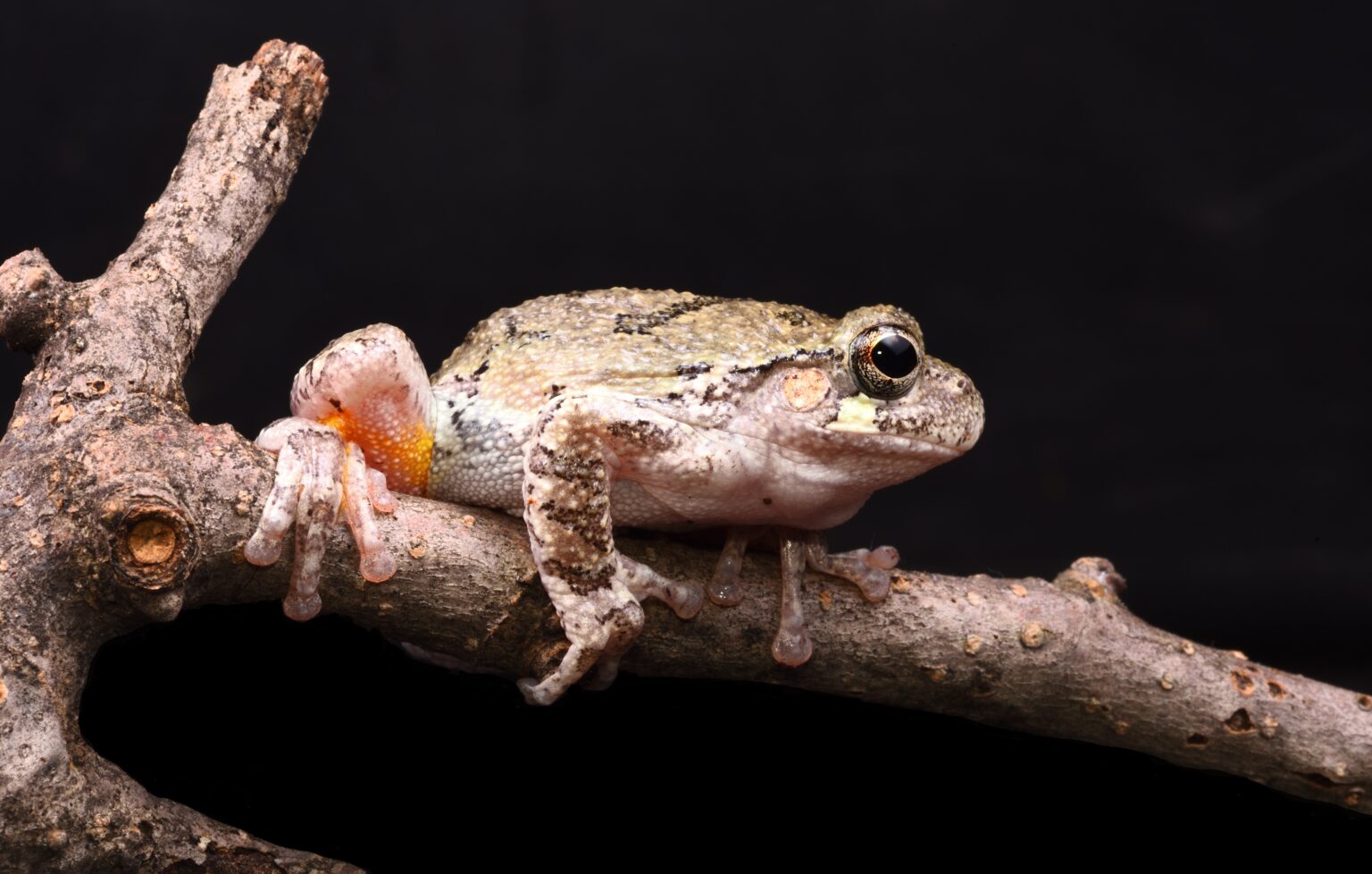
Restoring forests at old coal mines can boost species richness for frogs and toads in Appalachia.
“Wetlands in the very young forests that were recently planted had overall higher species richness in both Kentucky and West Virginia compared to these unaltered wetlands and mature forests,” said Steven Price, a professor in stream and riparian ecology at the University of Kentucky. “That was really surprising to us, and that wasn’t what we expected.”
Appalachian states have hundreds of abandoned coal mines. Companies restored some of these under requirements from the U.S. Surface Mining Control and Reclamation Act, but often this meant planting grasses, which regrow rather quickly on the often compacted soil resulting from industrial activity. While grasses help reduce the sedimentation that can spill into waterways at these sites and reduce the danger from landslides, it’s a “quick fix,” Price said, and usually doesn’t result in forest regrowth, at least in the short term. “We consider these lands to be in a state of arrested succession,” he said.
Another strategy called the “forestry reclamation approach” involves excavating the soil to loosen it up before planting saplings. It’s a little more involved, with restorers removing invasive vegetation, excavating wetlands and planting wetland plants.
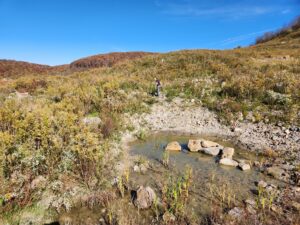
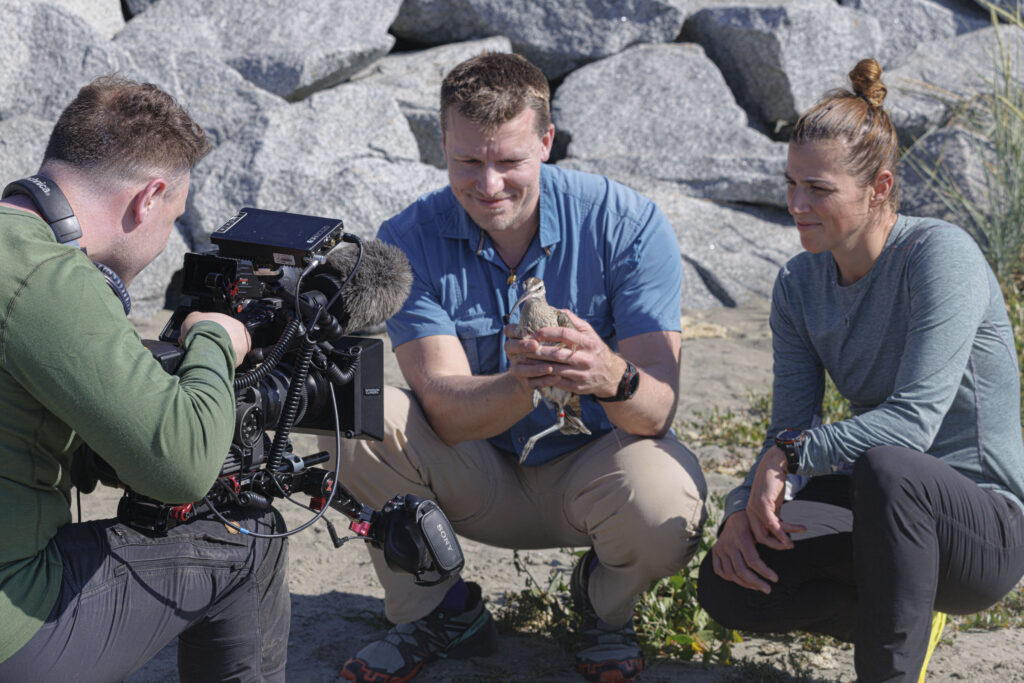
Price and his colleagues wanted to see how frogs and toads responded to this forest reclamation. Researchers tackled this question in a study published recently in The Journal of Wildlife Management, which is part of a larger project examining how various types of wildlife respond to restored mines in Appalachia.
The team surveyed wetlands at two types of sites at mines in Kentucky and West Virginia. They looked at sites that were forest-reclaimed for one to six years, sites forest-reclaimed for seven to 23 years, and mature forests that hadn’t been mined or disturbed for at least a century. Most of the latter sites were in forests relatively near the restored sites—they served as controls.
Eavesdropping on frog calls
The team surveyed frogs and toads using sound recorders that turned on every 15 minutes from late afternoon before dusk until around midnight—the period when frogs and toads usually make mating calls.
They then manually analyzed these recordings, sampling a subset of the huge amount of recorded time they accumulated.
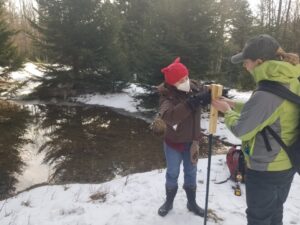
The researchers found that the newer sites had the most species richness—a surprising finding for the team. The Kentucky sites had a higher diversity of frogs and toads, with a total of 10 species, while the West Virginia sites had six.
The team found that some amphibians are hard to detect. Eastern spadefoot toads (Scaphiopus holbrookii), for example, only vocalized once night per year around the Fourth of July when it happens to rain a lot in the area. Price said this highlights the fact that many surveys might miss these species.
Spadefoots weren’t found at any of the reclaimed sites, either, Price said—the recorders only picked them up at old, unmined forests. He said this is likely since they spend so much time underground—ripping up and loosening compacted soil may not be great for a species that spends so much time underground, at least in the short term. Spadefoots are considered a species of greatest conservation need in Kentucky, included in its State Wildlife Action Plan.
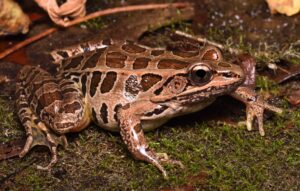
The researchers only detected eastern narrow-mouthed toads (Gastrophryne carolinensis) at the more recently reclaimed mine sites.
Price also cautioned that not all reclaimed mine sites may be as productive for frogs and toads as the ones surveyed in this study. These reclaimed mines were all selected because they were close to state or national parks or forests. This was done so the researchers could compare reclaimed sites with relatively similar natural sites nearby. But toads and frogs may also find it easier to recolonize reclaimed sites near natural areas. “I don’t know if we’d see the same kind of response in urban areas where there are a lot more barriers,” Price said.
But overall, Price said that forest restoration at old mine sites seems to be working—and not just for amphibians. Price and his colleagues recently published another study on bird response to restored mines, and they conducted further work that showed that salamanders were responding well to forest restoration as well.
“Restoration is providing habitat for a lot of these animals,” Price said.
This article features research that was published in a TWS peer-reviewed journal. Individual online access to all TWS journal articles is a benefit of membership. Join TWS now to read the latest in wildlife research.
Article by Joshua Rapp Learn