

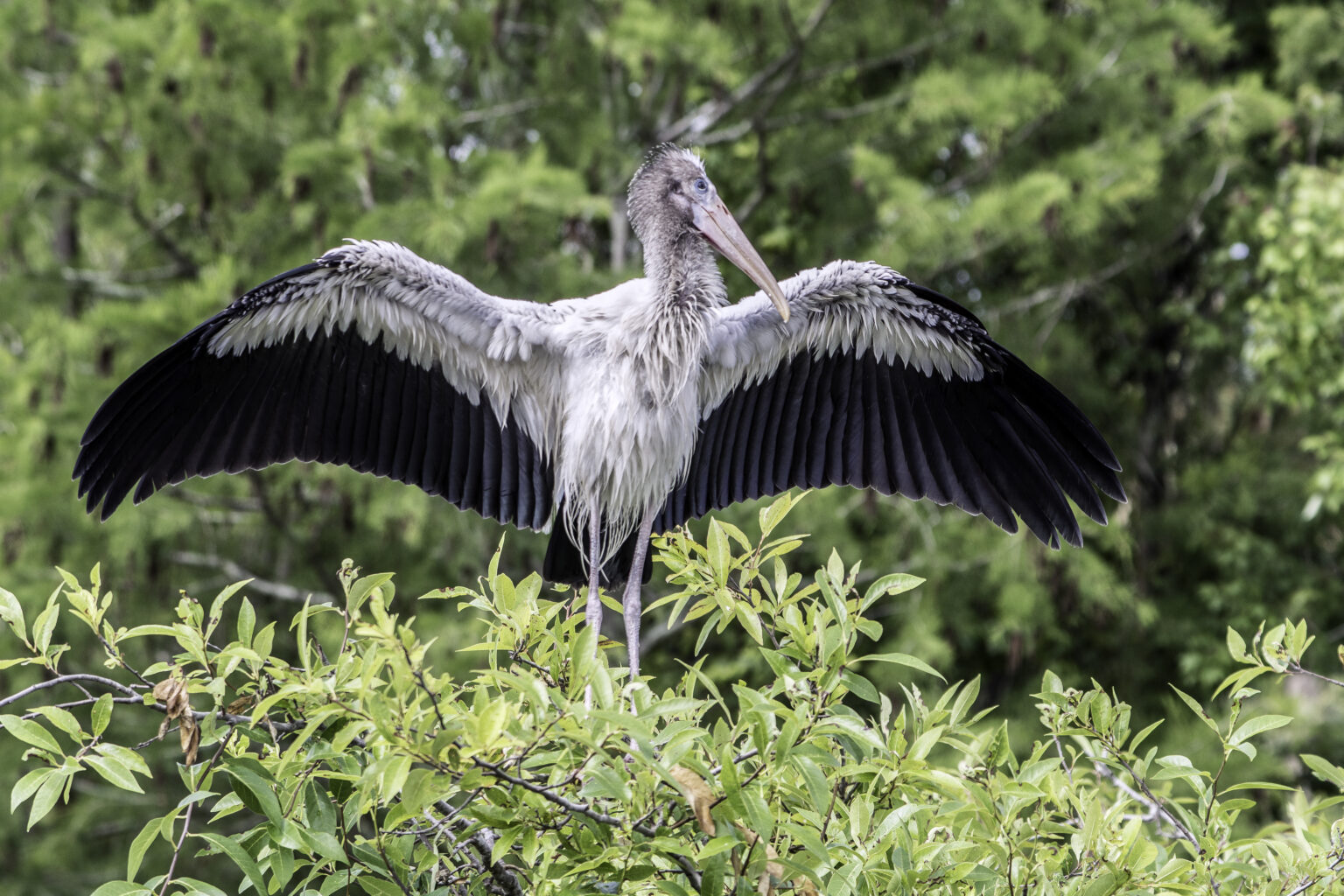
After 42 years, the wood stork—the only stork that breeds in the United States—is no longer listed under the U.S. Endangered Species Act. Experts will monitor the species for 10 years after delisting to ensure its recovery is maintained. The wood stork (Mycteria americana) was first listed in 1984 after its population had plummeted by over 75% since the 1930s. South Florida provided essential breeding and foraging habitat for wood storks at the time, and the loss of wetlands in the region significantly harmed the species. Today, the number of nesting pairs is twice as high as when it was listed—the birds are found in roughly 100 colony sites in Mississippi, Alabama, Florida, Georgia, South Carolina and North Carolina. It resides in coastal salt marshes, flooded rice fields, floodplain forest wetlands and human-created wetlands.
Read more in the U.S. Fish and Wildlife Service press release.