



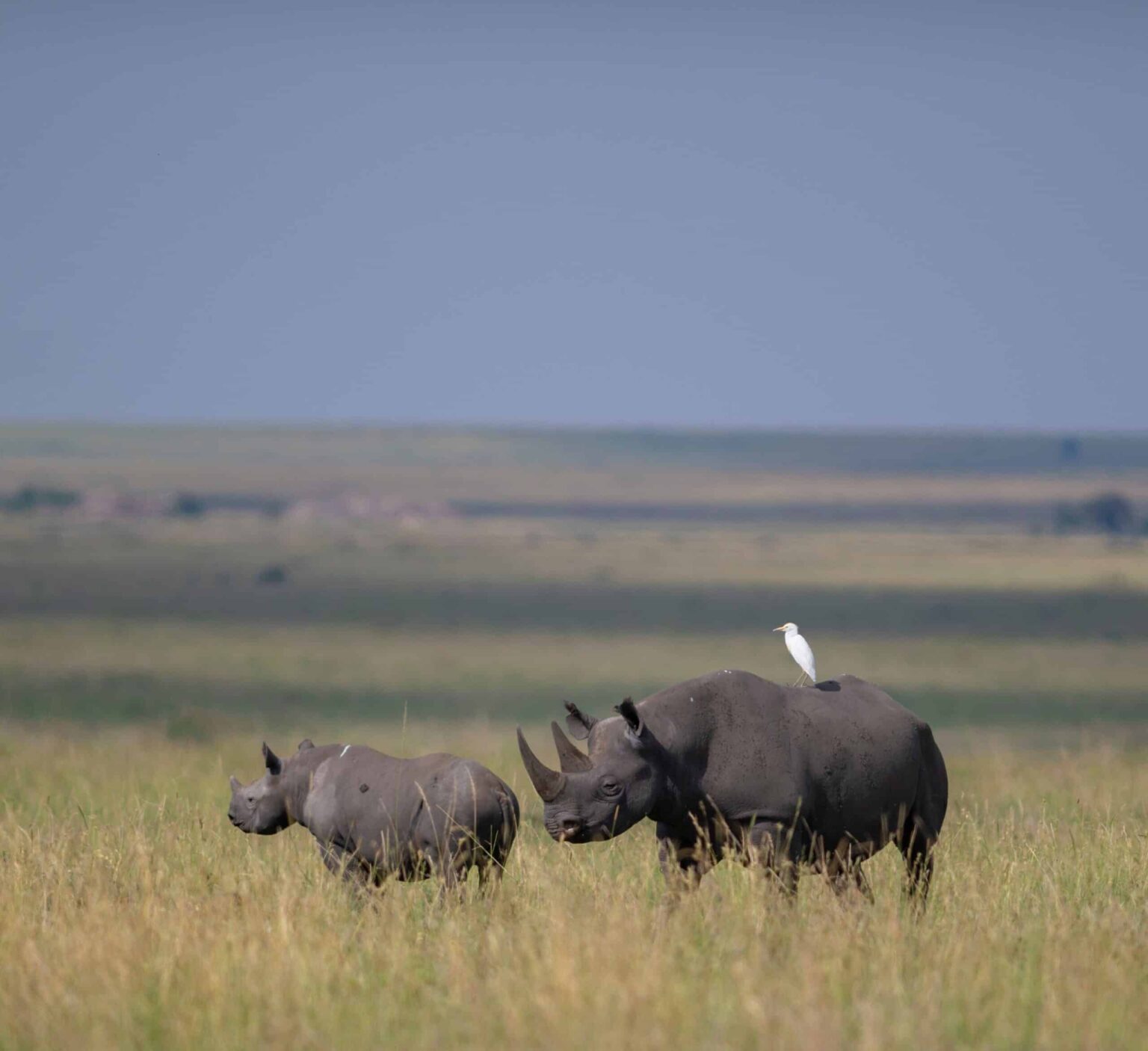
Black rhinos often live protected lives in fenced enclosures that keep them safe from poaching. But research reveals that letting them roam freely might protect them from the inbreeding that plagues the often sparse and fragmented populations. The International Union for Conservation of Nature considers the eastern black rhinoceros (Diceros bicornis michaeli) critically endangered due to poaching for food and parts—especially their ivory horns. To protect these dwindling populations, managers keep many eastern black rhinos behind fenced reserves. Researchers who published their findings recently in the Proceedings of the National Academy of Sciences found that this measure, meant to protect the animals from poaching, may be harming their genetic diversity. The research, conducted in Tanzania, found that allowing them to roam more freely is better for population health and survival than translocating individuals to try to introduce new genetic diversity into small populations. “Translocations can bring in new genetic variants, but they may also introduce hidden genetic risks that build up in captivity,” said Barbara Mable, a professor of evolutionary genetics at the University of Glasgow and the lead author of the study. “Translocations are often very expensive and risky operations,” added Philbert Ngoti, Tanzania’s Rhino Coordinator and co-author of the study. “While they are a useful approach, this research has shown that rhinos do best when they have space to live and move in natural ways.”
Read more at the University of Glasgow.
Article by The Wildlife Society