



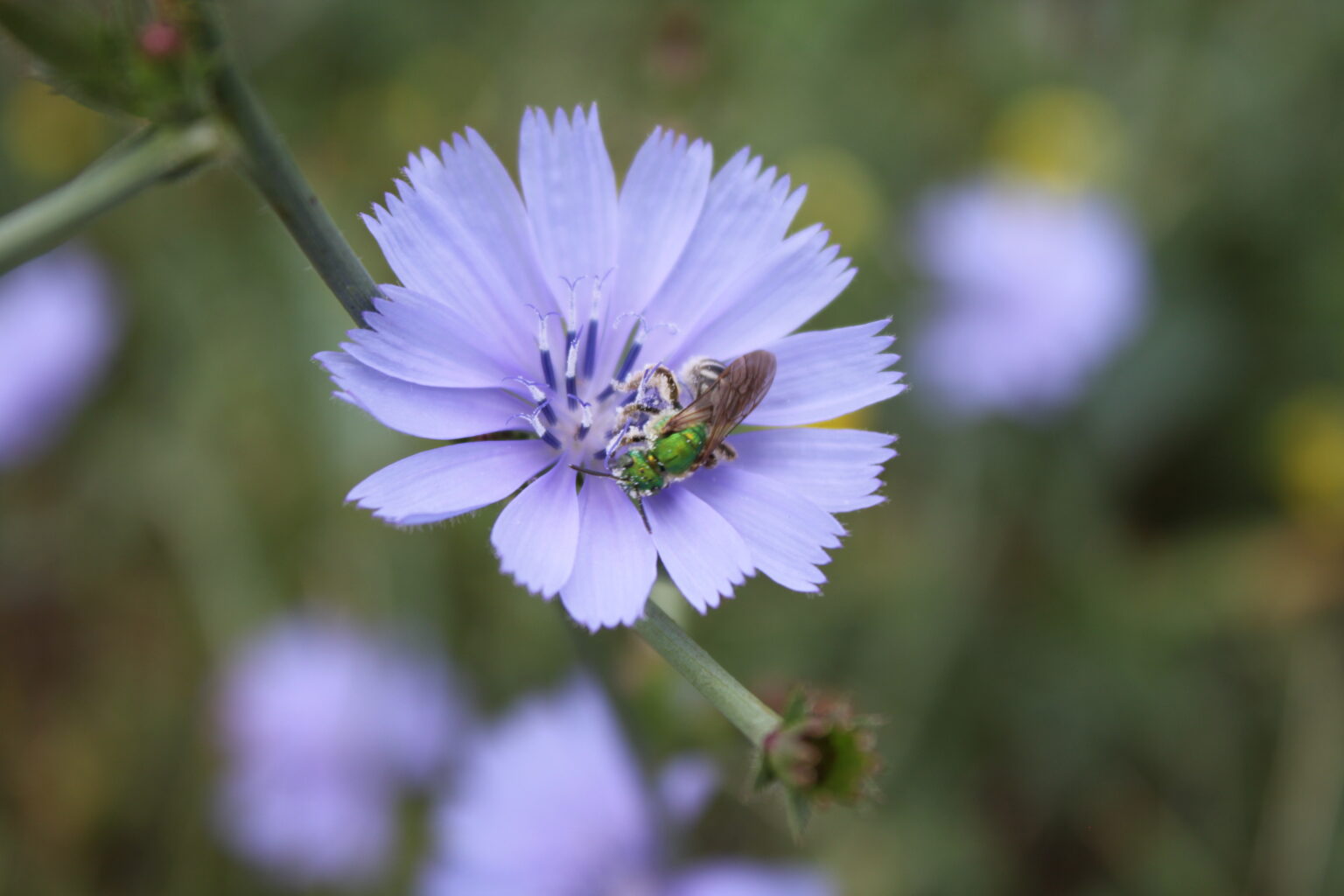
Among littered debris in Cleveland’s vacant lots, small purple and yellow flowers reach toward the sky. In the afternoon sunshine, a researcher hovers a device that, to the casual observer, might look like a shop vacuum over a glittering metallic blue-and-black insect. With a soft whirl, the device, a bee vacuum, sucks a wild bee safely inside its chamber.
Wildlife scientists are paying close attention to these vacant lots, a remnant of the rise and fall of Cleveland’s industrial sector. As industry left, factories closed and residents moved away to seek economic opportunities elsewhere. Once vibrant, populated neighborhoods became abandoned homes that were eventually demolished, transforming once densely built city blocks of Cleveland into a patchwork of vacant lots. These lots have proven to hold important bee habitats in urban areas, supporting over 37% of Ohio’s bee fauna.
“Cleveland, Ohio, has lost over 50% of its human residents and since has experienced a variety of challenges,” said Michelle Pham, a PhD student at The Ohio State University, who processed the data as part of her dissertation. “You’re doing fieldwork within the historical legacy of what has been lost, but also the resilient communities that remain.”
Some think of the lots as neglected spaces due to debris, dirt and at times overgrown appearance, but urban ecologists view them differently. These vacant lots have the potential to be habitats for ground-dwelling bees in a mostly paved landscape. In new research published in Ecological Entomology, Pham and her collaborators explored if vacant lots could be managed to support bee conservation.
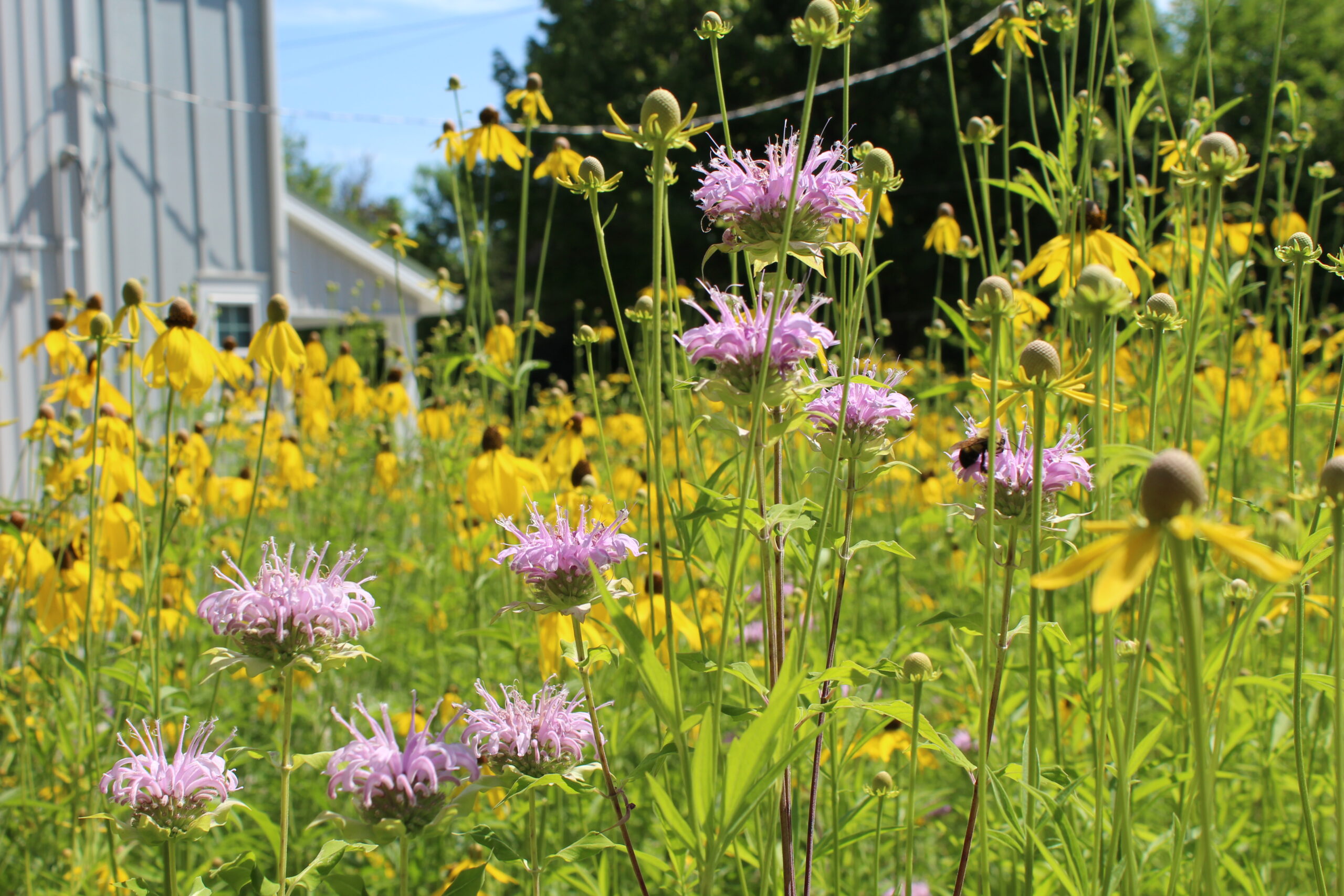
Pham’s PhD adviser Mary Gardiner, a professor of entomology at The Ohio State University, explored this potential management by starting the Cleveland Pocket Prairie Project. The Gardiner Lab collaborated with the Cuyahoga Land Bank, a city-run program that acquires and manages vacant and foreclosed property, to find empty lots that could be leased. Gardiner and her research team then managed 64 vacant lots across eight neighborhoods of Cleveland to see how bees would respond to the planting of native wildflowers when compared to untouched lots and semi-natural greenspace in the Cleveland Metroparks system. The team monitored 27 sites from 2014 until 2019, with 24 lots converted into pocket prairies, a term for the vacant lots planted with native wildflowers. The researchers then sampled the bees by vacuuming them off of flowering vegetation and passively collecting them with bowl traps. Then, they assessed the bee community in the area.
Pham and her collaborators found that pocket prairies hosted more bees and a greater diversity of species than unmanaged vacant lots.
“There’s minimal investment put into these habitats, but they provide a lot of value for insects,” Pham said.
Although the pocket prairies did not support as many species overall as the nearby park system, they buzzed with nearly as many individual bees as the parks. They also found that as the native wildflowers established, the bees fed on them more frequently, highlighting the importance of long-term habitat establishment for urban bee conservation.
“There are actions people can take to sustainably manage vacant land and make cities better for insects and other pollinators,” Pham said, suggesting that new life can arise from the industrial legacy of cities like Cleveland.
Article by Kaylyn Zipp