
“Our ability to perceive quality in nature begins, as in art, with the pretty. It expands through successive stages of the beautiful to values as yet uncaptured by language.”
― Aldo Leopold, A Sand County Almanac and Sketches Here and There
Art has emerged as a prominent theme of The Wildlife Society’s 2026 Annual Conference in Des Moines, Iowa, and with good reason. From 1906 to 1949, the Des Moines Register helped shape the conservation movement through publishing regular contributions from two-time Pulitzer Prize-winning editorial cartoonist Jay N. “Ding” Darling. During that time, Darling also served as a mentor to other prominent conservation artists, like the Iowa-based Maynard Reece, TWS’ first recipient of the Jay N. “Ding” Darling Memorial Award for Wildlife Stewardship Through Art in 2016. In planning for TWS2026, our goal is to honor the enduring legacy of local artists like Darling and Reece while also capturing the vibrancy of art and conservation in TWS today.
For me, that starts with our members. While we can’t all claim to have changed the course of history through our artistic creations, many of our members possess amazing and unique talents that capture a perspective that would otherwise be difficult to describe. This year at TWS2026, we call on you to show your creative side by submitting digital files of artwork in the medium of your choice for display on TWS’ conference website and on posters at the conference. To kick things off, I collaborated with my mom, to paint a portrait of some familiar faces in Iowa.
Tapping into the past, in more ways than one
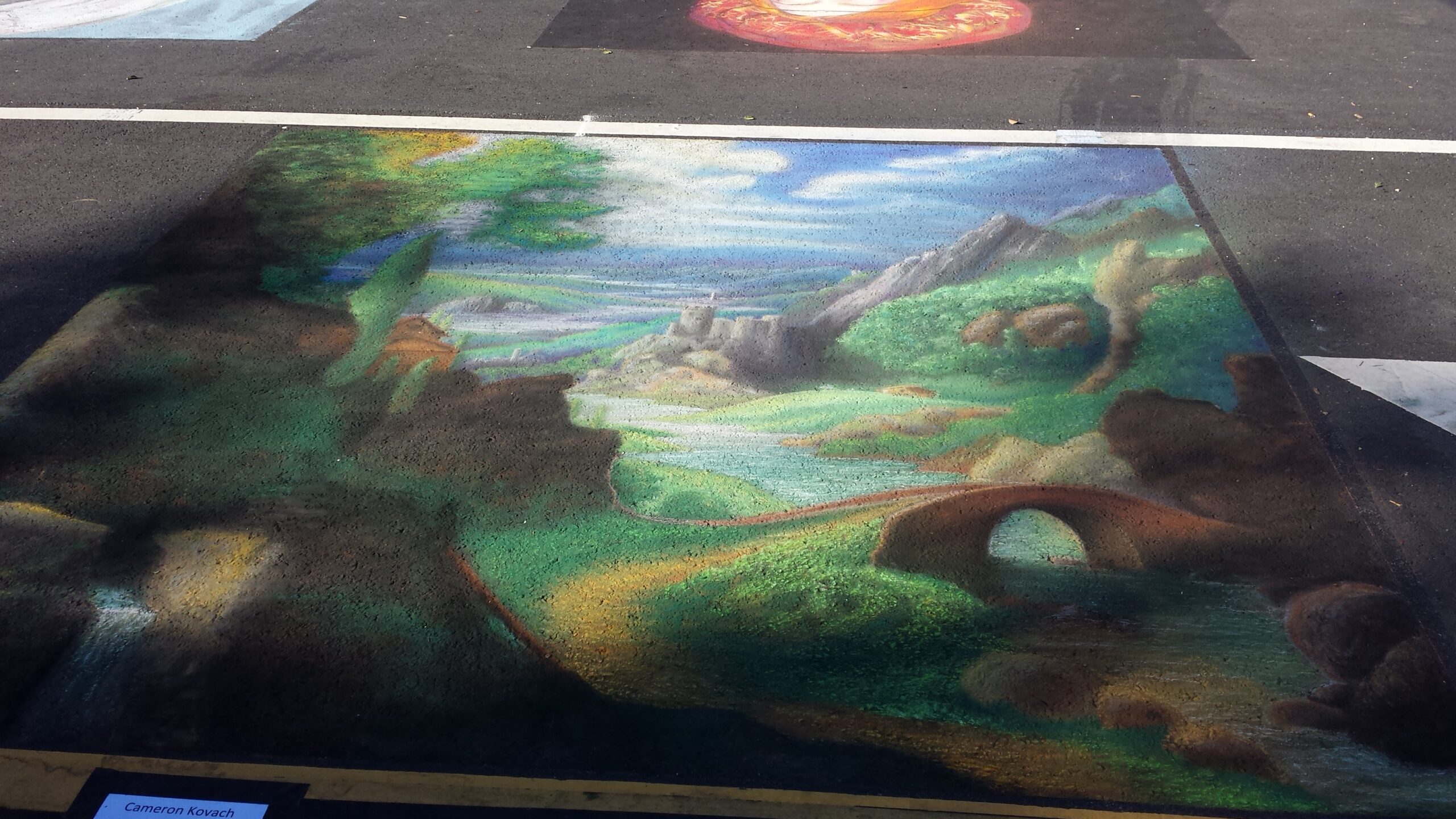
Art has always played a strong role in my life. My great-grandfather, grandmother and mother were all artists, and I wanted to follow in their footsteps. Naturally, I gravitated toward nature and spent countless hours of my youth sketching animals. Eventually that expanded into painting the places where I traveled, lived, studied and worked, drawing style inspiration from French Impressionists, like Claude Monet.
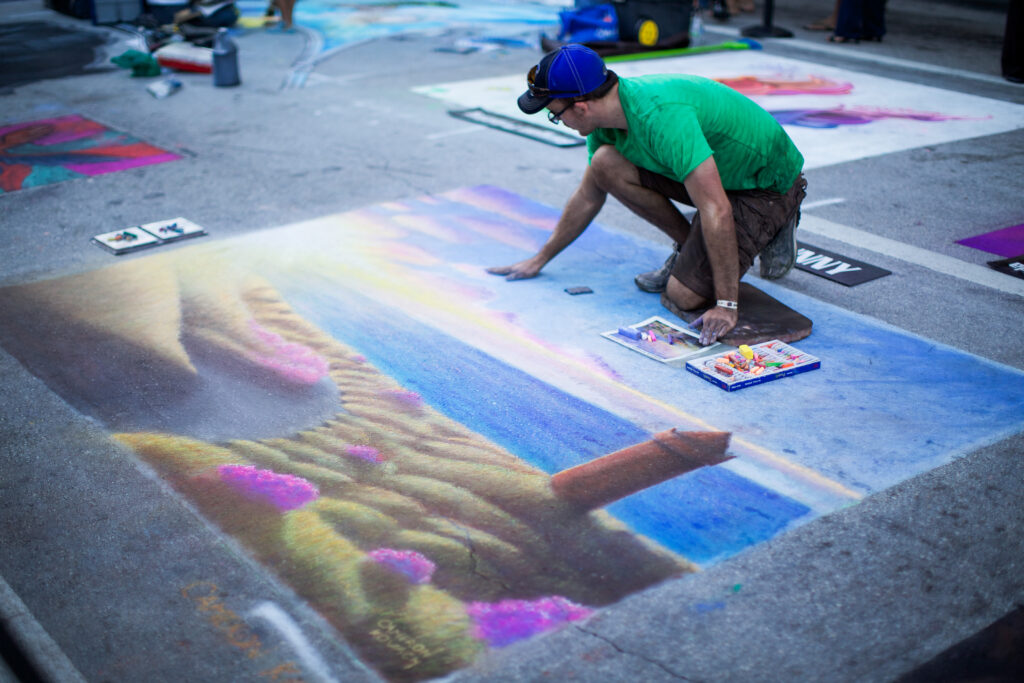
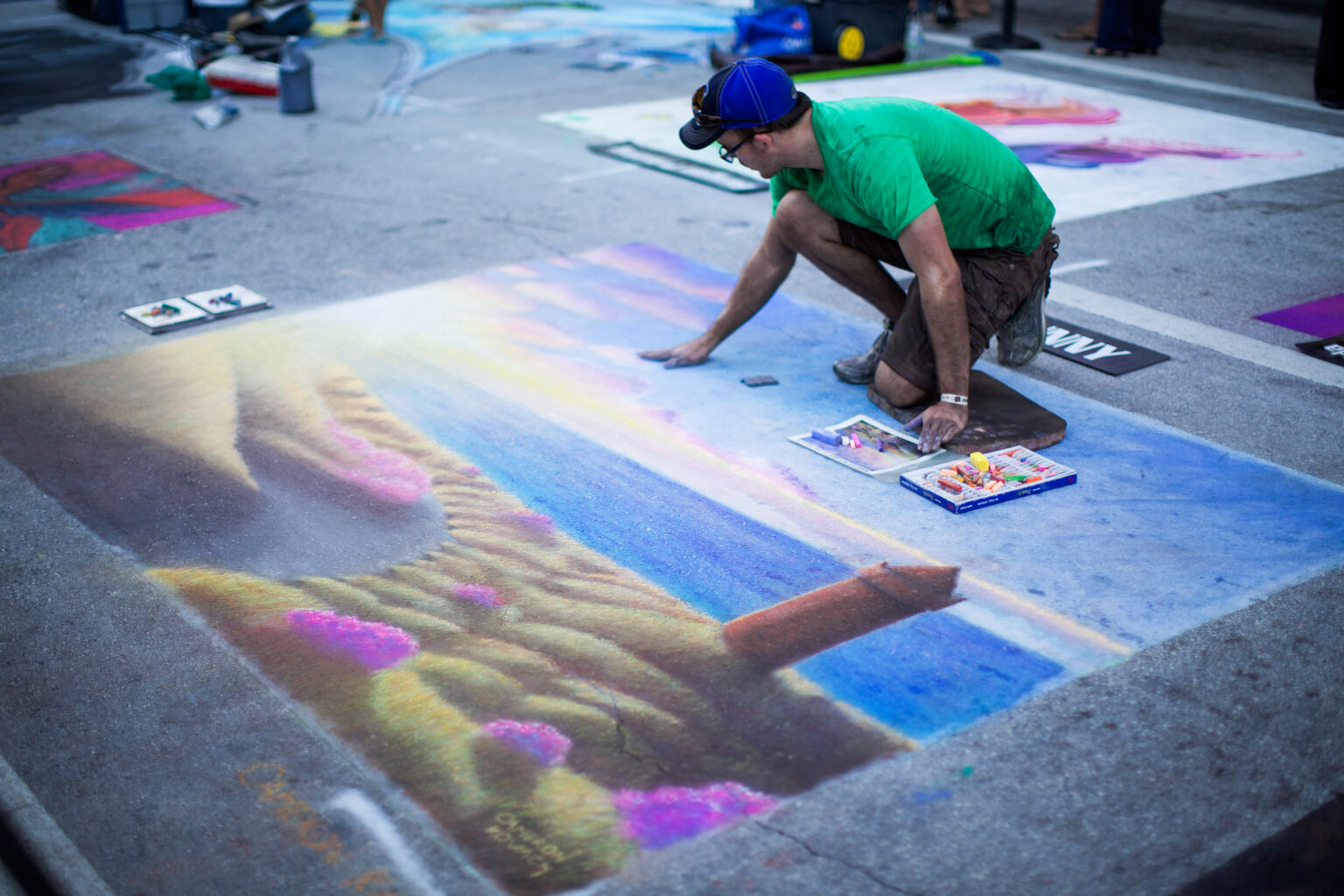
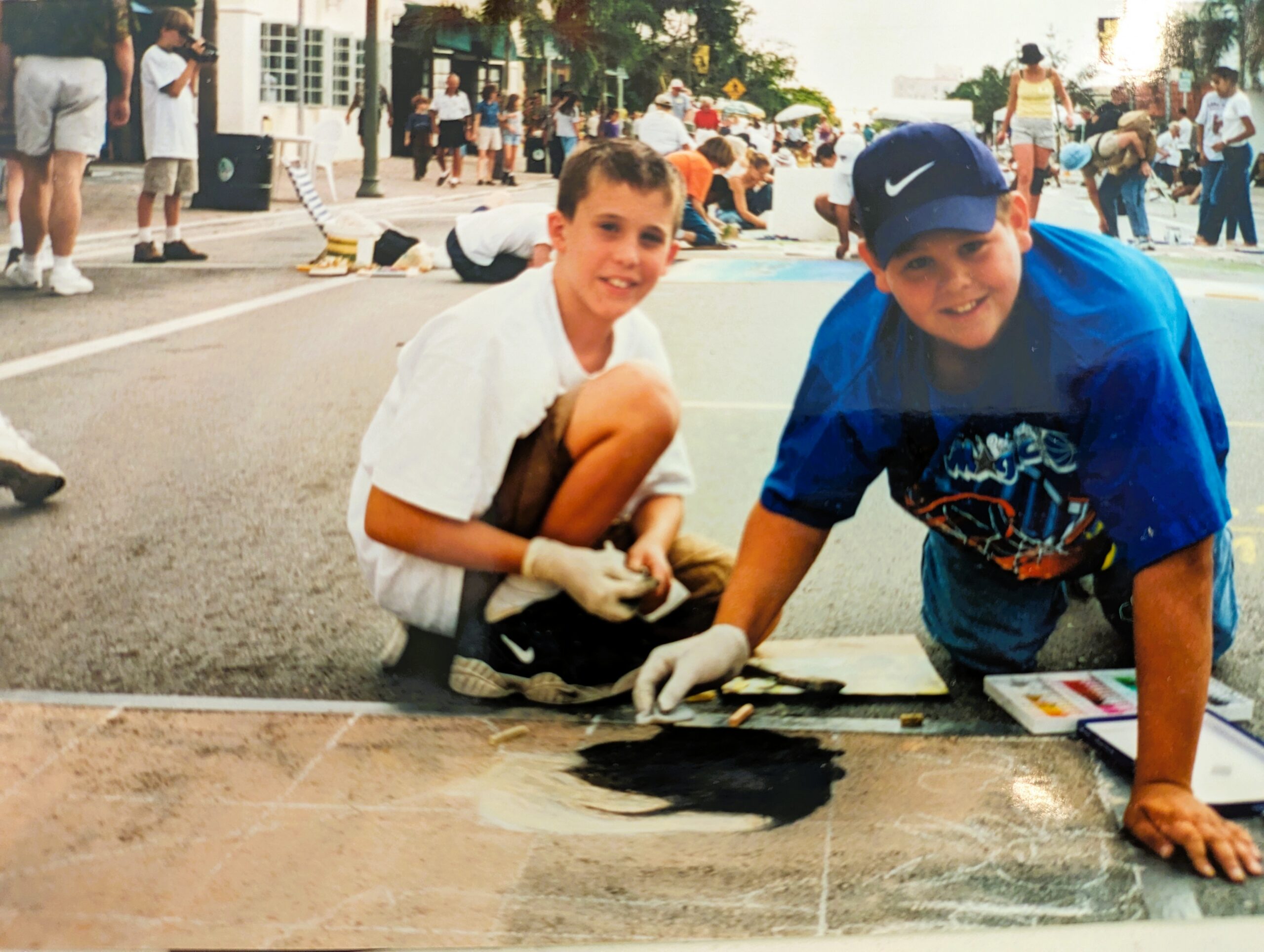
In fourth grade, my art teacher encouraged me to participate in the Lake Worth Street Painting Festival in Florida, where artists created chalk murals directly on the pavement. At the time, this was a novel concept for a fine arts festival. Today, it has grown into one of the largest events of its kind in the country, inspiring similar festivals worldwide. Soon, my mom, Jacklyn Coyne, joined me at the festival, quickly becoming one of the event’s featured artists.
For nearly two decades, the event became our annual ritual—until my first year at TWS in 2016. For years, I lamented that my career had pulled me away from art, but during a TWS conference, a close friend helped me reframe my perspective. She reminded me that it wasn’t my career that distanced me from art, but the fact that my priorities had shifted. In addition to taking on more responsibilities at TWS, I also got married, started a family and was simply juggling more demands than I could reasonably fulfill. This helped me view art and that stage in my life as a beautiful memory as opposed to something missing from my present life.
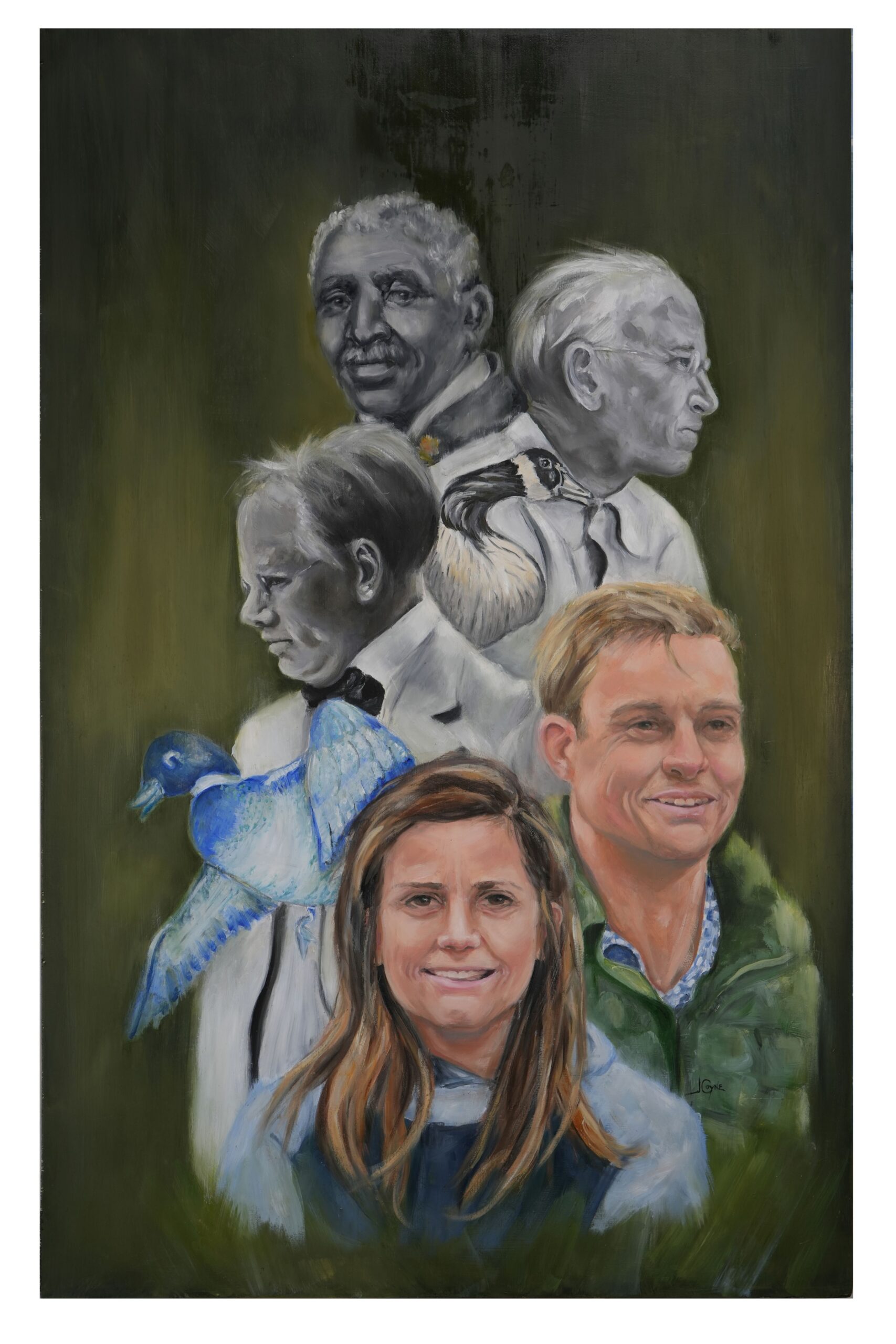
But then TWS2026 came into the picture. Des Moines—with its connection to Darling—provided the perfect backdrop to stretch my artistic muscles. Out of practice—but not out of imagination—I envisioned a portrait of conservation that honored figures both past and present. I then turned to my mother for help in making it a reality. Together, with me leading the design and her bringing it to life, we created the painting, In the minds of a thinking community, for TWS2026. The original artwork, a 23” x 33” oil painting on wood, will be auctioned at the conference to support the future of TWS.
About the painting
“I have purposely presented the land ethic as a product of social evolution because nothing so important as an ethic is ever ‘written.’ Only the most superficial student of history will suppose that Moses ‘wrote’ the Decalogue; it evolved in the minds of a thinking community, and Moses wrote a tentative summary of it for a ‘seminar.” I say tentative because evolution never stops. The evolution of a land ethic is an intellectual as well as an emotional process.”
― Aldo Leopold, A Sand County Almanac
The three black-and-white figures in the background are 20th-century luminaries with deep connections to art, conservation and Iowa—George Washington Carver, J.N. “Ding” Darling and Aldo Leopold. Leopold was born and raised in Burlington, Iowa. Darling spent most of his career in Des Moines, and as a child developed his love for wildlife while exploring the prairies surrounding Sioux City, Iowa. Carver moved to Iowa first to pursue an art degree at a private school and eventually to earn advanced degrees studying soils, fungi and plants at Iowa State College. He later channeled his Iowa experience into a career at Tuskegee University, where he helped poor southern farmers break the cycle of poverty and debt through sustainable agriculture.
Each historical figure is paired with iconic imagery tied to their careers: Carver with a cotton flower, Darling with the first duck stamp, and Leopold with a goose from the cover of “A Sand County Almanac.” Collectively, they played pivotal roles in shaping conservation and the evolution of the land ethic. Carver served as an early modern figure in articulating and promoting a holistic and respectful relationship with the land. Leopold further refined and popularized what he coined as the “land ethic” through his literary work and helped form TWS, serving as its third president. Similarly, Darling helped found the National Wildlife Federation on the same day as TWS, serving as its first chair. Darling was also the first honorary member of TWS and the first recipient of TWS’ Aldo Leopold Memorial Award. They represent our past.
In the foreground, two contemporary figures from Iowa symbolize today’s members. On the right is Adam Janke, the president of the Iowa Chapter. At the center is Kelsey Fleming, immediate past president of the North Central Section. While chosen for their leadership roles within TWS and specifically Iowa, Janke and Fleming are intended to represent all current members and the broader notion that leadership in TWS and the evolution of the land ethic did not end in the 1930s—it continues today
Recognizing progress … and gaps
“To those devoid of imagination a blank place on the map is a useless waste; to others, the most valuable part.”
― Aldo Leopold, A Sand County Almanac and Sketches Here and There
As outlined in our Standing Position Statement on Workforce Diversity, TWS acknowledges a diversity gap while calling for programs and practices that advance efforts to recruit, mentor and retain professionals from a broad spectrum of identities reflective of the overall human population, including individuals from historically underrepresented backgrounds.
Selecting five individuals to represent the full richness of human diversity within TWS and conservation is, of course, impossible. Yet I’m deeply inspired by the fact that this narrow snapshot of contemporary TWS leaders in Iowa captures an element of the progress we have made as a Society. Over the past decade, Women of Wildlife and Out in the Field have emerged as prominent communities within TWS focused on fostering a more inclusive, welcoming culture where diversity of all kinds is embraced.
In the painting, we see both a woman, Fleming, and an LGBTQIA+ wildlifer, Janke, carrying forward the work begun by the iconic figures in the background. This imagery is an homage to the value of our communities and the work of TWS members to create a more welcoming profession.
At the same time, I want to acknowledge that, like the land ethic, our work to create a more diverse profession is an ever-evolving intellectual and emotional process. Earlier, I referred to Carver as a modern figure in the evolution of the land ethic in recognition of the ethic’s ancient foundations. Indigenous communities have long practiced traditions of reciprocity between the land and people and continue to play an active role in championing and evolving our relationship with the earth. Recent years have also seen the rapid growth of communities to support students, low-income members, those with often unseen disabilities, individuals from Spanish-speaking countries and more. Although not directly reflected in this painting, we are all part of the social evolution and thinking community that makes wildlife conservation possible. I hope this painting serves both as a celebration of how far we’ve come and as inspiration for the journey ahead.
Rediscovering the link between art and science
“All the sciences and arts are taught as if they were separate. They are separate only in the classroom. Step out on the campus and they are immediately fused. Land ecology is putting arts and sciences together for the purpose of understanding our environment.”
― Aldo Leopold, “The Role of Wildlife in a Liberal Education”
When I started this design process, my hope was to create something unique to honor our past, lift our present and spotlight an often-overlooked element of wildlife conservation, the people who make it happen. I am grateful for the contributions of our members to this noble profession and wanted to pay tribute to you—the heart of TWS. I never expected this journey to turn into a personal one back to my roots or to realize that art and science are not mutually exclusive. They can and should exist in the same space.
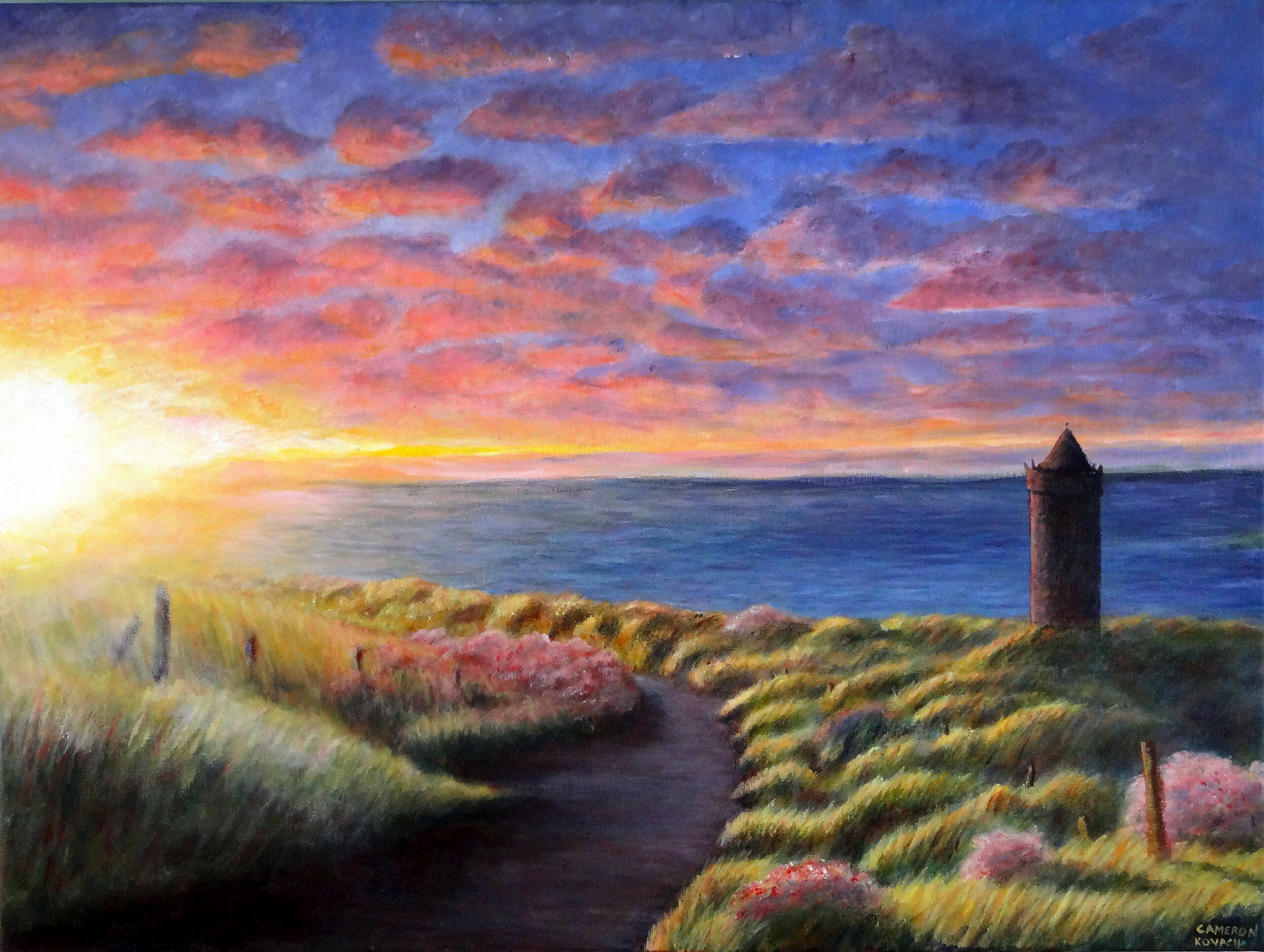
By bringing art to the forefront of this year’s conference, I hope you too are inspired to explore your own artistic expression. Art and science have always been intertwined. Before modern technology, drawings and paintings were the only way to record wildlife behavior and habitats, serving as a crucial scientific tool while inspiring public appreciation that later helped fuel the environmental movement.
Even today, as technology makes recording complex ecological data easier than ever, art remains a grounded form of expression that brings emotion and human connection to our work. Studies also increasingly show that art helps students and biologists understand scientific concepts more holistically, improving retention and deepening appreciation for life’s complexity.
TWS2026 Challenge
This year, we invite you to channel your inner artist. Share your wildlife-inspired creations with us, and we’ll showcase them on our website. Selected works may even appear at the conference on posters, slides, signage, stickers, postcards and more.
We want to bring back the art of conservation by celebrating the creativity of our members. This is not a competition, and all skill levels are welcome—so pick up a brush, pencil, camera, microphone or your medium of choice and have fun! We look forward to seeing what you create.
Submit high resolution images, recordings, or files of your art before August 31, 2026 here.
Read more about the historical figures featured in this article and other influential voices from Iowa (like John Lacey and Paul Errington) here.
Read more about Maynard Reece here.
Submitted artwork will appear on our conference website here.
Article by Cameron J. Kovach