






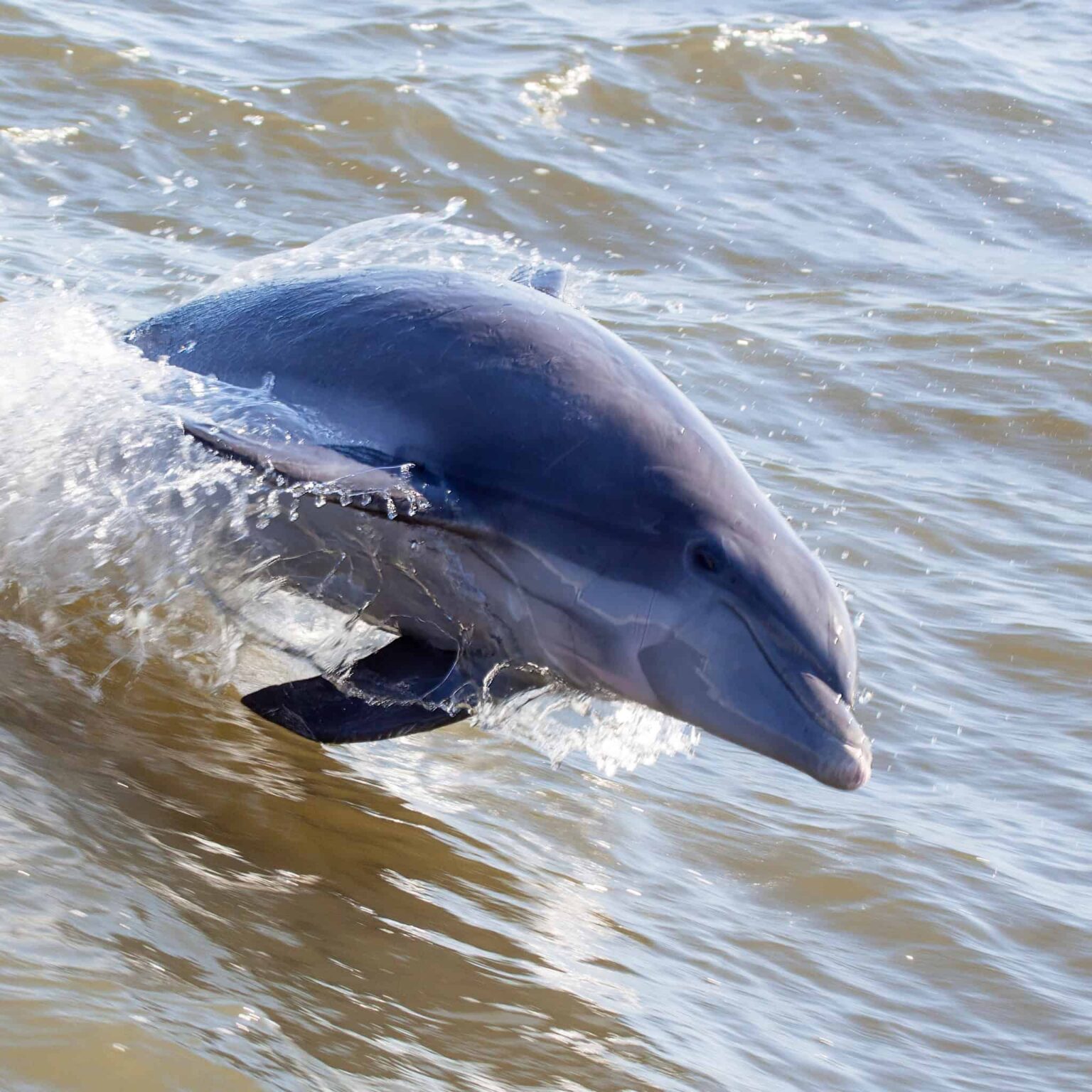
Through a decade long study, researchers found microplastics in every stranded bottlenose dolphin tested, including newborns, suggesting the marine mammals are exposed to these pollutants throughout their whole lives and even before birth.
Microplastic pollution in marine ecosystems is an escalating environmental concern. Researchers with the National Oceanic and Atmospheric Administration’s Coastal Marine Mammal Assessments Program are studying microplastic ingestion in Tamanend’s bottlenose dolphins (Tursiops erebennus), a wild population of about 300 dolphins living in the Charleston, South Carolina estuary, to better understand pollution exposure across the population. From 2015 to 2024, scientists collected gastrointestinal tract samples from 47 stranded dolphins and analyzed them for microplastics. They found microplastics in every dolphin examined—even newborns—demonstrating the consistent and widespread nature of this contaminant. Newborn dolphins had surprising levels of microplastics—one calf had them in its milk-filled stomach, and another in its first poop. These results indicate exposure begins before birth through the womb, and continues in lactation.
In adult dolphins, diet may play a role in their exposure to microplastics. Several individuals that had been feeding on river fish and had high levels of microplastics. These findings highlight the urgent need to address plastic pollution in coastal ecosystems to protect both marine wildlife and the health of the environments they depend on.
Read more at the National Centers for Coastal Ocean Science.
Article by The Wildlife Society