
Government cuts to wildlife management programs and funding sources could harm threatened and endangered species in the U.S. and elsewhere well into the future.
Conservation of species like the black-footed ferret, grizzly bear and cactus ferruginous pygmy-owl are just some species that may suffer under a lack of, or reduction in, wildlife management efforts at the federal level.
“The recovery of those [species] doesn’t happen overnight,” said TWS member Ed Bangs, a retired wildlife manager who worked on a wildlife refuge in Alaska before leading the recovery program for gray wolves (Canis lupus) in the Rocky Mountains at the U.S. Fish and Wildlife Service. “Endangered species programs involve all branches of the federal government.”
Meanwhile, changes to federal legislation like the U.S. Endangered Species Act (ESA) and the National Environmental Policy Act (NEPA) under the current administration could add hurdles to species conservation and recovery.
The loss of long-term work
Bangs is especially concerned about the best science being used in environmental impact statements (EIS). Under the National Environmental Policy Act (NEPA), the federal government requires facts showing the potential effects of certain actions on threatened and endangered species.
But Bangs fears that a lack of funding and personnel available to work on these statements would cause a decline in the quality of the science that drives EISs.
Bangs has had lots of experience with environmental impact statements while working on a plan to deal with ESA-listed gray wolves. It took years and a million dollars to create a plan for gray wolves that would hold up against court challenges. It also involved coordination with states, Tribes, landowners, nongovernmental organizations and other stakeholders. But if these complicated processes are overly simplified due to a lack of staff or funding, the government won’t be as effective in creating EISs that will withstand scientific and legal scrutiny.
“It’s easy to just throw something together that isn’t going to stick and then just blame somebody else,” he said.
If the planning that goes into EIS or endangered species conservation doesn’t happen, this could mean that government agencies like the U.S. Fish and Wildlife Service (USFWS) are going to waste time and money by losing lawsuits for not adequately planning or protecting species.
“Meanwhile, in this dysfunction, your [species recovery] program just kind of languishes,” he said.
In addition, a rule change that the Trump administration proposed in April would change the definition of “harm” under the U.S. Endangered Species Act to be specific to the organisms themselves, not the habitat they rely on. This subtle change in language will greatly diminish the scope of protection that species receive, as it will be easier to alter critical habitat.
Species-specific losses
Other impacts of a lack of wildlife personnel may be more immediately obvious. Any loss of capacity at the U.S. Geological Survey’s Cooperative Research Units (CRU) and science centers could pull away the organizational structure of monitoring carnivores like grizzly bears (Ursus arctos horribilis), for example.
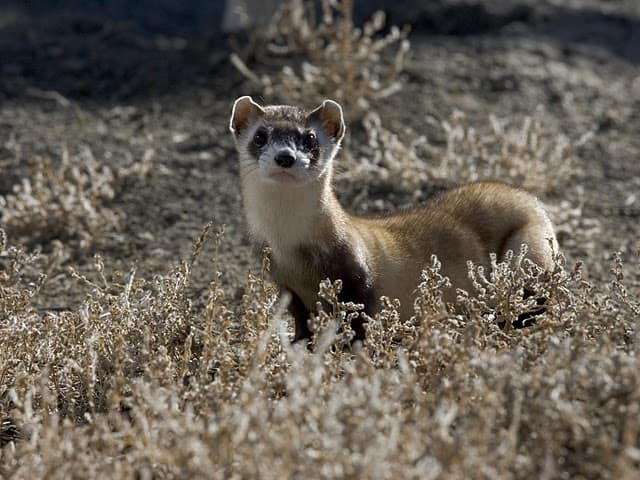
Meanwhile, layoffs and funding cuts are likely to impact listed species that require a lot of on-the-ground work, like black-footed ferrets (Mustela nigripes). Initial reports stated that at least one worker at the National Black-footed Ferret Conservation Center had been laid off in February, and more could be at risk. This center is responsible for coordinating reintroduction efforts as well as managing sarcoptic plague in black-tailed prairie dogs (Cynomys ludovicianus), one of the main prey species of the federally endangered ferrets.
Lost collaborations
Usually, the conservation of endangered species requires cooperation between federal agencies, state agencies, Tribal governments and others. “Partnerships work better than lone wolf stuff,” Bangs said.
TWS member Neal Wilkins, is CEO and president of the East Foundation, which overseas private ranches focused on land stewardship, cattle-raising and wildlife conservation. He said that while working on conservation of the federally endangered ocelot (Leopardus pardalis), building relationships with federal agencies was critical, especially since so much of the ocelot’s U.S. distribution sits on private land like the area managed by the East Foundation.
“I’m concerned about losing that momentum as we lose people within the U.S. Fish and Wildlife Service that built that collaboration over the last decade,” he said.
The good news is that ocelots may be in a better position to weather some of these changes than other listed species, due in part to the efforts of the East Foundation and other nonfederal stakeholders. “It’s unlike any other endangered species I’ve worked with,” Wilkins said.
But he worries about other species that don’t have such a unique management situation—especially species like the cactus ferruginous pygmy-owl (Glaucidium brasilianum cactorum) found in Arizona and Texas, just recently listed as threatened under the ESA. While these owls are also found on East Foundation property, there may be delays in acting on protection measures or doing anything beyond getting survey permits due to challenges in engaging with new leadership. “That said, it seems that there are high-quality USFWS staff moving into new leadership positions, so private lands partnership opportunities might simply be delayed while a new leadership structure is established,” Wilkins said.
Theoretical work on pause?
Research that aims to improve regulatory decisions for endangered species may also be on the chopping block.
TWS member Darcy Doran-Myers, a PhD student at the University of Florida, is studying whether experts can make good judgment calls when informing listing decisions.
Scientific data are not always available on the ecological needs of each individual species proposed for either uplisting or delisting. In these cases, decision makers sometimes rely on the expert opinion of scientists well-versed on these species to fill these data gaps.
They answer questions such as: what are the breeding, feeding or other habitat requirements of a given species? What is the average abundance, survival rate, and reproductive rate of the species? What effect might future conditions, like land use change or climate change, have on the species?
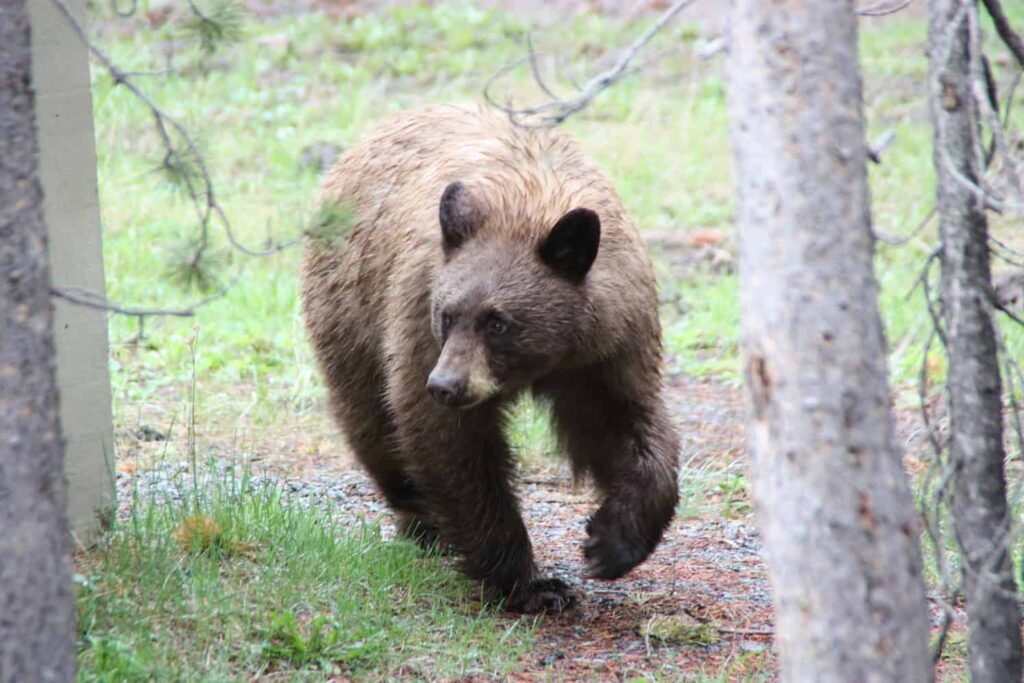
Doran-Myers works with a range-wide dataset on black bears (Ursus americanus)—an unlisted species—to find out whether expert opinion really can fill those data gaps and where it might fall short. This research, she said, will ultimately help improve the use of expert opinion when making listing decisions. Her research is funded through a U.S. Fish and Wildlife Service grant. “If my work was lost, that means we would lose insights into one of the most common tools we use to fill in data gaps in ecology,” Doran-Myers said.
“I feel angry because it’s something that I think is so important.” Doran-Myers said. “It’s so much broader than just me.”
Article by Joshua Rapp Learn