


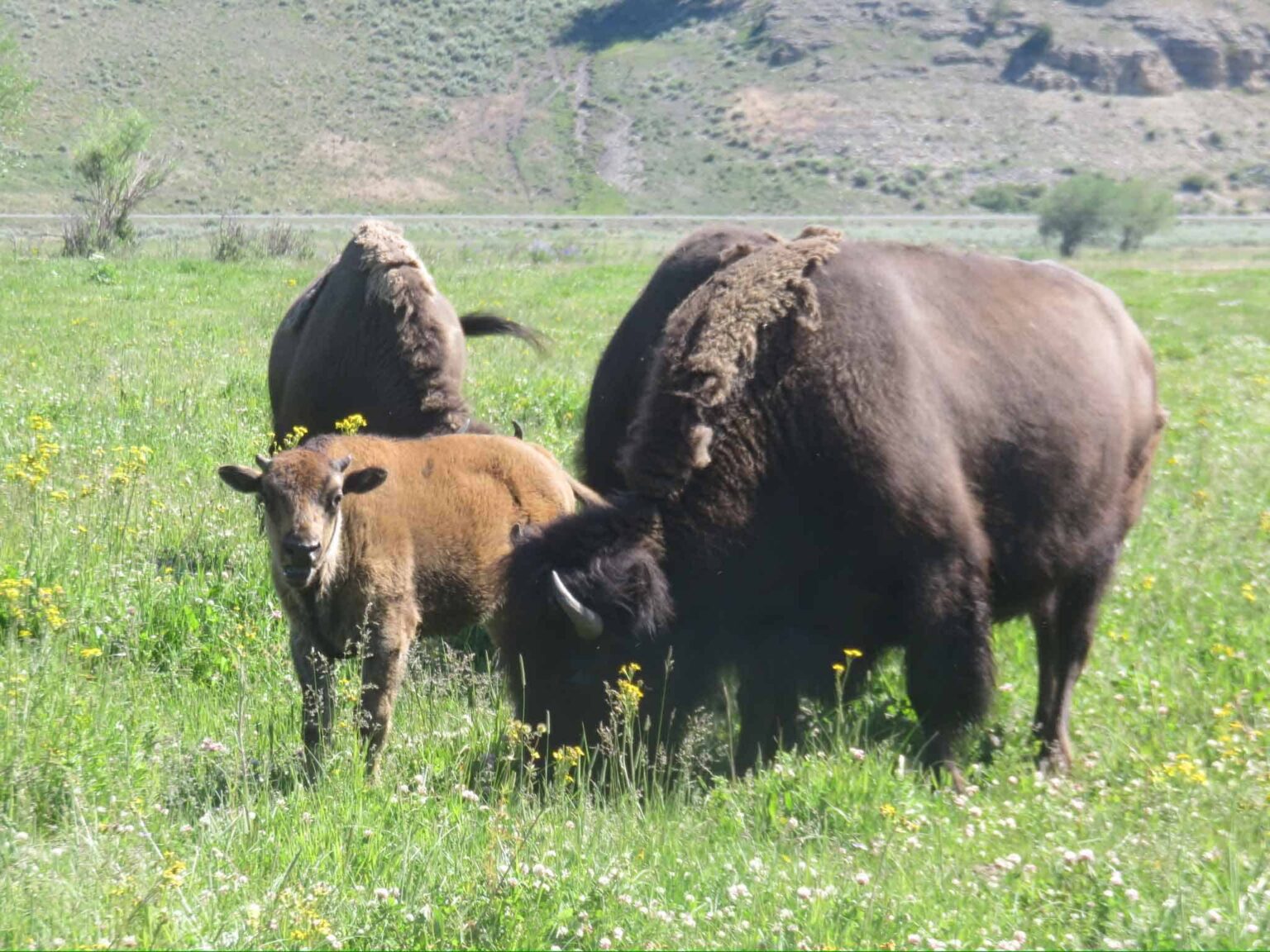
Plant-eating animals in Yellowstone National Park have more diverse diets than scientists previously thought. When characterizing a given animal’s diet, doing so based off their species alone won’t give a complete picture.
“We found that the sharpest divisions in what animals were eating were not strictly based on species, season or space—but a combination of those things,” said Tyler Kartzinel, coauthor of a new study and associate professor at Brown University. In an ecosystem as dynamic as Yellowstone, understanding what migratory herbivores are eating—and when—is key so that park scientists can sustainably manage the landscape.
Kartzinel and his team collaborated with scientists at Yellowstone National Park to track five species of herbivores: pronghorn (Antilocarpa americana), bighorn sheep (Ovis canadensis), mule deer (Odocoileus hemiondus), elk (Cervus canadensis) and bison (Bison bison). They collected fecal samples for DNA analysis to determine what the herbivores had been eating.
At Brown University’s Genomic Opportunities Lab, Kartzinel specializes in connecting conservationists and managers—who he describes as the “muddy boots scientists” that are in the field protecting species—with his lab’s services in modern genomic technology and data science. “We can answer questions about animal behavior, nutrition and health in ways we couldn’t 20 or even five years ago,” he said.
Foundational questions
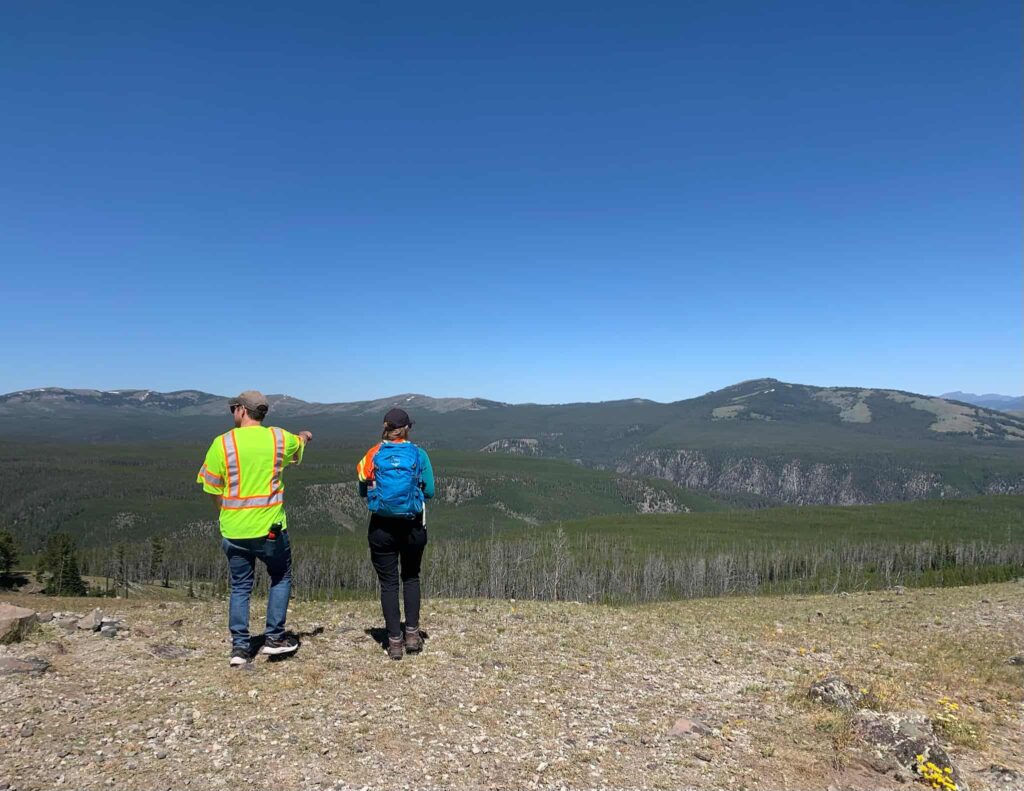
Kartzinel first came to work with park scientists from Yellowstone in 2018. Together, their main goal was to understand the drivers of migration patterns of wildlife across the Greater Yellowstone Ecosystem—particularly, why they tend to gather in lowland areas during the winter and disperse uphill to higher elevations during the summer.
To answer these questions while engaging students in research, Kartzinel designed a class for undergraduates where he taught students how to use cutting-edge genomic tools through analyzing bison feces from Yellowstone.
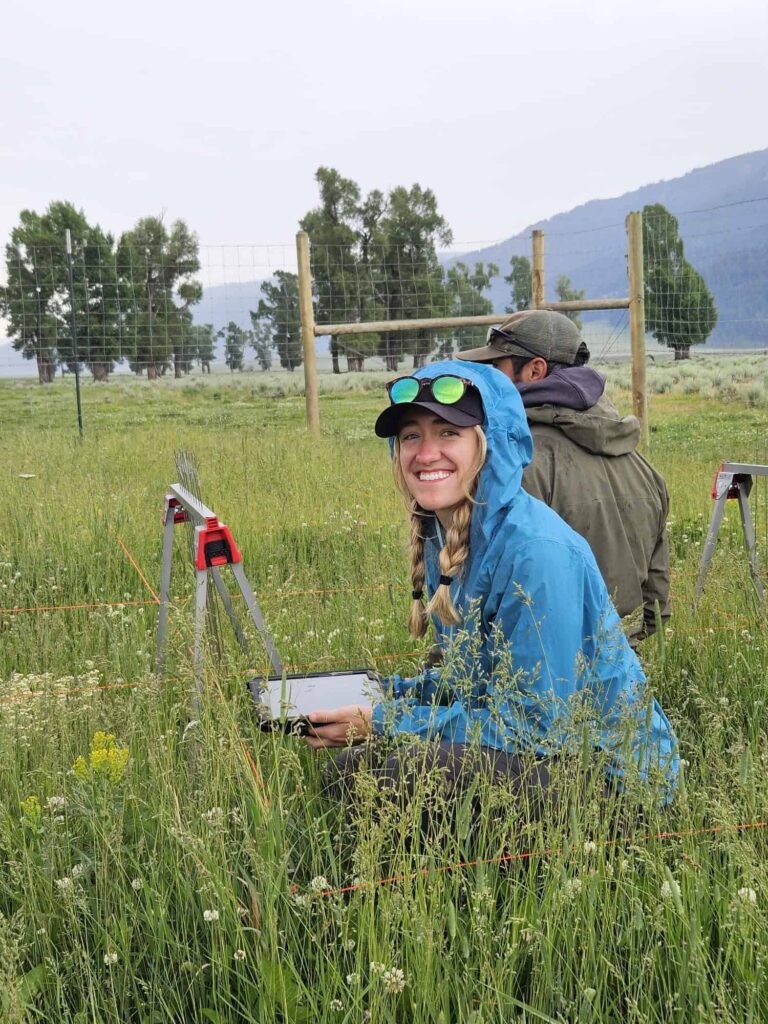
But before the eager undergraduates could start the analysis, the samples needed to make it from the digestive tract of herbivores all the way to Providence, Rhode Island for analysis. Yellowstone biologists and citizen scientists tracked the study’s focal animals using GPS collars and watched them from a spotting scope, waiting for them to defecate. Then, one spotter would keep an eye on the pile of dung while another would venture out into the field. Once the herd had passed, the spotter would play a game of hot and cold via walkie-talkie until they found the correct pile of waste. The scientists and volunteers continued this work throughout the migratory cycle for each of the four other ungulate species, collecting samples and shipping them to Kartzinel’s team.
Over the course of the semester, the students prepared the samples, sequenced the DNA and compiled their findings into a report for the park service. Multiple papers have been published from the collaboration so far, including students as coauthors.
Since that initial collaboration, the project has grown in scope to learn more about the foraging decisions of herbivores—and the consequences of these decisions—across Yellowstone.
Rethinking herbivory
Before working in Yellowstone, Kartzinel worked in East Africa, where herbivores tend to stick to certain dietary niches—for example, zebras (Equus quagga) eat mostly grasses, while giraffes (Giraffa reticulata) eat trees and shrubs. Yellowstone is a different story, where herbivores’ dietary niches are much less consistently defined.
When Kartzinel and his colleagues began to share initial results, they got one main question in response: Why aren’t these animals eating as much grass as people say they’re eating?
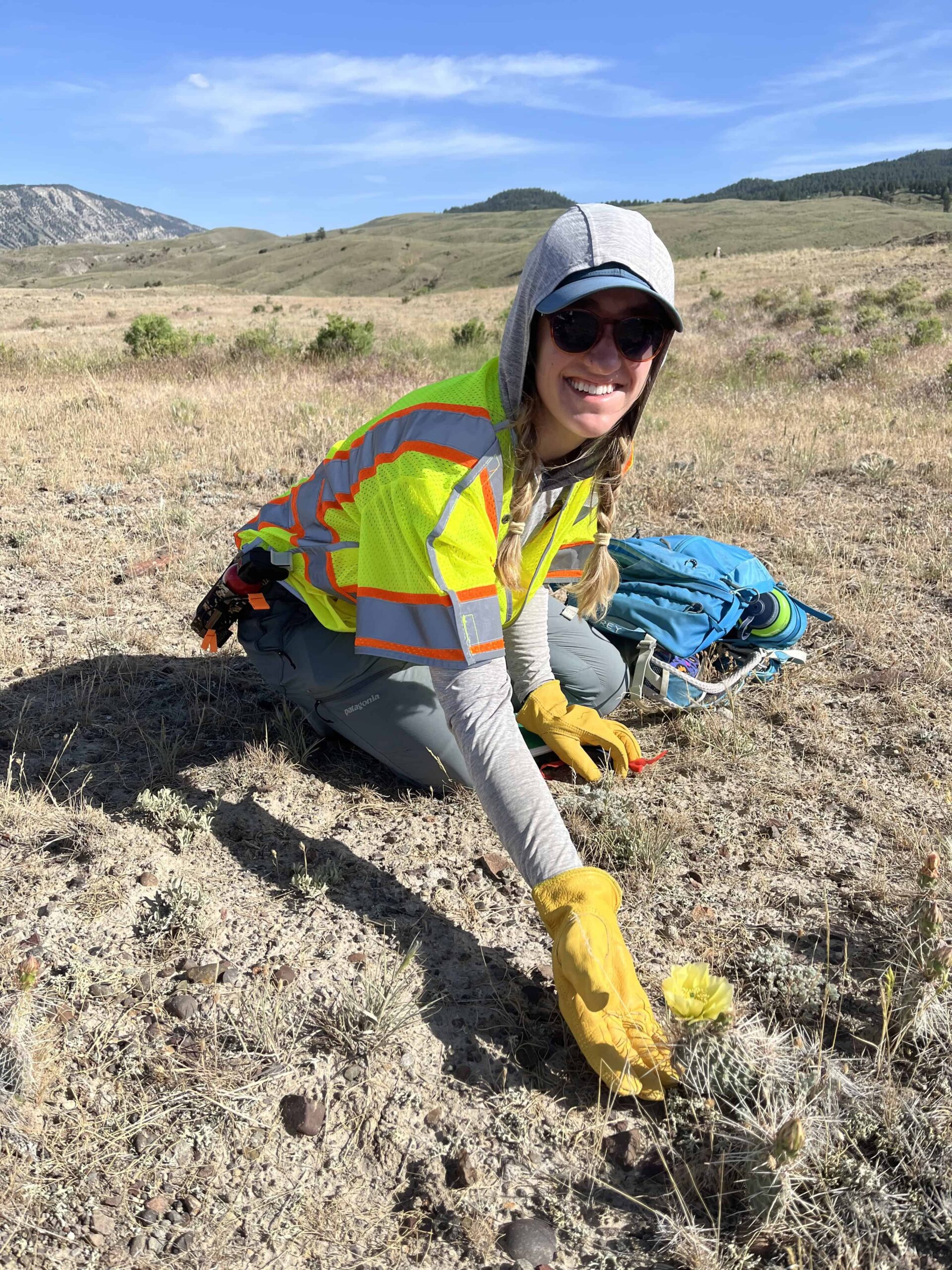
Kartzinel spent the next few years going back over his work. Meanwhile, he recruited doctoral candidate Hannah Hoff, who had a background in botany and data science, to continue to document more of the 1,400 plant species present in the park.
The inspiration for this most recent study came to Hoff when she took a seminar on the history of how scientists study human genetics and evolution. She learned about the discredited field of race science, where so-called “race scientists” attempted to find genetic evidence to support the idea that there were biological differences between the human races. These pseudoscientific findings were used by eugenicists and white supremacists to justify policies that reinforced racial hierarchies.
For the seminar, she read “The Apportionment of Human Diversity,” Richard Lewontin’s 1972 landmark paper that threw into question what people thought they knew about human categories. “Lewontin showed that there was much more genetic variation within the continental groups of people than between them, and that basically blew race science out of the water and became the foundation of our modern understanding of human evolutionary history,” Kartzinel said.
While studying herbivore niches and human race science is “a totally different sphere” with separate social, cultural and ethical considerations, the base of their assumptions was similar. “Race scientists” were looking for statistical evidence to justify the lines they had drawn around human populations. “For us, that was the “ah-ha” moment: we recognized that wildlife biologists are probably making the same kind of mistake when looking for statistical evidence to “prove” animals eat what we think they eat.”
The team took a page out of Lewontin’s playbook. “That was Hannah’s stroke of genius: let’s throw away our preconceived notions, embrace the artificial intelligence revolution and use a simple model to figure out what really makes these diets different,” Kartzinel said. They titled their resulting paper “The apportionment of dietary diversity in wildlife” as a nod to Lewontin’s work and the inspiration for their analysis. “It’s an important part of this story: the history of the way that science grapples with—and then overcomes—ideas that are stuck because of bias.”
Turning back to the landscape
Their analyses supported previous findings that the diets of herbivores were fairly variable and that the distinctions between species’ diets in Yellowstone were smaller than scientists previously thought. Factors that were more important than species in predicting an animal’s diet included time of year and where the animal was in its migratory cycle.
“In certain places at certain times, species have some common dietary characteristics—but they’re not all identical,” he said. “If some species are foraging under similar circumstances, their diets can look the same.” For example, many species of animals take advantage of summer wildflowers while foraging in the upland meadows. In the winter, animals tend to turn towards coniferous trees and shrubs.
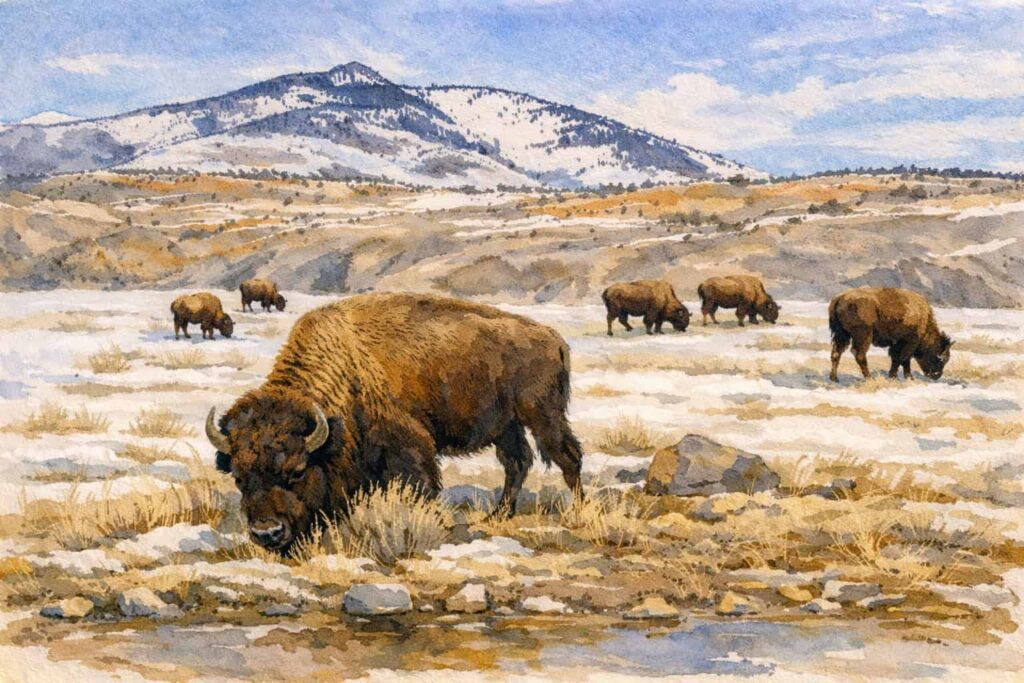
There were some species distinctions, though. In the winter, bison tended to continue to forage for grasses over other types of vegetation, while smaller animals like mule deer and pronghorn tended to eat evergreen trees.
“Species-based differences are a reasonable starting point. But we also owe it to ourselves to not make the assumption that species is always the most important grouping—because sometimes it may not be,” Kartzinel said. “If we forget that classification is a process that needs interrogation, we’re vulnerable to making mistakes.”
Kartzinel said that having a better understanding of what animals are eating—and at what time of year—can help park scientists make more informed decisions about the sustainability of the ecosystem. Their research began by answering the basic question of what’s fueling herbivore migration. “Now that we have a list of plants that these animals are eating throughout their migration, we’re thinking about what other assumptions we might be making that might mislead us for the next 10 or 50 years of management decisions,” Kartzinel said.
“This goes way beyond Yellowstone. This is relevant to anywhere where people think they know what animals are eating but might not really.”
Article by Olivia Milloway