
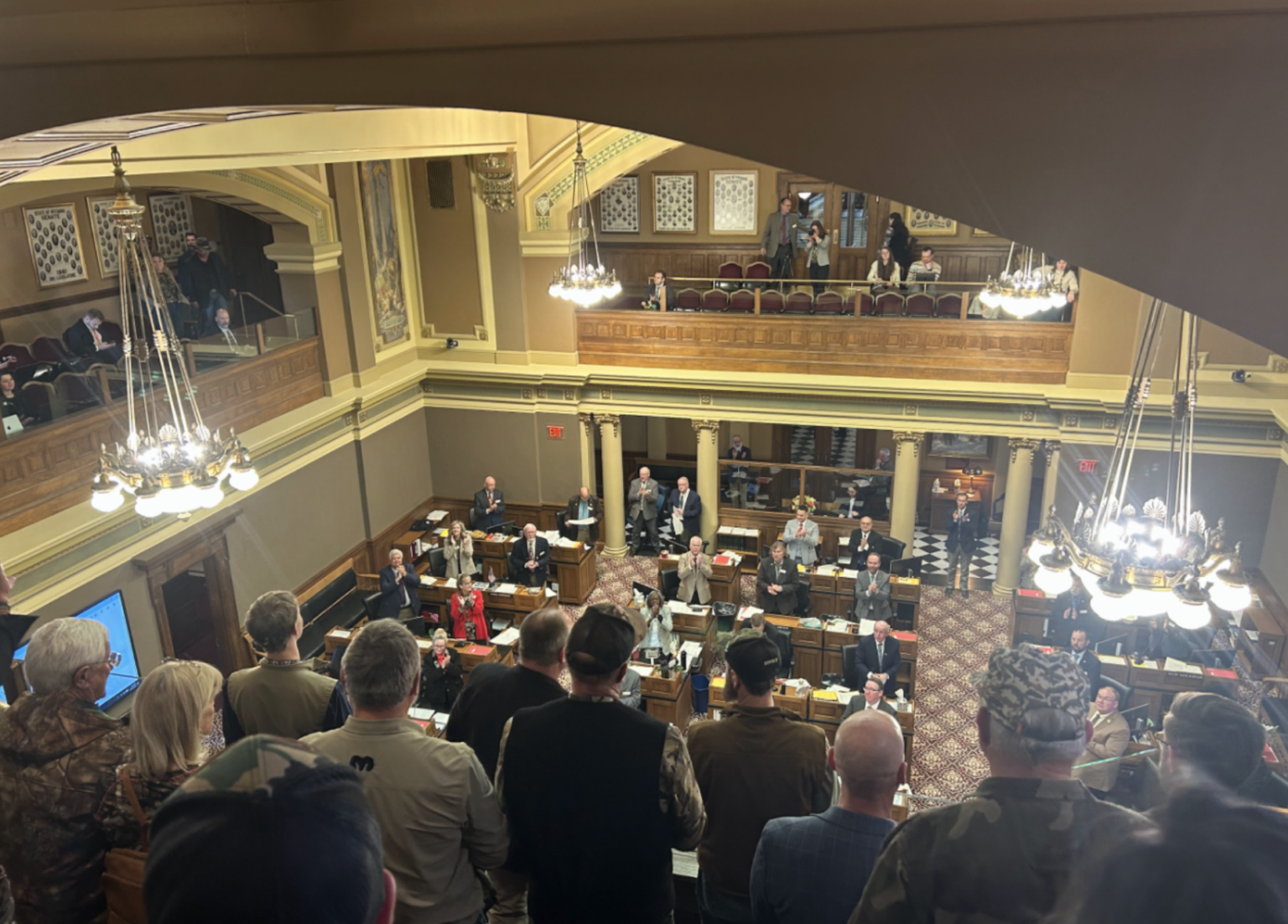
Wildlife students in Wyoming got an on-the-ground lesson in how bills are passed as policymakers, wildlife professionals and the public weighed in on a bill moving through the state legislature.
“The idea of law, policy and government has always been a little scary and foreign to me, and I’ve always kind of shied away from it,” said Sophie Nowak, an undergraduate at the University of Wyoming, who feels more empowered to engage and participate with policy after the event.
The “Camo at the Capitol” event is an annual event that brings together wildlife biologists, students and other conservation partners, who all wear camouflage, to learn about policy engagement and then engage with it at the Capitol building in Cheyenne, Wyoming.
Sophie Nowak is part of a group of students from the student chapter of The Wildlife Society at the University of Wyoming that attended the Camo at the Capitol event. The students joined other members of the Wyoming Chapter of The Wildlife Society and partners like the American Fisheries Society to learn how to engage with policy and policymakers.
Nowak and other attendees participated in a mock legislative exercise, drafting and debating their own conservation proposals while weighing competing priorities and arguing their positions. After learning about how a bill is introduced and voted upon, the students and participants took the knowledge to the Capitol building. At first, Nowak was intimidated by the straight, solemn faces in the crowds.
“But I realized it’s much deeper than it seems on the surface—these are people’s livelihoods,” Nowak said. “These are real people, and it’s not just a piece of paper with words on it in the Capitol. We’re all affected by it, and we’re all here sharing about it.”
In Wyoming, the landscape is a checkerboard of public and private land. Some public land is surrounded by private land, making it harder to access. To access these public parcels, users cross the corners of private land, causing disputes between landowners and public land users on rights and trespassing. Nowak and the rest of the members wore camouflage to draw attention as they watched the Wyoming Travel, Recreation, Wildlife, and Cultural Resources Committee discuss the “corner crossing clarification” bill, which looked to address these disputes.
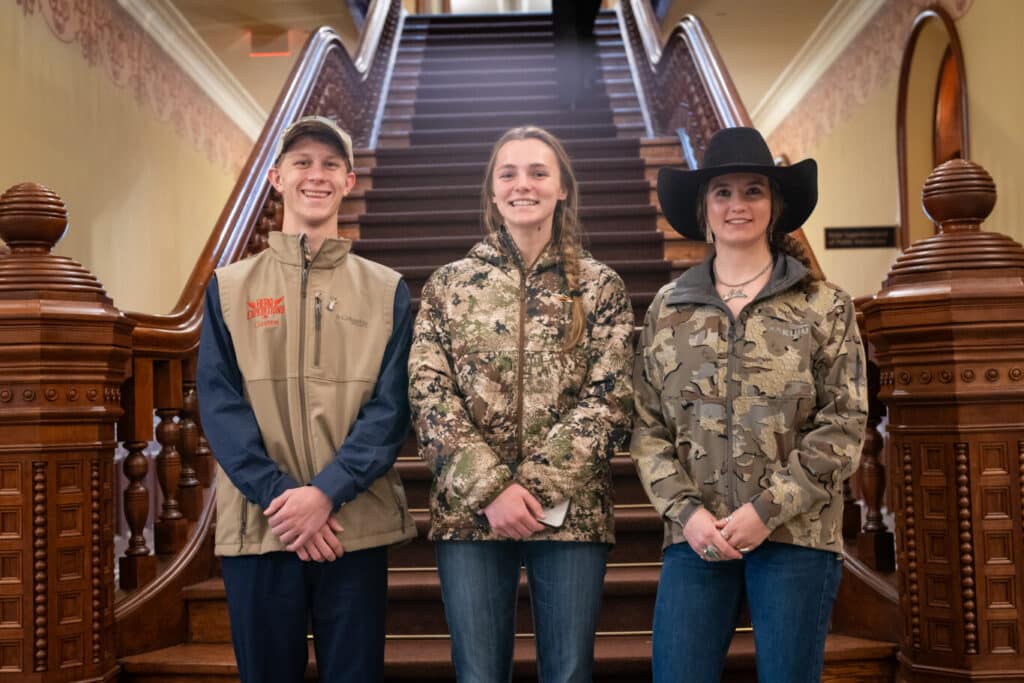
The bill aimed to clarify if people can legally “corner cross” between public lands where parcels meet, if they do not touch or damage adjacent private property. Nowak listened as citizens spoke for and against the solution, aiming to resolve disputes over access to blocked public lands in the state. Hearing the stories and seeing how attentively lawmakers listened left a strong impression on Nowak. It highlighted to her the human stakes behind land access debates and how dialogue shapes policy.
“I’m more likely to reach out now or at least try and get my voice heard because so many people did it there and it wasn’t as big and scary as it seems. We’re not so removed,” Nowak said.
The bill that Nowak and the other students witnessed was ultimately voted down, but the experience gave them a clearer understanding of how policy is shaped in the legislative process.
Article by Kaylyn Zipp