


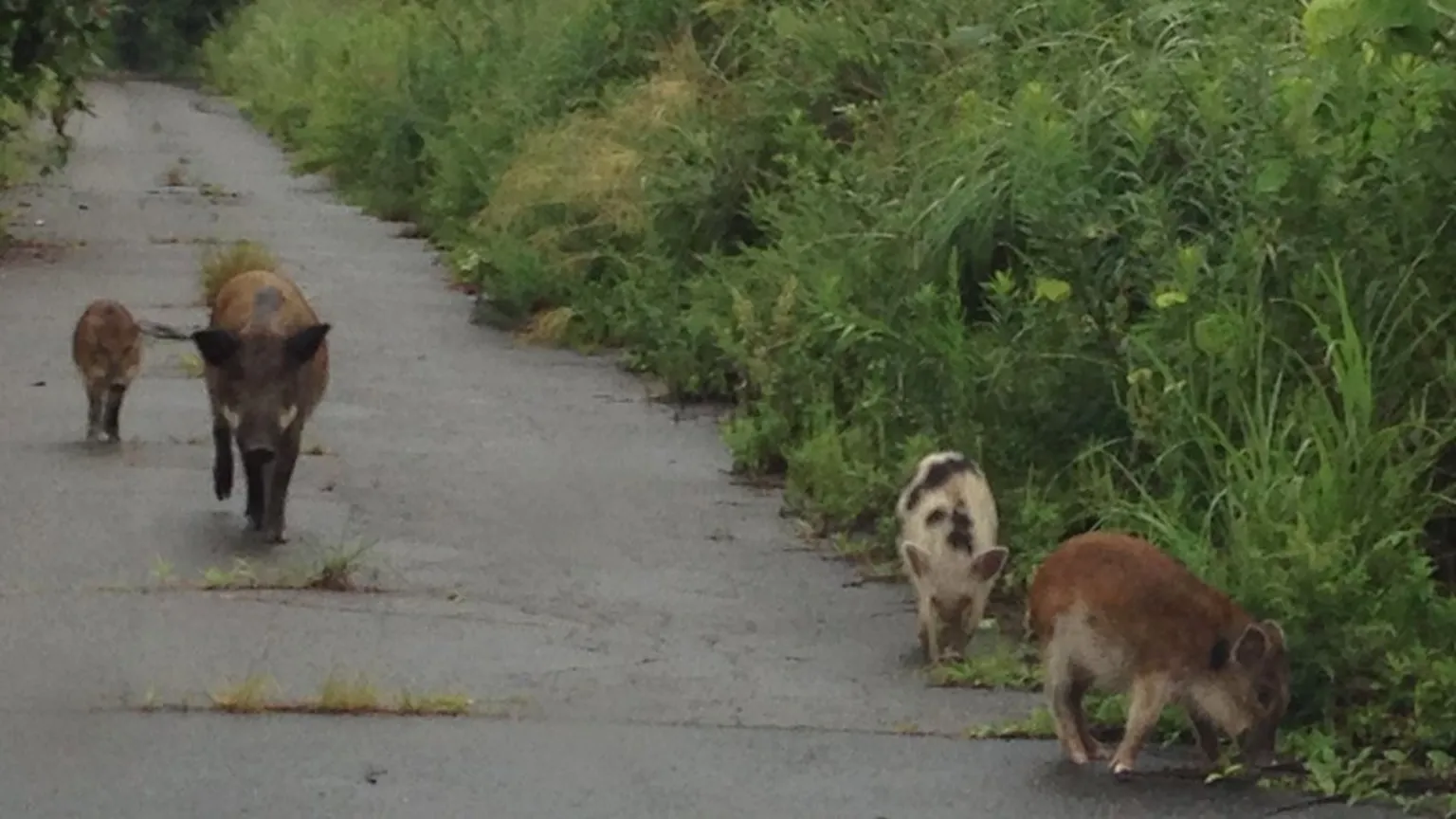
Since 2011’s earthquake, tsunami and ensuing nuclear disaster in Fukushima, wild boars and escaped domestic pigs are breeding like rabbits. Humans abandoned what Japan calls a “difficult-to-return” zone, the area around the former Fukushima Daiichi Nuclear Power Plant. Escaped domestic pigs (Sus scrofa domesticus) bred with wild boar (S. scrofa leucomystax). In a recent paper published in the Journal of Forest Research, investigators from Hirosaki University analyzed the hybridization between the two species at the site of the accident. They compared DNA from 191 wild boars and 10 domestic pigs from samples collected between 2015 and 2018. The researchers analyzed both nuclear DNA, which is inherited from both parents, and mitochondrial DNA, which is inherited just from the mother. Using population genetics models, they found that most of the pigs were at least five generations removed from the initial hybridization between the species. They also found that maternal genes found in the mitochondria from the domestic pigs sped up the generation time of the hybrid offspring. While wild boars only produce about once a year, domestic pigs have a fast, year-round reproductive cycle. This reproduction led to a surprising amount of genetic dilution of the wild boar genes. “The findings can be applied to wildlife management and damage control strategies for invasive species,” said Shingo Kaneko, a wildlife geneticist at Hirosaki University, in an interview with the institution. “By understanding that maternal swine lineages accelerate generation turnover, authorities can better predict population explosion risks.”