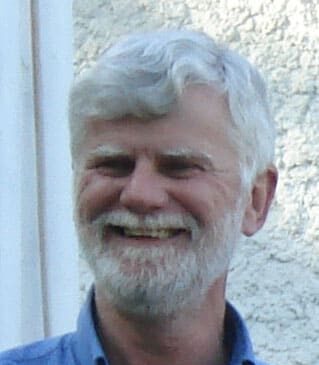
Art Rodgers grew up in Toronto, Ontario, Canada. He attended the University of Toronto and York University where he obtained his Ph.D. in Biology. Over the years, his research has taken him from small to large mammals. He began by comparing food and habitat use, as well as population biology, of two species of Arctic lemmings in Igloolik, Nunavut, during his Ph.D. research. Not only did he learn a great deal about the biology of the two species, he learned a great deal about Inuit culture and the challenges faced by Indigenous peoples in Canada—an experience he wishes all non-Indigenous people could have. He then moved on to a postdoctoral position in the Institute for Animal Resource Ecology at the University of British Columbia, where he worked with Dr. Charles Krebs and Dr. Tony Sinclair on the snowshoe hare project at Kluane Lake in the southwest Yukon. He remained at UBC as a sessional lecturer in the Department of Zoology for several years. Art moved back to Ontario where he is currently a Senior Research Scientist with the Ontario Ministry of Natural Resources and Forestry. His research in Ontario began with an assessment of the effects and effectiveness of forest management guidelines on moose populations. In more recent times, his research has centered on the effects of natural and anthropogenic disturbance, coupled with climate change, on boreal caribou populations.
Art has served at all levels of The Wildlife Society. He was the fourth President of the Canadian Section and represented the Section for two terms on TWS Council, where he served on numerous Council committees. He was then a member of the Canadian Section Board of Directors following incorporation of the Section as a not-for-profit organization in 2019. Art is a Charter member and a Past-President of the Ontario Chapter.
Throughout his professional career, Art has sought to get his science into policy and legislation. He is a strong believer in diversity, equity, and inclusion in the wildlife profession and is motivated by people from all walks of life who are inspired by the beauty of the natural landscapes that surround us, curiosity about the wonders of the natural world, and a desire to conserve our wildlife heritage.