



In the past 31 years of studying bats, Robert Schorr has never seen one of the flying mammals roosting on the side of a cliff. But he knew they were there.
For many years bat researchers spent much of their time looking for bats in caves, mines, tree hollows or buildings—most biologists didn’t rope in to scale the side of clifftops to peer in every nook and cranny along the way.
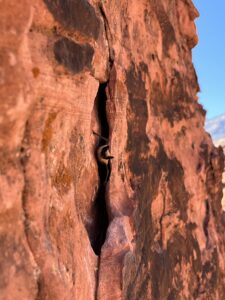
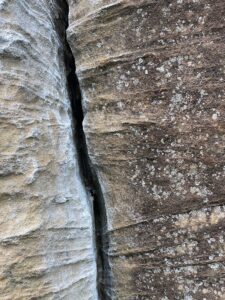
But about 10 years ago, Schorr, a conservation biologist at Colorado State University, began to realize bat researchers may have developed a blind spot for their research subjects—there could be bats roosting in the cracks common on some cliffsides. “We just had no idea to what degree,” he said.
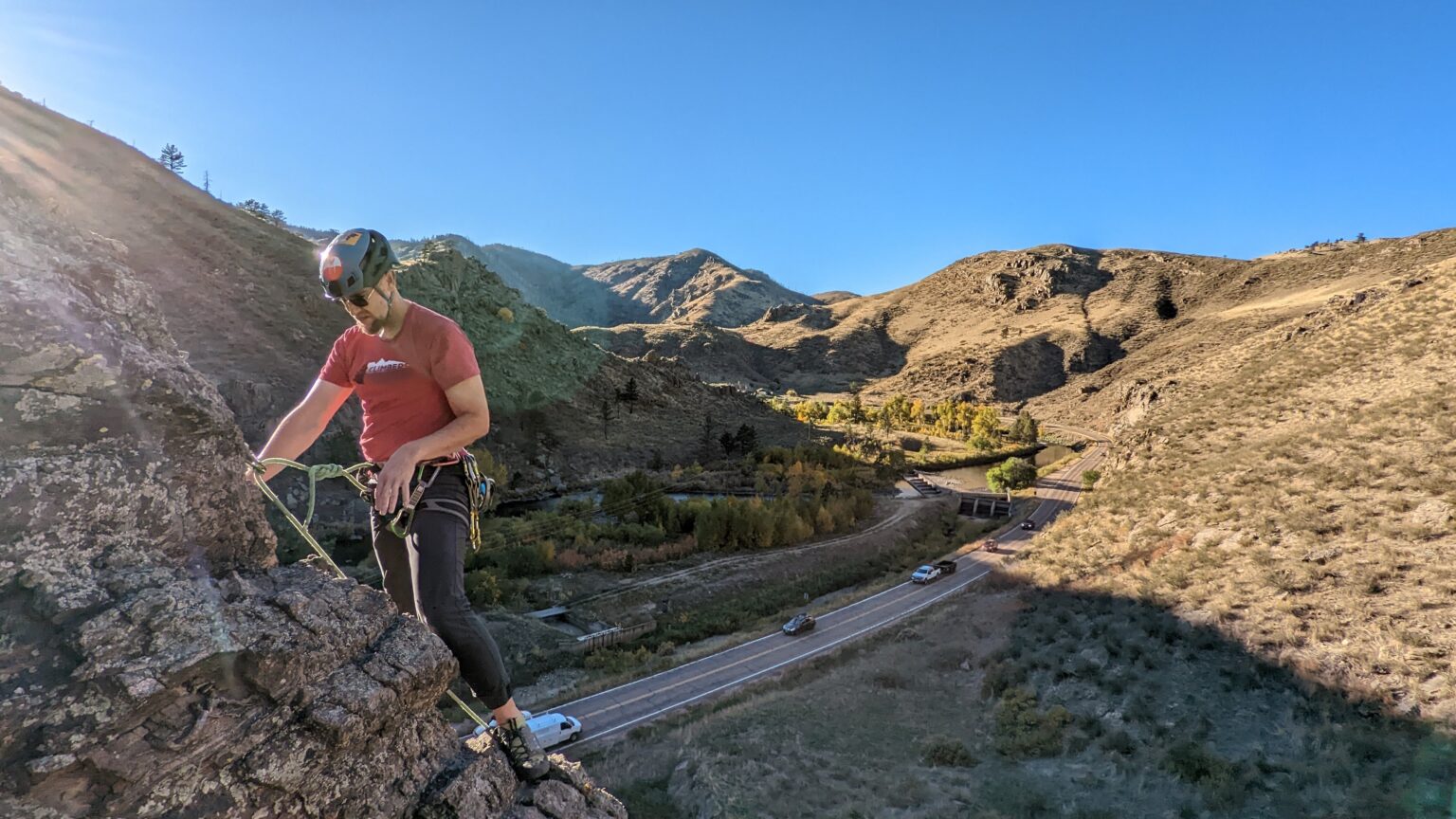
The problem was Schorr didn’t know how to get up on the side of a cliff himself.
At the time, biologists had begun to collaborate with cavers to improve their knowledge of bat ranges and habitats. But cave access restrictions began to pop up due to risks associated with the spread of white-nose syndrome. As a result, biologists encountered some resistance from a caver community that prizes its freedom to explore the darkest, least known corners of the planet. Schorr was concerned that rock climbers might have the same reaction if biologists like him became interested in bats in popular climbing destinations. He wanted to get ahead of the problem.
“Climbers have a long history of conflict with natural resource management taking away climbing access,” said Emily Gross, a PhD student at Colorado State University who collaborates with Schorr. “Yet, climbers have an equally long history of contributing to and supporting natural resource conservation where they climb.”
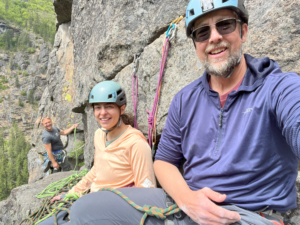
He and his colleagues founded a project called Climbers for Bat Conservation (CBC) aimed at harnessing the talent of rock climbers to better understand the roosting habitat of bats and improving their relationship with biologists. The project’s goal is to improve knowledge about bats among climbers while collecting bat sightings from them. Schorr and his colleagues set up booths at rock climbing festivals and got their name out among climbers by word of mouth.
Gross began rock climbing before she ever studied bats. While rock climbing in New Hampshire while working in wildlife conservation, she saw bats and was excited to combine two of her passions in life. In her graduate research, she shifted more toward the human dimensions side of wildlife research and began to think of ways to improve the engagement between biologists and rock climbers.
Finding the route to collaboration
In a study published recently in Conservation Science and Practice, Gross analyzed some of the barriers and benefits of increasing rock climber participation.
She interviewed many rock climbers, then distributed a survey at a rock climbing festival in Red River Gorge in Kentucky, a popular climbing destination.
The main barrier to collaboration with climbers, they found, was forgetting to report, lack of cellphone service at climbing sites and uncertainty about how the information will ultimately be used. The first two are a little easier to address by following up with climbers to make sure they report after the fact.
The fear of reporting, in the third case, isn’t unfounded—the discovery of bird nests, for example, sometimes results in areas being roped off for fledging season due to protections under the U.S. Migratory Bird Treaty Act of 1918.
“Raptors are famous for causing route closures,” Gross said.
But the surveys also revealed that these fears and distrust may be easy to address. Rock climbers enjoy the outdoors—often climbing in beautiful, natural areas. “Most people had pro-environmental attitudes,” Gross said. As a result, it’s not that difficult to get people interested in projects that might help with bat knowledge or conservation.
She pointed out the example of the Red River Gorge Climbers’ Association, whose goals include preserving access to climbers and conserving the land.
That area of Kentucky is also a hot spot for bat conservation—Gross has surveyed bats there during climbs herself.
Increasing cooperation between climbers and biologists would benefit the latter, Gross said. Before Schorr began to work with climbers, many bat biologists thought most species only roosted in trees or human structures. Now, they know many species use cliff sides for roosts. Both Gross and Schorr hope that CBC’s reporting system will help boost researchers’ understanding of bat roosting and populations, helping to refine range information.
“They are out accessing these areas that bat biologists don’t have the time or funding for doing all the time,” Gross said.
Can climbing put bats at risk?
Climbing may present some danger for bats. Anytime humans enter ecosystems for the first time, there’s the potential for disturbance. Gross has discovered bats in crevices that climbers had used over and over, such as one in Red River Gorge. “Sure enough, in one of the key handholds that all the climbers were using was a bat,” she said. None of the climbers had noticed it.
At the same time, climbers don’t usually like to reach deep into crevices where bats might be while climbing. “Their intentional avoidance may help the issue,” Schorr said.
The area where climbing may be most hazardous for bats is when climbers enter or get close to caves. Because the fungus that causes white-nose syndrome thrives in dark, moist environments, climbers in these areas may inadvertently carry the fungus and transmit it to other areas. Other concerns might revolve around the creation of climbing routes. In some areas, climbers will drill holes into the rock for climbing anchors. This drilling could affect sensitive bat hearing, Schorr said, though no work has been done on this potential problem.
Many climbers already adhere to best practices that benefit bats—not making noise or lighting fires near caves or climbing walls, for example, or limiting the trimming of vegetation on cliffs.
Turning bat knowledge upside down
Schorr also cautions about a potential drawback in his database of bat sightings. While it has increased the knowledge scientists have of bat roosting and species ranges, he worries that the database is biased toward places where climbers often go rather than the preferred types of cliffs bats actually prefer. “We are reporting where climbers are, so we may just be describing what climbers like,” he said.
He’d also like to conduct a before-and-after study of an area that becomes popular with climbers, though it would be difficult as it’s hard to predict what place is going to take off. Landowners are certainly interested in this kind of study, Schorr said.
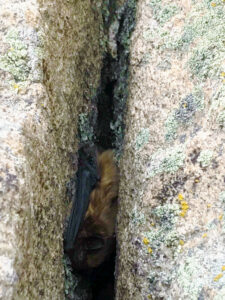
He hopes his research will help answer questions about roost preference in the future—things like whether bats prefer south-facing cracks or north-facing cracks at certain times of the year, for example. The database has more than 400 records so far. While most are in the U.S., some are as far as Mexico, Cuba and even Kenya.
Schorr hopes that collaborations will continue in the future—bat biologists might contract with rock climbers to conduct cliffside research, for example, or put up thermal cameras in known bat roosting areas. To improve his own ability to find his research subjects, Schorr has since learned to climb, though, unlike Gross, he has yet to find a bat on a cliffside.
“It’s special and exciting, because it’s a perspective that not a lot of people get, even bat scientists,” Gross said of rock climbing.
Bats are evasive, nocturnal and often hard to see. But for her, it’s rewarding to find them. “Bats are just a lot more charismatic than most people think.”
Article by Joshua Rapp Learn