





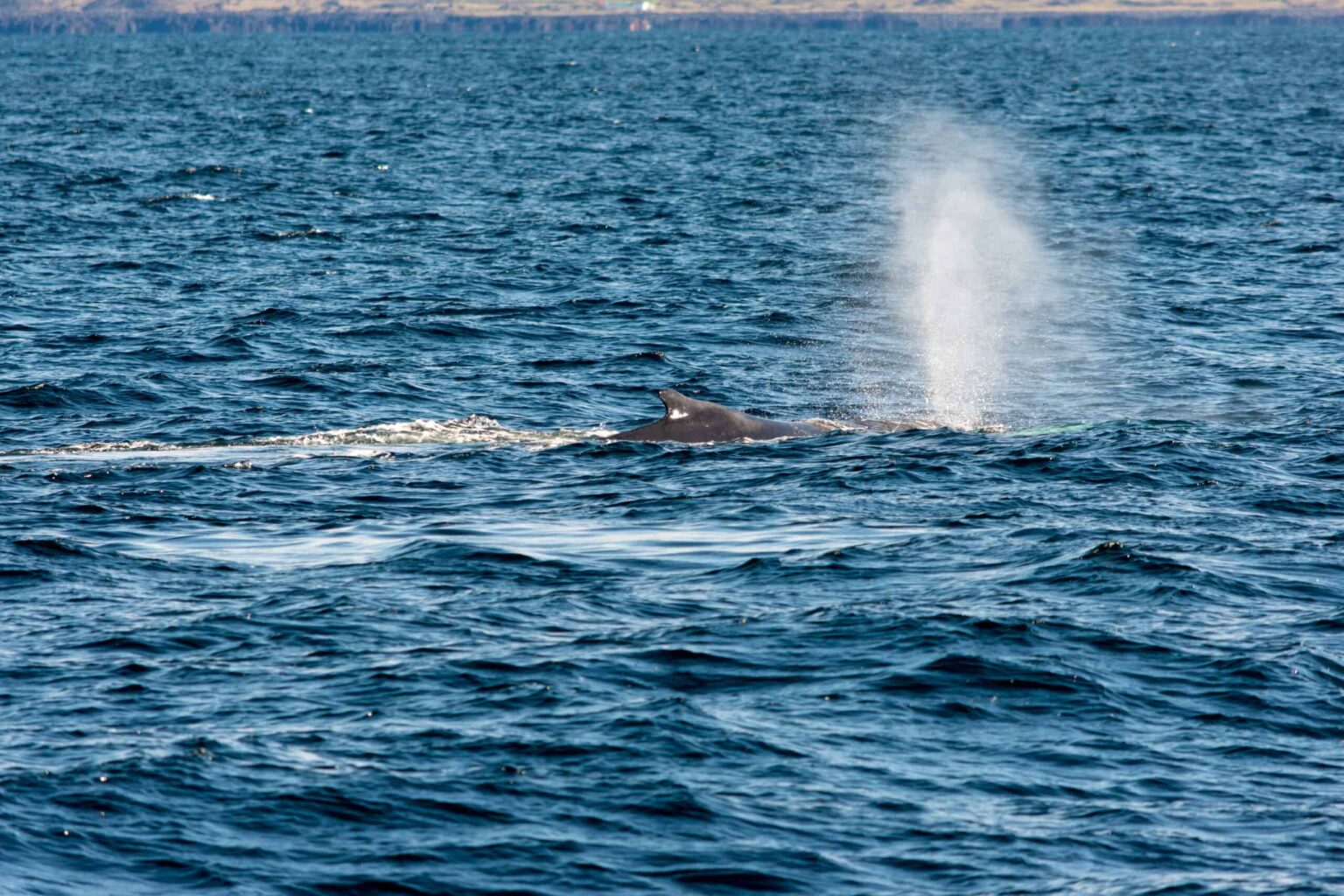
Scientists have detected a virus never seen north of the Arctic Circle in several species of whales. Experts monitored fin (Balaenoptera physalus), humpback (Megaptera novaeangliae) and sperm (Physeter macrocephalus) whales across the Northeast Atlantic flying drones carrying sterile petri dishes over spouting whales from 2016 to 2025. They also collected a few skin and organ samples when possible to test for disease. After testing the samples, researchers found cetacean morbillivirus, a deadly pathogen, in humpback whales in Norway and two individual sperm and pilot whales. The virus infects whales, dolphins and porpoises and has led to mass die-offs since its discovery in 1987. The researchers also found herpesvirus in humpback whales across Norway, Iceland and Cape Verde. They did not find two other diseases linked to cetacean strandings, avian influenza or brucellosis. Lead author Helena Costa, a researcher at Norway’s Nord University, said understanding the disease profiles of whales will help conservation in the Arctic. “Going forward, the priority is to continue using these methods for long-term surveillance, so we can understand how multiple emerging stressors will shape whale health in the coming years,” Costa said.
Read more at Oceanographic Magazine.
Article by The Wildlife Society