




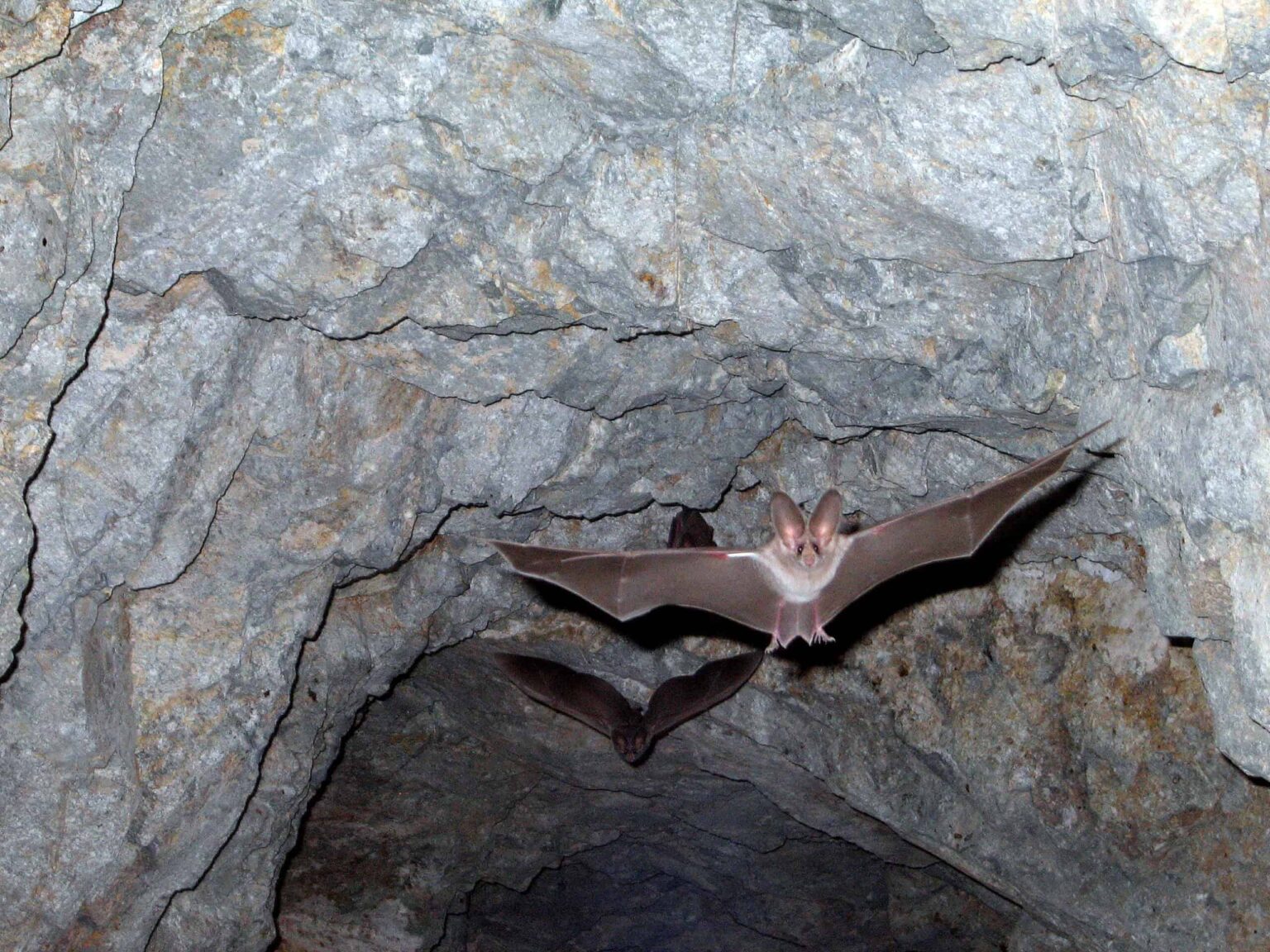
For the first time, wildlife managers have detected the fungal pathogen that causes white-nose syndrome—a disease that has devastated North American bat populations since 2006—in Nevada. The U.S. National Park Service detected the fungus on a California leaf-nosed bat (Macrotus californicus) in Lake Mead National Recreation Area in Clark County during routine monitoring. “We knew it was a matter of time before [white-nose syndrome] arrived in Nevada and we have been vigilantly surveying bats for many years now, not only for this fungus but also to track their population trends,” said Jonathan Young, a staff specialist at the Nevada Department of Wildlife (NDOW). The fungus that causes white-nose syndrome, Pseudogymnoascus destructans, is primarily spread by bat-to-bat contact during hibernation. “Nevada’s bats are incredibly important, and this fungus could have serious implications for their conservation.” said Young. NDOW is working to protect bat habitats, particularly abandoned mines, to prevent unintentional spread of the fungus on human clothing and equipment and will continue monitoring to determine how widespread the fungus is.
Read more at the Nevada Department of Wildlife.
Article by The Wildlife Society