


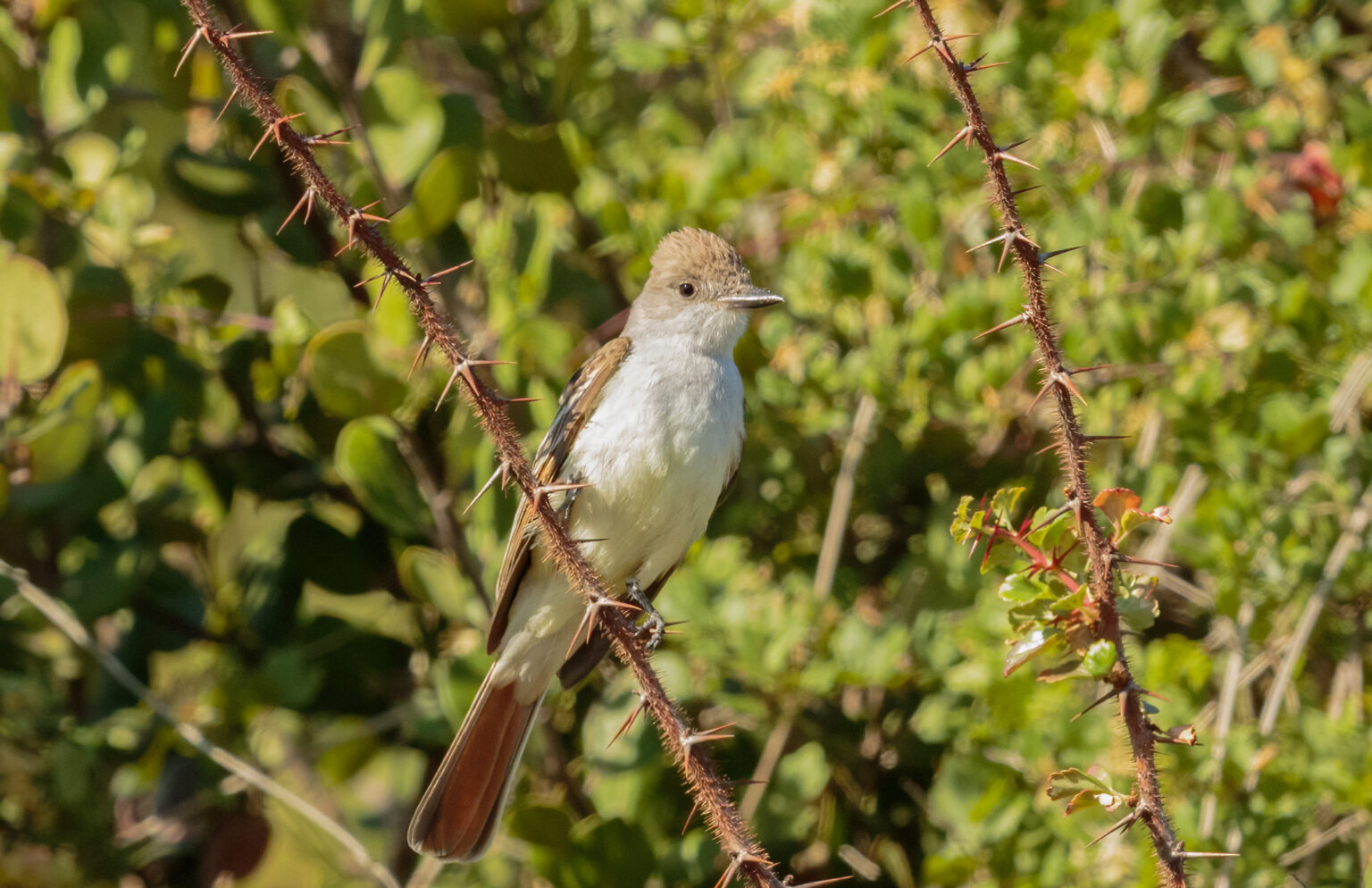
Whether it’s counting the different kinds of trees in a forest, frogs in a pond or even bacteria in your gut, diversity often demonstrates ecological health.
But new research shows that when invasive species are involved, diversity may sometimes be a short-term illusion that conceals larger ecological problems. Invasive species can diversify bird communities, but only for a short period of time.
“Species richness and diversity can be a pretty unreliable measure of ecosystem health,” said Brendan Hobart, a research scientist at the University of Wisconsin-Madison and TWS member who studies how human-caused environmental changes impact the species around us.
The finding has implications for conservation, as ecosystem assessments based solely on species diversity may not reveal an adequate picture of environmental sustainability.
In research published recently in Frontiers in Ecology and the Environment, Hobart and his colleagues reviewed over a decade of data documenting songbird communities across western North America. He combined songbird surveys with data documenting how sagebrush steppe ecosystems changed over time. By looking at what’s already happened, Hobart was able to figure out what areas might be at the greatest risk of ecosystem change and loss of native birds.
Cheatgrass takeover
Westerners inadvertently brought invasive cheatgrass (Bromus tectorum), which Hobart said is the leading cause of sagebrush habitat loss, to North America in the mid to late 19th century. It became widespread across the Intermountain West, a region located west of the Rocky Mountains and east of the Sierra Nevada and Cascade mountain ranges.
In a natural sagebrush ecosystem, native plants are clustered in groups. Fire doesn’t easily jump from clump to clump, meaning it spreads less quickly on the sagebrush steppe. But cheatgrass blankets the landscape like a shag carpet, leaving few gaps. “It leads to more frequent, larger-scale fires,” Hobart said. The cheatgrass also dies each year and dries out early in the season, adding lots of fuel to the landscape each year. While fire is a natural part of the sagebrush cycle, it’s now burning more frequently thanks to invasive cheatgrass, throwing off the ecosystem balance.
Hobart said that cheatgrass now drives many fires in places like Idaho and Utah. And it’s just one part of a vicious cycle. Cheatgrass establishes quickly in disturbed areas, displacing native perennial grasses and forbs. This means that each fire can welcome in more cheatgrass. Over a longer period of time, cheatgrass even outcompetes sagebrush. “What does best after a cheatgrass fire is cheatgrass,” Hobart said.
As cheatgrass changes fire regimes in the sagebrush steppe, Hobart said the ecosystems can become “devastatingly homogenous.” But many people don’t notice the ecosystem is diverse to begin with. “You drive through the sagebrush region, and it looks monotonous at 80 miles an hour,” Hobart said. In reality, the sagebrush steppe is a mosaic of native grasses, forbs and shrubs and even trees along creek beds.
Winners and losers
While scientists understand the landscape-level effects of cheatgrass on fire regimes, Hobart said there’s been less research on how the invasive plant affects bird communities.
He used data from the Bird Conservancy of the Rockies’ Integrated Monitoring in Bird Conservation Regions program, including information on 40 species over 11 years. He combined the bird data with satellite photos that tracked the percentage of cheatgrass cover on the landscape during the same time period.
Hobart found that cheatgrass significantly changed the composition of songbird communities. “As a site becomes more invaded by annual grasses, the bird community is going to shift and look over 50% different than before it was invaded,” he said. Surprisingly, he found that species richness was higher in the most invaded sites.
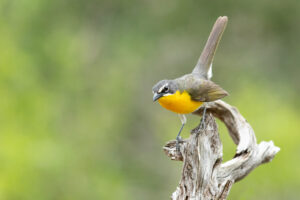
But after digging deeper, Hobart started to make sense of the trends. Generalist birds, like the black-billed magpie (Pica hudsonia), weren’t sensitive to the invasion, while grassland specialists like the western meadowlark (Sturnella neglecta) even benefited. But riparian specialists like the yellow-breasted chat (Icteria virens) and sagebrush specialists like the sagebrush sparrow (Artemisiospiza nevadensis) declined. Of the 40 species he looked at, 12 were sensitive to annual grass invasions: two sagebrush species, five shrubland species, three riparian species and even two grassland species. “Specialists will be lost more slowly than species are added,” Hobart said.
The lag between when a species begins to decline and blinks out entirely is called an extinction debt. Sometimes, these debts can be hard to notice, especially when metrics like species richness are high. “If you ask most people what’s the effect of invasive species on biodiversity, they’ll probably say it’s negative,” Hobart said. But in this case, the effect is sometimes positive at small spatial scales—though it still has a negative impact on the overall number of species in a region.
“These transient, intermediate communities are composed of the winners and the losers,” he said. But in the future, only the winners will remain. And the specialist species are those who often already have a restricted range, lower population numbers and are more likely to be species of conservation concern, especially when they rely on vanishing habitats like the sagebrush steppe.
There is still hope for some specialist species, though, in areas more resistant to cheatgrass invasion.
After learning what species were most sensitive to the cheatgrass invasions, Hobart identified the areas with the most sensitive species and combined that information with what areas cheatgrass was more likely to invade.
The areas with a low likelihood of cheatgrass invasion and a high number of sensitive species can be identified as refugia, or areas that can remain a stronghold for sensitive species as the environment continues to change. “Bringing these two things together can help identify what the most relevant management strategy is,” Hobart said.
Article by Olivia Milloway