
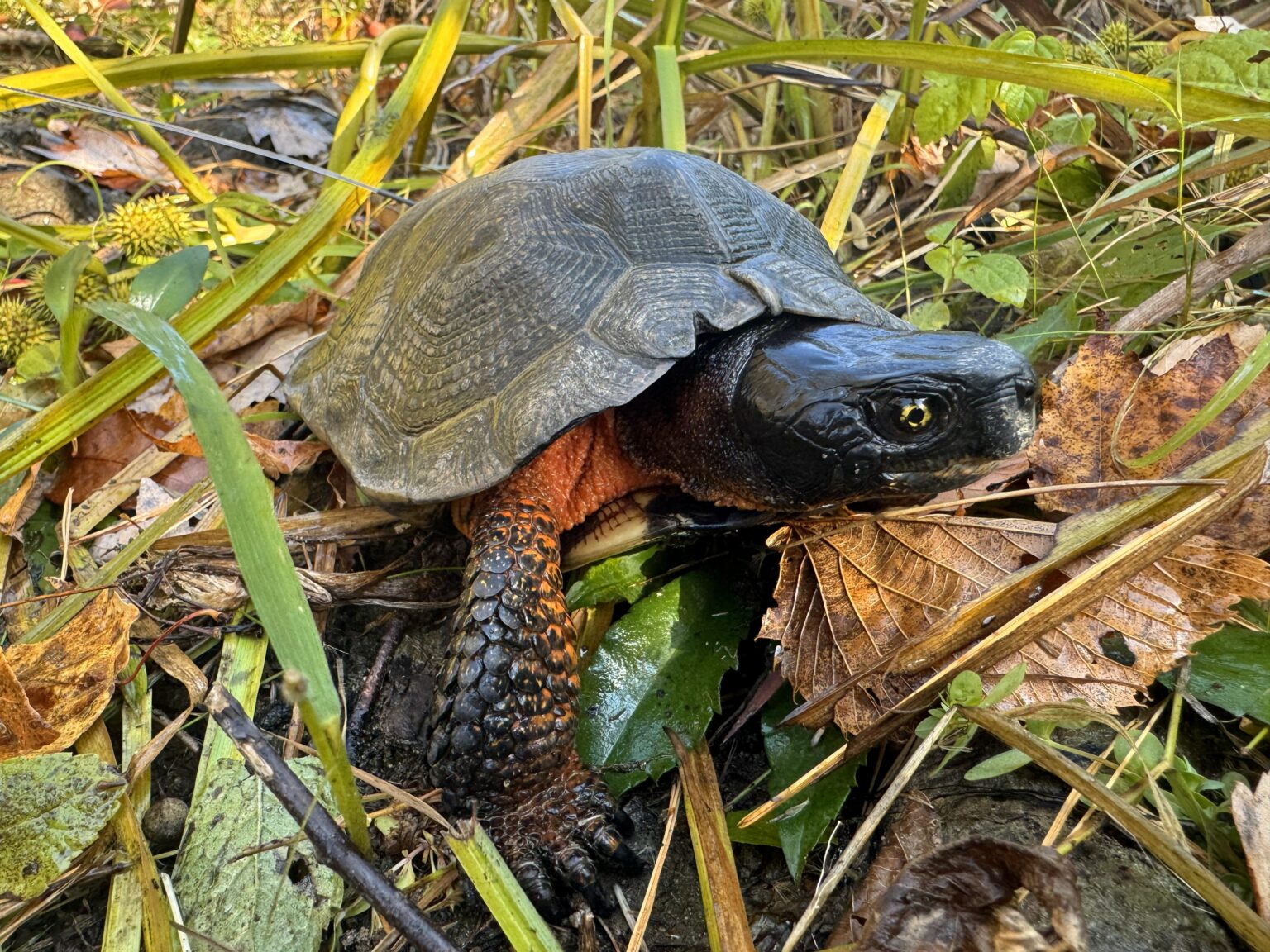
If you’d like to know what a turtle has eaten and where for the past year of its life, Matthew Chatfield can probably find out for you by examining its toenail. Each individual carries a unique chemical signature that he hopes can one day help law enforcement officials determine whether captive turtles were poached from the wild or raised in captivity.
“Our ultimate goal in starting all of this was to address the loophole of wildlife laundering,” said Chatfield, an associate professor of biology and ecology at the University of Maine.
Chatfield and his colleagues began the Maine Wood Turtle Project about a decade ago to learn more about the ecology of the species. During his research, Chatfield and his colleagues became aware of the growing threat that the illegal wildlife trade was posing for North American turtles and tortoises. Species like box turtles (Terrapene carolina), for example, are among those most often removed from the wild in the U.S. for the purpose of sales.
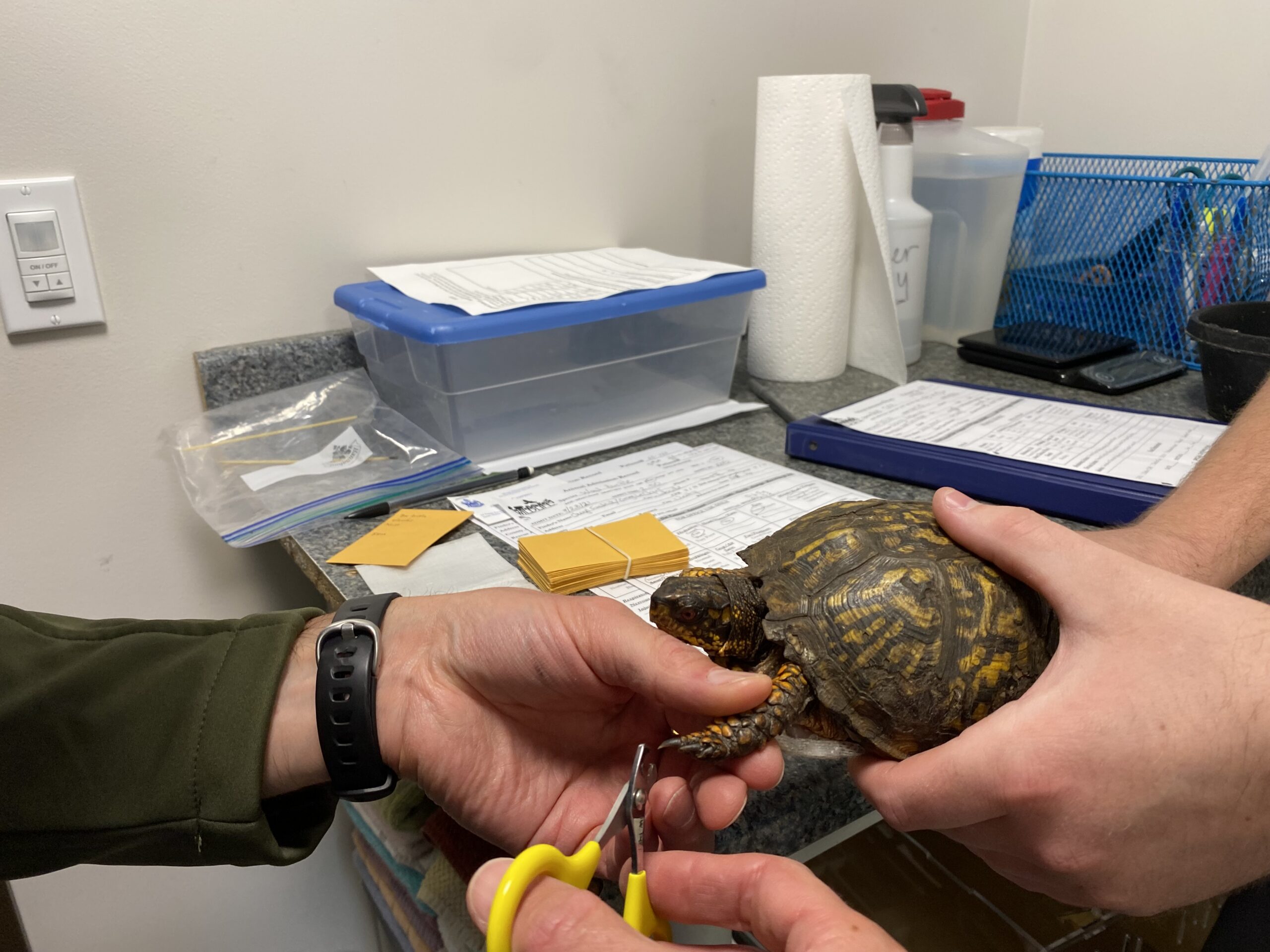
But many reptile enthusiasts also raise turtles and tortoises in captivity, making it difficult for law enforcement to prove that people removed certain animals from the wild. Chatfield wanted to see whether improved understanding of stable isotopes and other chemicals might help researchers determine an individual turtle’s origin.
Toenail chemical tracers
In a study published recently in the Journal of Wildlife Management, Chatfield and his colleagues tested chemical tracers found in the toenail clippings of wood turtles (Glyptemys insculpta), spotted turtles (Clemmys guttata) and Blanding’s turtles (Emydoidea blandingii). The researchers took some of these from the wild, either from other research projects or from turtles taken in by rehabilitation centers. They took other clippings from captive turtles in zoos.
The researchers were able to narrow down a handful of trace elements and stable isotopes that were key to distinguishing between captive and wild samples. “We can look at the chemical profile in these claw tips, and we can compare them,” Chatfield said.
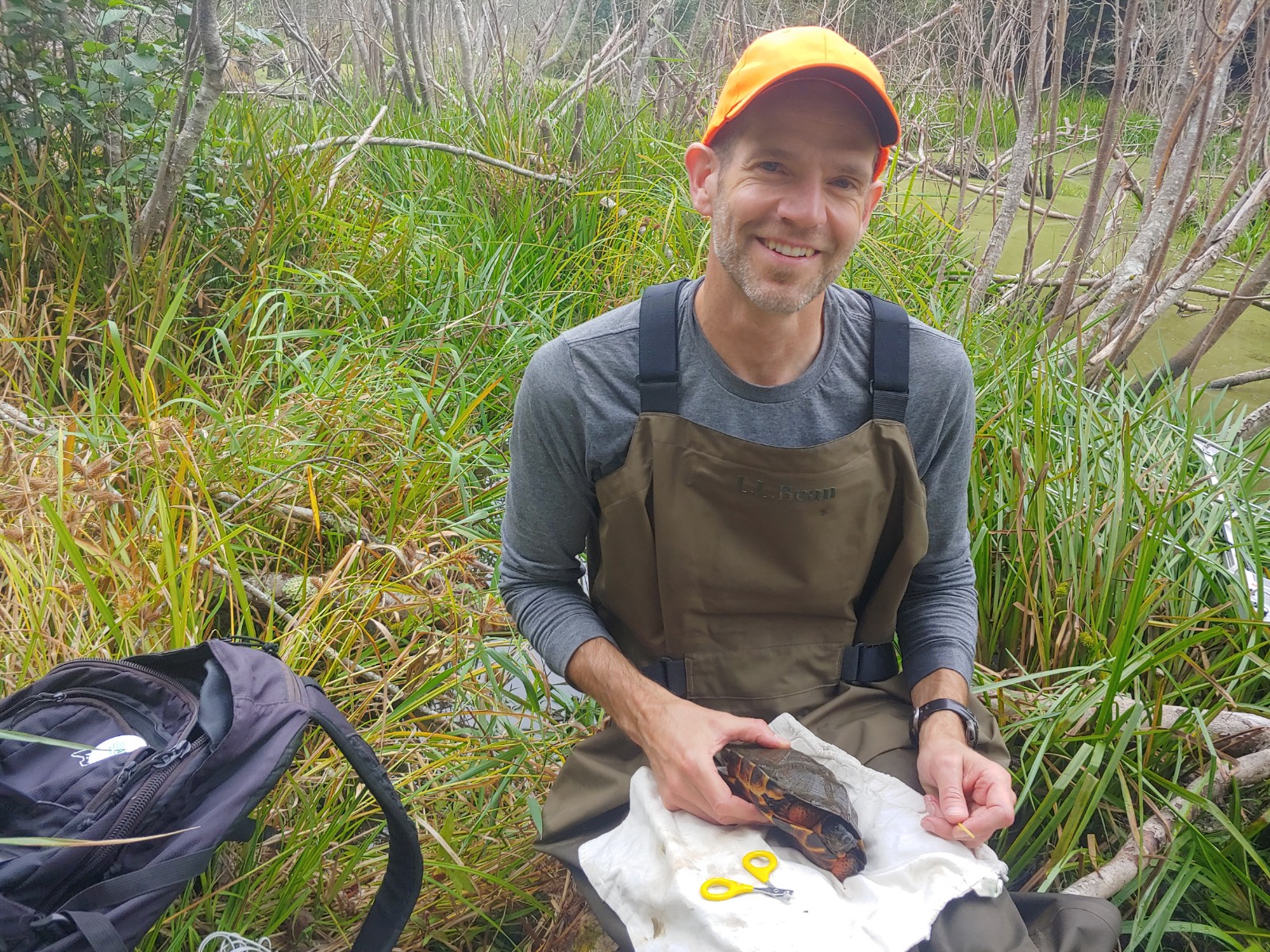
The team then created a model that predicted the origin of 99.6% of toenails they analyzed. From 449 different turtles, the model only misclassified two. The sex or age class of the turtles didn’t seem to matter much in terms of accuracy. It all came down to home and diet. “Where they are living and what they are eating makes a huge difference in their chemical profile,” Chatfield said.
Since toenails are slow-growing, the chemical profile they store lasts for a while. Chatfield isn’t sure exactly how long it takes a wild animal taken into captivity to lose its wild chemical signature. But preliminary tests of nail clippings taken every two months for a turtle taken into a rehab center show it takes at least six months before the chemical signature starts to change.
Finding a turtle’s home
Chatfield said that the wild animals tend to have higher portions of some trace elements than captive animals, though he isn’t sure exactly why. The reason likely has something to do with the habitat, though. Turtles in captivity are often fed commercial pellet food, which gives off a unique signature.

He said one of the great things about the tool is its noninvasive nature. He can imagine people taking clippings of turtles at expositions or rehab centers to tell if they are wild or were kept in captivity.
In the future, as the study of stable isotopes improves, Chatfield said that the tool may help narrow down where the animals taken from the wild came from. This could help law enforcement determine where wild animals were taken from more specifically and improve the possibility of repatriating them to the wild, as long as they are healthy and disease-free.
While Chatfield developed this model only for these three related species of turtles, he said it will soon be able to work with more species.
“Our goal ultimately is to produce a model that would work for any turtle species,” he said.
This article features research that was published in a TWS peer-reviewed journal. Individual online access to all TWS journal articles is a benefit of membership. Join TWS now to read the latest in wildlife research.
Article by Joshua Rapp Learn