






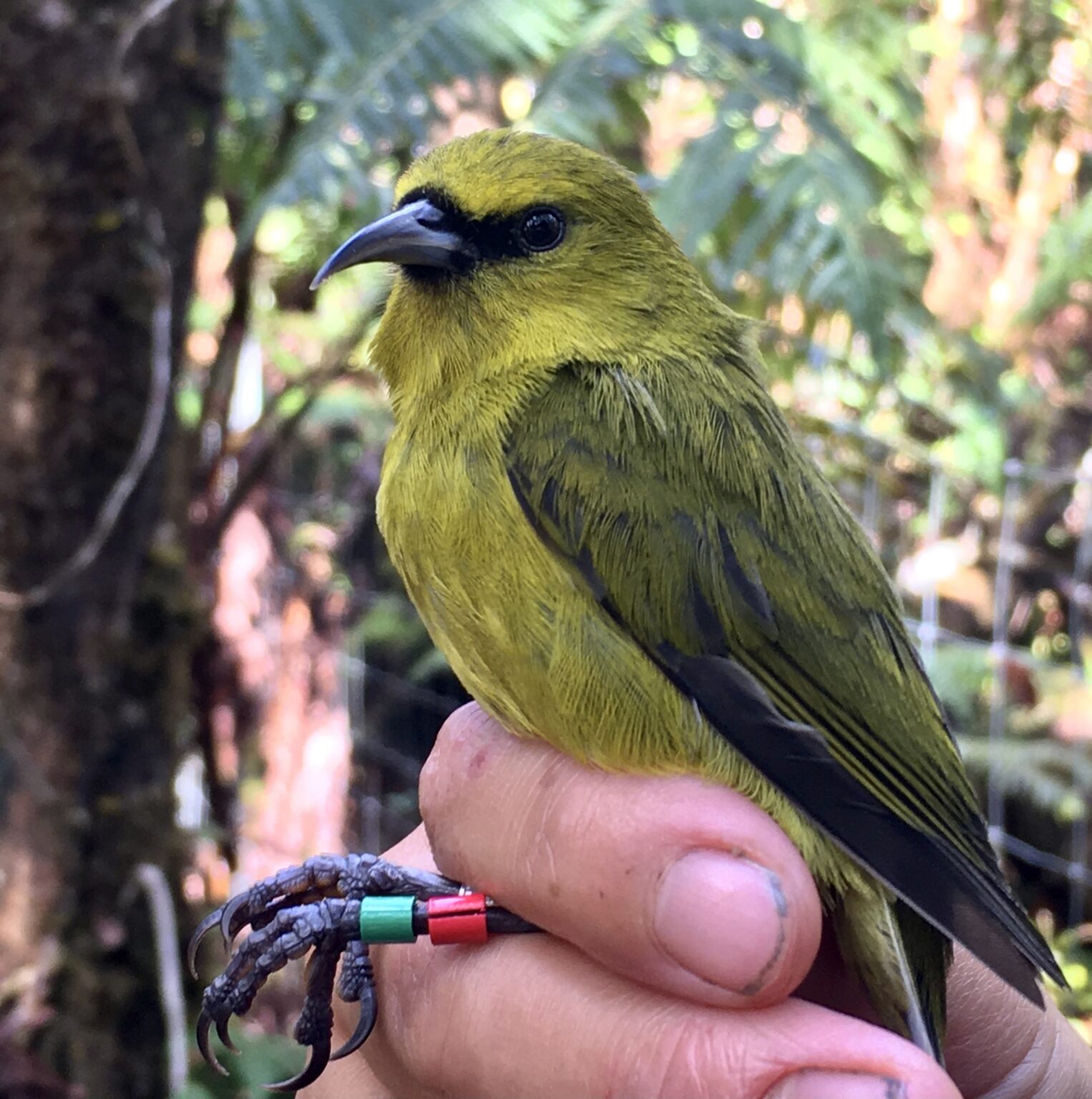
Both native and nonnative birds in Hawaii are responsible for spreading a deadly virus that has led to the extinction of more than a dozen species. Avian malaria, caused by a parasite transmitted by a mosquito bite, is widespread in birds on the archipelago. Past research found that native birds often have high levels of the parasite in their blood, leading researchers to think that native species were transmitting the infection. But even in areas with no native birds left, nonnative birds are still infected. A study published in Nature Communications by University of Santa Cruz (UCSC) researchers found that most species of birds could transmit avian malaria to biting mosquitos, which can then spread the disease to uninfected birds. They discovered this by a series of laboratory experiments in which mosquitos fed on birds with different levels of infection and seeing how many mosquitos became infected with the parasite. “What surprised us most was how effectively avian malaria was transmitted to mosquitoes, even from birds carrying vanishingly small parasite loads,” said Christa Seidl, a doctoral researcher at UCSC and lead author on the study. By combining these trials with information on the levels of malaria in different species, the researchers found that both native and nonnative birds were infectious to a similar degree. The researchers also found avian malaria at 63 of the 64 sites they sampled and warned that because of its ability to be infectious in many different species, avian malaria will continue to threaten Hawaiian birds with extinction.