




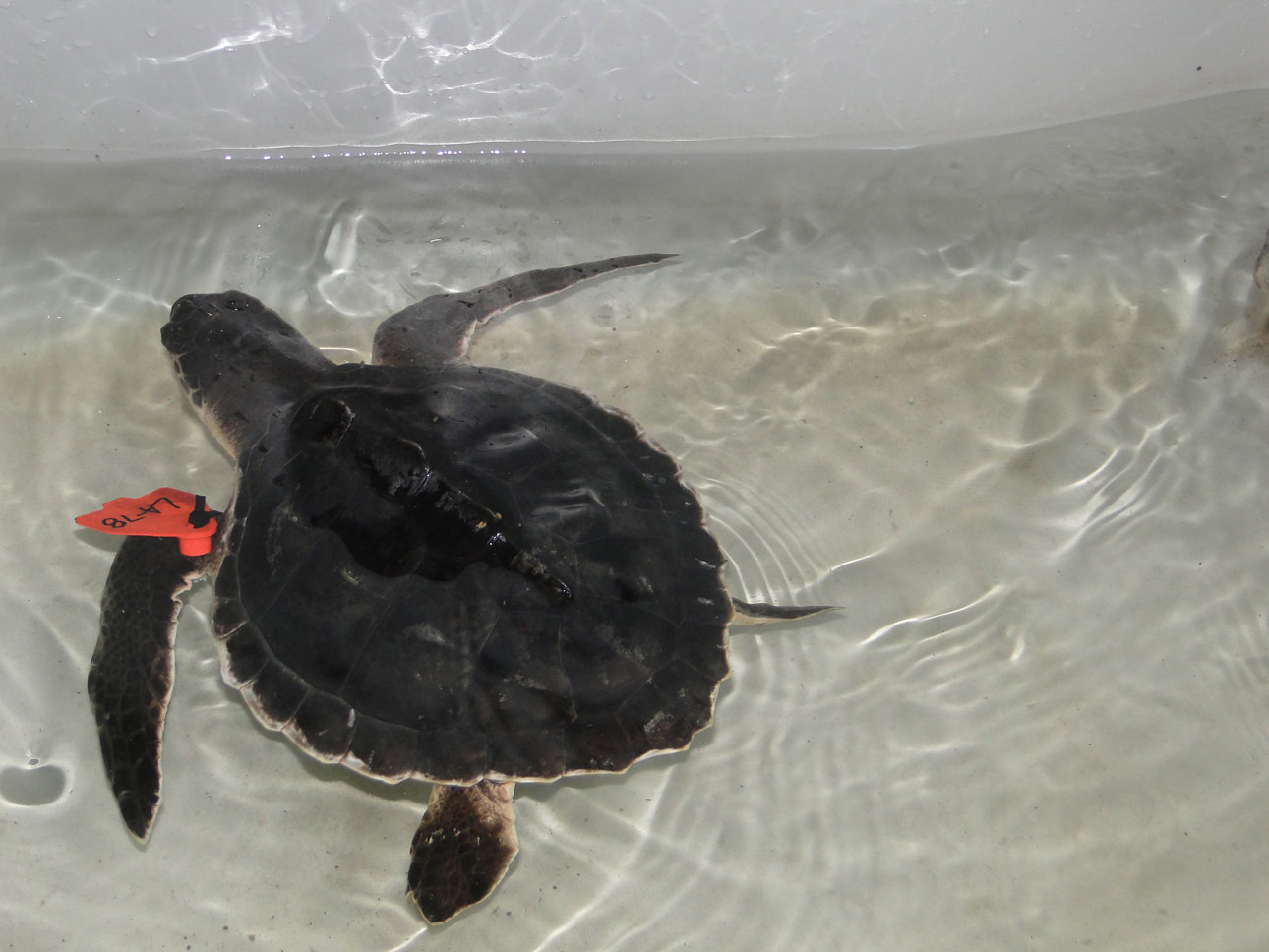
Turtles and other animals rely on sound to navigate and maintain awareness of the world around them. Low frequency sound waves from anthropogenic activities from ships, seismic blasting and industrial development have the potential to disrupt animal behaviors. New research looked to fill in the gaps to determine the potential overlap between the endangered Kemp’s ridley sea turtle (Lepidochelys kempii) hearing and the sounds made by anthropogenic activities.
To determine what the sea turtles can hear, researchers measured brain activity in response to sounds by placing a noninvasive sensor on reptiles’ heads. Researchers then played sounds ranging from 50 hertz to 1,600 hertz. They found that the species’ hearing was between 200 and 300 hertz, making the turtle a low-frequency specialist. Most industrial noise occurs below 400 Hz, so Kemp’s ridley sea turtle’s hearing is sensitive to the sounds such as ships made by human activities. Noise can affect marine organisms by causing physical injury, disrupting behavior, displacing individuals from preferred locations and masking important sounds needed for understanding the environment around them. Understanding hearing sensitivity is the first step in understanding potential noise impacts and mitigation strategies for this endangered species.
Read more in The Journal of the Acoustical Society of America.