

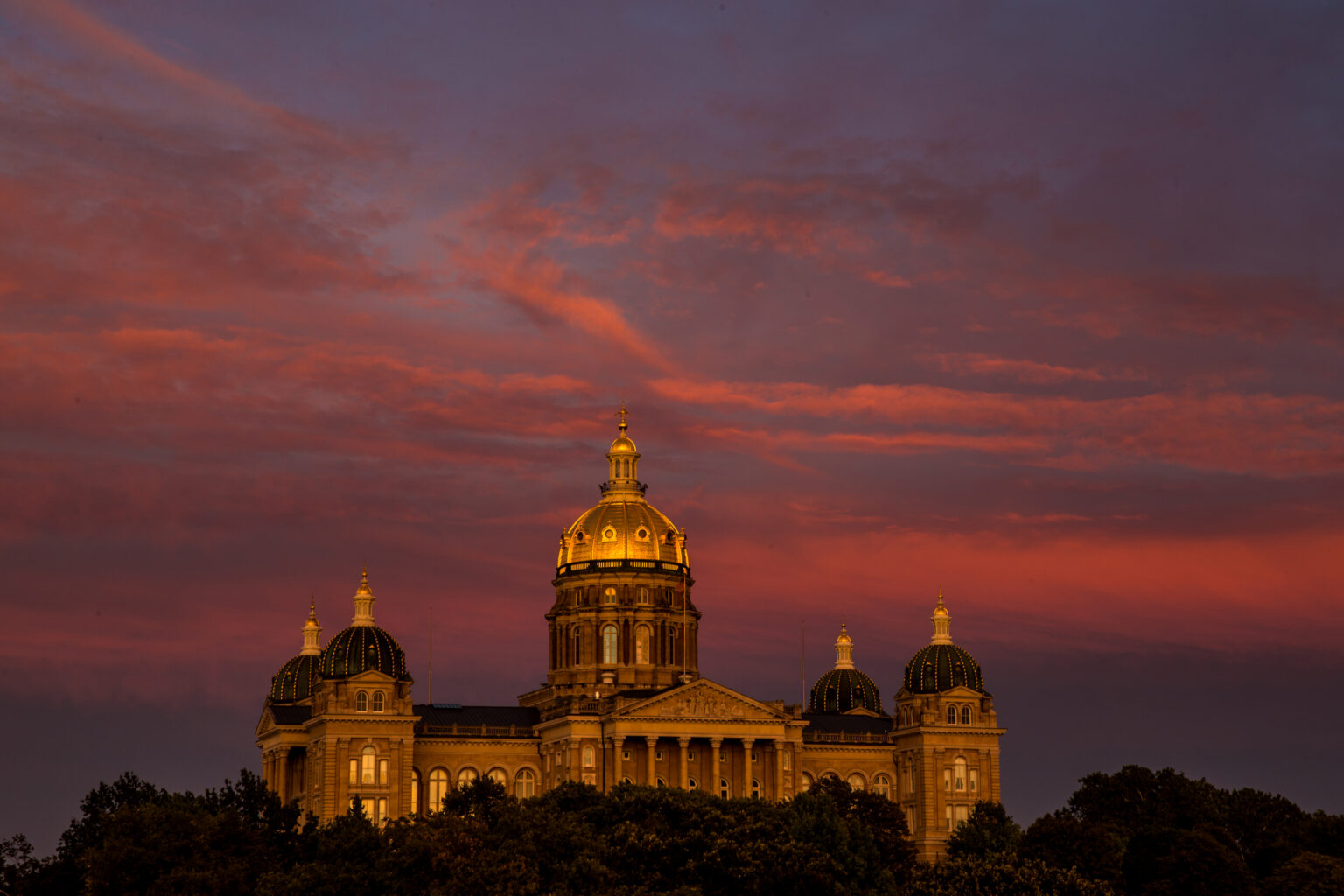
As I prepared for my first trip to Iowa before The Wildlife Society’s 2026 Annual Conference this fall (Nov. 1-5), our host from Catch Des Moines, the local convention bureau, asked me a simple question:
What are the first three words that come to mind when you think about Des Moines?
I paused for a moment and sheepishly said, “baseball, corn and politics.” Having never been to Iowa, I could only draw from what I had seen on film or in the media. In this case, the movie Field of Dreams—a baseball classic that takes place on an Iowa cornfield—and the first-in-the-nation Iowa caucus. As my plane touched down at Des Moines National Airport, I knew I had a lot to discover.
Twenty-four hours in Des Moines
People often ask why we move our conference around so frequently, rather than revisit sites that have worked for us in the past. I always answer that it provides an opportunity for members from different regions to more easily engage in the event. However, that logic works both ways. Visiting new cities each year also allows TWS perspectives to grow as we immerse ourselves in the locations we visit. Each destination brings new members, ideas and experiences that become part of our organization’s identity.
Often, our impression of a location changes quite drastically after experiencing it firsthand. After 24 hours in Des Moines, for example, I can tell you that baseball, corn and politics, while certainly present, barely scratch the surface of what this vibrant city has to offer. If asked again to describe Des Moines in three words, I would say, eclectic, artsy and welcoming.
Eclectic
The biggest surprise for me about Des Moines was how amazingly complex the city was. Every corner of the city brought together a unique fusion of seemingly disparate items in a beautiful unison that seemed to embody the spirit of Des Moines. From architecture to shops to food, character was rich, and ordinary was hard to find.
Architecture
Des Moines has a compact urban core that layers styles from multiple eras. This stylistic diversity and adaptive use of old structures means that during a short walk around town, you will likely encounter a restored Victorian warehouse next to an innovative modernist design. After commenting about the beauty of the architecture, my Uber driver said, “We’re a small city, but we’re growing up real nice.” For a city as old as Des Moines, founded in 1843, I was surprised to hear my driver talk about the city like it was still up and coming. However, I think that highlights the city’s continual embrace of new ideas.
Shopping
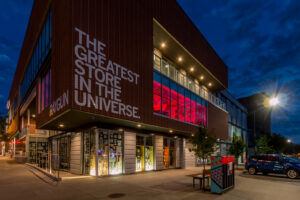
While I’m certain there are big brand stores around town, I didn’t notice many. The downtown area hosted locally owned shops with what I’ll define as “strong vibes.” I only had a chance to visit a couple of stores, but those visits were certainly memorable. The self-described “greatest store in the universe,” Raygun, for example, brings a comedic and unapologetically liberal twist to T-shirts. That was not something I expected to find when visiting a traditionally conservative state. Across town, West End Architectural Salvage continued the eclectic theme by serving coffee and wine in a warehouse that specializes in bringing new life to long-forgotten treasures.
Food
This is where the eclecticism of Des Moines is inescapable. Every restaurant I visited seemed intent on breaking through traditional flavor paradigms. For example, you could start your day with an “impish or admirable” from the eco-conscious coffee shop, Horizon Line Coffee. It is a burnt rosemary caramel latte with smoked salt. For lunch, you could visit Zombie Burger and Drink Lab for a burger topped with mayo, egg, bacon, cheese, fried bananas and peanut butter paired with a crunch berry shake topped with tequila rose strawberry cream. Finally, if you can’t decide between Chinese or pizza for your late-night snack, just combine them. Fong’s Pizza serves Chinese-Italian fusion, like a crab rangoon pizza and pizza egg rolls. It may sound strange at first, but the Iowans care deeply about their food and agricultural heritage. I found that each unique combination was constructed with a high degree of care toward quality and taste.
Arts
During my time with TWS, I have come to appreciate the deep conservation legacy of Iowa through wildlife luminaries like Aldo Leopold and Ding Darling. In my discussions with TWS members in Iowa, I have also learned about the importance of figures like George Washington Carver to both the state and broader development of the conservation land ethic. With all three individuals boasting an impressive portfolio of creative works, I expected to encounter some level of artistic and literary history.
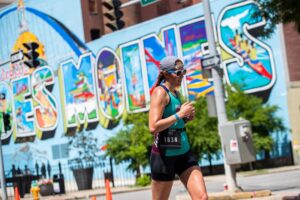
What I discovered, though, was a city still fully immersed in art. Around almost every corner downtown, there are massive and beautiful murals that adorn the urban environment with a strong sense of place. That theme continues inside the Iowa Events Center, where photographs from local artists bring the rural beauty of Iowa to visitors far and wide.
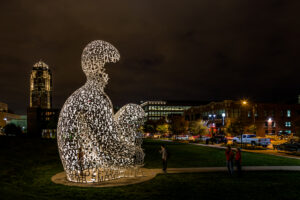
If you do decide to visit Horizon Line Coffee, take your drink to go and stroll the Pappajohn Sculpture Park just around the corner. It is a 4.4-acre public park showcasing 24 sculptures valued at more than $40 million. If you prefer a more intimate space to enjoy a hot beverage, try Plain Talk Books and Coffee, where visitors are encouraged to browse an extensive collection of literary works from Iowa history collections to current bestsellers.
Welcoming
There is a sincerity and openness to Des Moines that I found quite refreshing. Everyone that I met was engaging, respectful and genuine in their communications. Things also seemed to move at a more relaxed pace, which I found conducive to making stronger connections with the people I met. While I know the sample size is small, I found it easy to start up a conversation with strangers. In fact, a few people started unprompted conversations with me, including one interaction where I discovered I have a shockingly close look-alike living in New York City.
The welcome feelings also extend beyond personal interactions. I found that the city was clean and easy to navigate by foot. There were abundant pedestrian paths outside and an indoor skywalk network that connected a large portion of the city, including both conference hotels, with the Iowa Events Center. I also couldn’t help but notice that the prices of food and drink were well below what I’m used to. When I inquired about that with a restaurant owner, they quickly said, “We like to eat, we like to drink and we think it should be cheap.” I can’t argue with that logic.

A perfect spot for TWS2026
I am grateful for the chance to have discovered Des Moines, and I am eager to get back this fall for TWS2026. Our staff are working diligently to build an event that is not to be missed in a city not to be overlooked. I invite all of you to attend as we celebrate not only The Wildlife Society’s 90th birthday in person, but also the 150th anniversary of Ding Darling’s birth. Des Moines offers the perfect backdrop for TWS2026.
If you are interested in submitting a proposal for a symposia, panel discussion or workshop for TWS2026, the deadline for submissions is March 27. Instructions for how to submit a proposal can be found here. The general call for abstracts and posters will open on April 20th and close on May 27th. Registration is expected to open in June.
Article by Cameron J. Kovach