



About Us
Since 1936, The Wildlife Society has shaped the future of wildlife and wild places to benefit generations to come.
With more than 10,000 members worldwide, we offer opportunities to connect, grow professionally and actively contribute to a better future for wildlife and their habitats.
We unite professionals who are passionate about advancing wildlife conservation and equip them with the tools to lead.
Our members include:
- Scientists, managers, educators, technicians, planners, consultants and others who manage, conserve and study wildlife populations and habitats.
- Supporters who help spread the word and take action on important wildlife and habitat issues.
- Students who are pursuing degrees and experience that will enable them to become the next generation of wildlife professionals.
We are an international organization committed to addressing national and international issues that affect the current and future status of wildlife in North America and throughout the world.
Through our position statements, you can learn more about our stance on important issues in the areas of wildlife health, biological diversity, habitats, harvesting and hunting, invasive species, energy development and climate change, and human dimensions.
We annually recognize professional excellence, outstanding achievement and highlight contributions to wildlife science and management through our Awards Program. The first TWS award (Honorary Membership) was bestowed on J.N. (Ding) Darling in 1938, just two years after the founding of TWS.
Our History
19th Century
Building the Conservation Movement
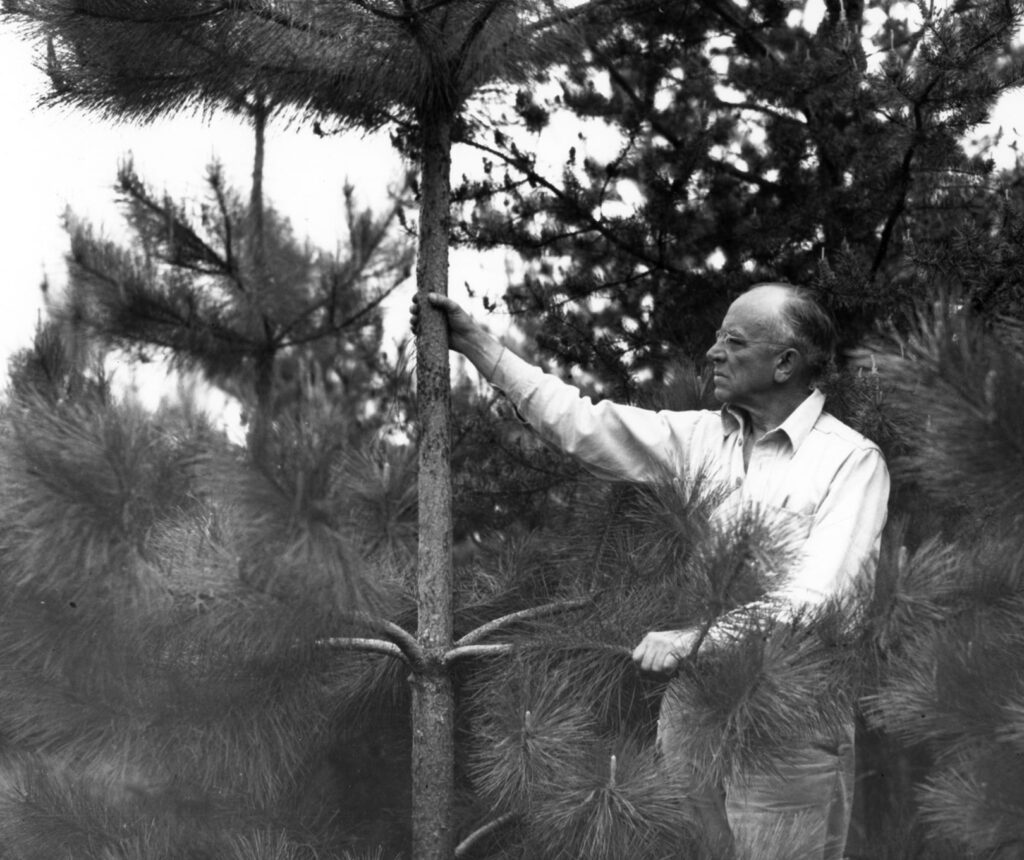
Wildlife conservation emerged as a powerful movement in the 19th century across the United States and Canada.
Concerned “sport hunters” led the charge, reacting to wildlife losses caused by “market hunters” who harvested animals for profit. As the Industrial Revolution drove people from farms to cities and increased demand for meat, this overexploitation intensified.
Sport hunters organized to protect wildlife, developed hunting ethics like “Fair Chase” and advocated for regulations. Groups like the New York Sportsmen’s Club, Boone and Crockett Club and Campfire Club successfully pushed for government responsibility over wildlife at state, provincial and federal levels.
Photo Credit: Aldo Leopold Foundation and University of Wisconsin-Madison Archives

Early 20th Century
Formalizing Wildlife Management
U.S. and Canada establish game agencies, wildlife regulations and enforcement programs.
By the early 20th century, both the U.S. and Canada had established game agencies and introduced wildlife regulations, refuges and enforcement programs. Still, leading conservationists recognized these early efforts weren’t enough to prevent ongoing wildlife declines.
Photo Credit: Aldo Leopold Foundation and University of Wisconsin-Madison Archives
1930
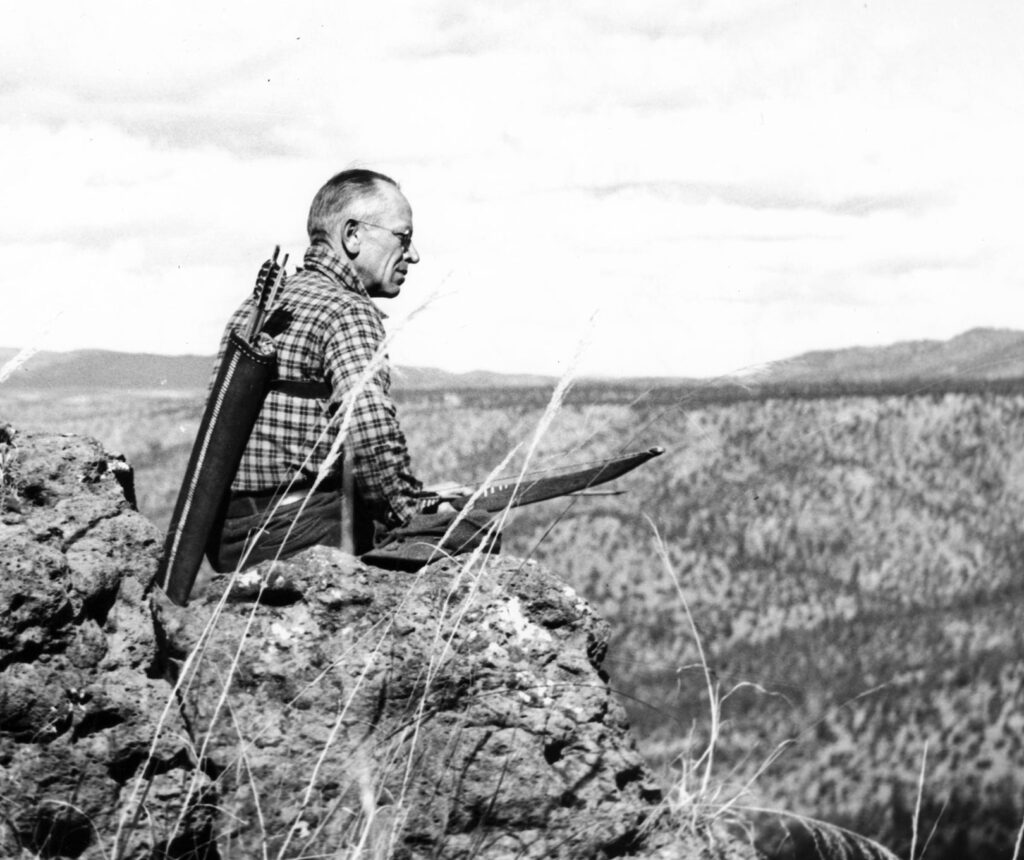
In the 1930s, pioneers like Aldo Leopold, Arthur Allen and Herbert Stoddard began promoting wildlife ecology and management as a scientific discipline. The 1930 American Game Policy, developed with help from the American Game Institute (now the Wildlife Management Institute), called for a national program led by trained professionals and funded through stable resources. It declared that wildlife management should be “recognized as a distinct profession and developed accordingly.”
Photo Credit: Aldo Leopold Foundation and University of Wisconsin-Madison Archives
1933
Launching Education and Training
Universities responded quickly.
The University of Wisconsin established the first wildlife degree program in 1933, and the Cooperative Wildlife Research Units followed soon after.
Photo Courtesy of the Aldo Leopold Foundation and University of Wisconsin-Madison Archives.
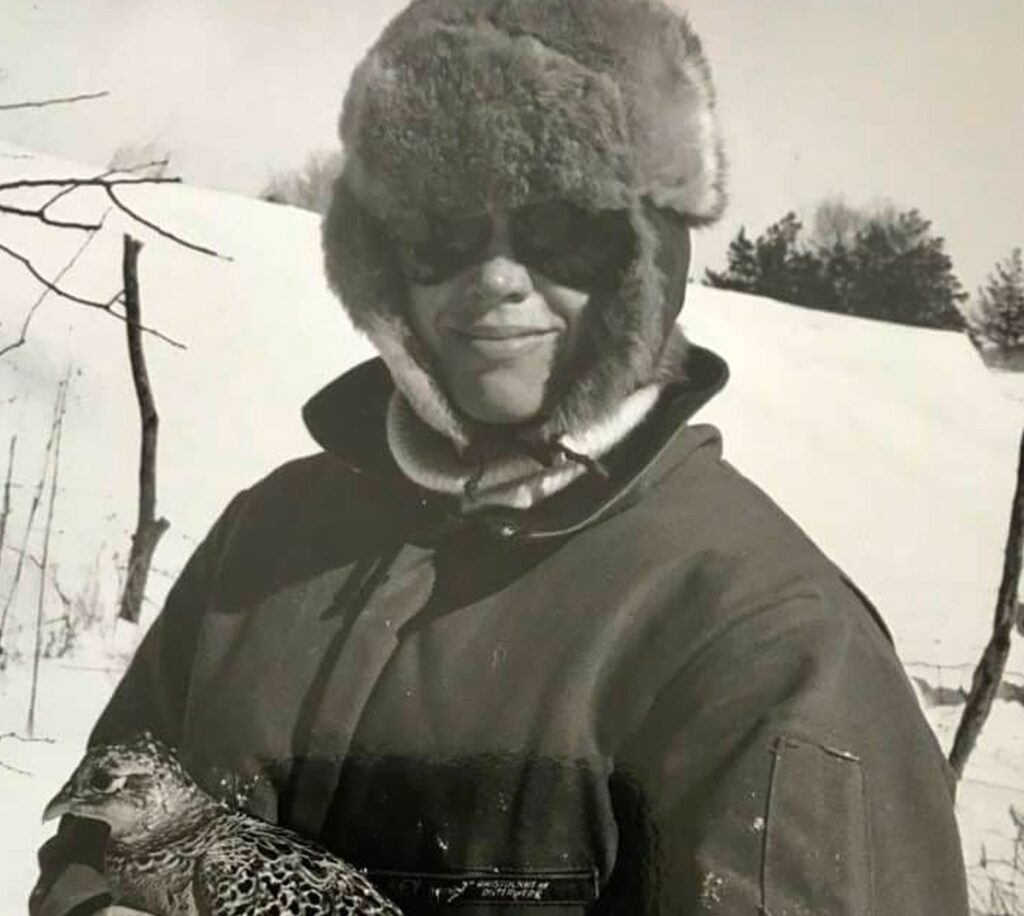
1935
Creating The Wildlife Society
Photo Credit: Nancy Lamb
Wildlifers from across the Midwest met to explore forming a professional society.
In 1935, Ted Frison of the Illinois Natural History Survey gathered colleagues in Urbana, Illinois, to discuss shared challenges and the need for a national organization. That December, wildlifers from across the Midwest met to explore forming a professional society.
Photo Credit: Gregory Green
1936
Just two months later in February 1936, the idea took national stage at the First North American Wildlife Conference in Washington, D.C., where the Society of Wildlife Specialists was founded and Ralph “Terry” King became its first president.

1937
At the Second North American Wildlife Conference in St. Louis in 1937, the group held its first formal meeting—and adopted a new name:
The Wildlife Society
Milestones in our History
Publications — In 1937, TWS published the first issue of The Journal of Wildlife Management, establishing a vital outlet for applied science.
Photo Credit: Diana Hallett

Over time, our publishing efforts expanded.
1957
Policy — Council gained authority to issue formal resolutions.
Our Policy Program empowers members to influence decisions with science. TWS staff and volunteers monitor legislation, prepare technical reviews and develop position statements to reflect the expertise of our community.
1958
Publications — We launched Wildlife Monographs for in-depth research papers, introduced by TWS President A. Starker Leopold.
1960
Publications — We released the Manual of Game Investigational Techniques, known today as the Techniques Manual—still a staple for wildlife courses.
Photo Credit: Britney Adrahamson
1973
Publications — Wildlife Society Bulletin began publishing management-focused articles and Society updates.
1977
Certification — In 1977, TWS introduced the Certification Program to recognize individuals who meet high standards in education and experience. Today, we offer two tiers:
Certified Wildlife Biologist® – For professionals with both the education and field experience.
Associate Wildlife Biologist® – For those who have completed educational requirements and are gaining experience.
1990
Policy — Members approved the creation of a full-time Policy Director position.
Photo Credit: Gregory Green
As a scientific and educational organization, we ground all policy engagement in credible research—never partisanship.
1993
Meetings — We co-hosted the 1993 International Wildlife Management Congress in San Jose, Costa Rica.
1994
Annual Conference — From 1937 to 1994, we held our annual meeting alongside the North American Wildlife and Natural Resources Conference. In September 1994, we launched our own stand-alone TWS Annual Conference in Albuquerque, New Mexico.

We’ve also sponsored three International Wildlife Congresses since the early 1990’s.
Join us at the next TWS Annual Conference to share research, build skills and connect with peers.
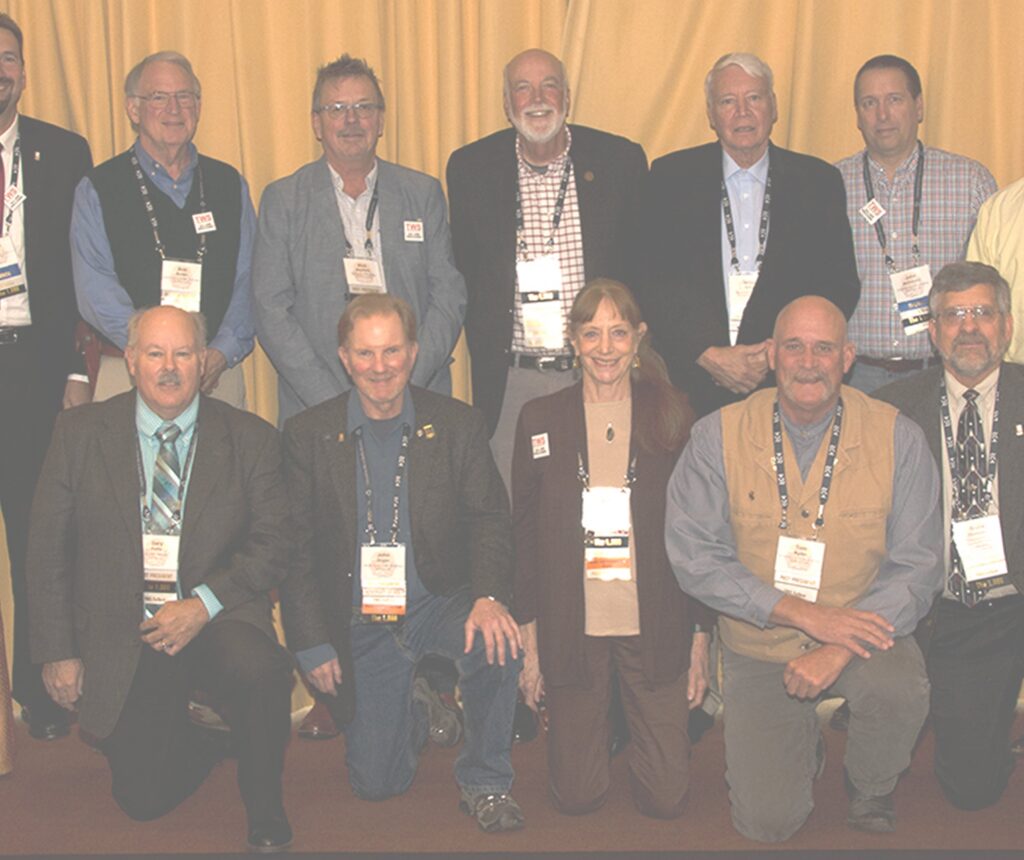
Photo Credit: Gregory Green
1999
Meetings — We co-hosted the 1999 International Wildlife Management Congress in Gödöllő, Hungary.
2003
Meetings — We co-hosted the 2003 International Wildlife Management Congress in Christchurch, New Zealand.
2007
Publications — We introduced The Wildlife Professional, a bimonthly magazine offering accessible science and insights for members.
Explore our publications to stay current with the latest in wildlife science and practice.

2012
Meetings — We co-hosted the 2012 International Wildlife Management Congress in Durban, South Africa.
2015
Meetings — We co-hosted the 2015 International Wildlife Management Congress with The Mammalogical Society of Japan in Sapporo, Japan.
2023
Certification — In 2023, we added the Qualified Airport Wildlife Biologist designation to recognize Certified Wildlife Biologists® who meet the qualifications laid out in FAA’s Advisory Circular 150/5200-36B regarding education, training and an approved Wildlife Hazard Assessment.
Explore how you can become certified on our Certification Programs page.
Photo Credit: Gregory Green
TWS Logo
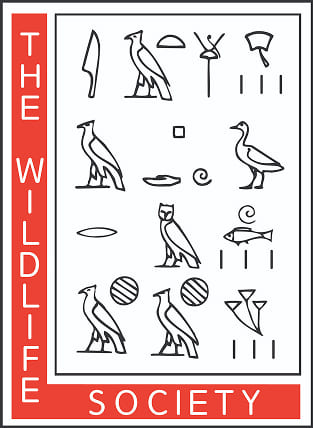
The Original TWS Logo
The Wildlife Society’s unique emblem features Egyptian hieroglyphics and depicts our broad interest. The symbols represent beasts (mammals), birds, fishes, and flowering plants (vegetation). Those symbols were chosen to represent the interconnectedness of animals, plants, and other elements of the ecosystem.
The original logo was requested in 1937 by W. L. McAtee, editor of The Journal of Wildlife Management, and drawn in pen and ink by U.S. National Park Service artist Walter Weber. In 1977, the words “The Wildlife Society” were added to the logo in an L-shaped frame around the symbols.
The New TWS Logo
The Wildlife Society’s new emblem features a hieroglyphic-inspired owl that connects to our historical roots while reflecting the evolution of our brand. The owl symbolizes wisdom and awareness, looking outward to engage directly with our community. Its clean lines and shapes echo the design of our wordmark, creating a modern identity that honors our legacy while pointing toward the future.
Past Presidents
Keeping an organization vibrant requires great commitment from strong leaders. The Wildlife Society is grateful for the leadership provided by all of our past presidents of Council. View the complete list of past presidents.