



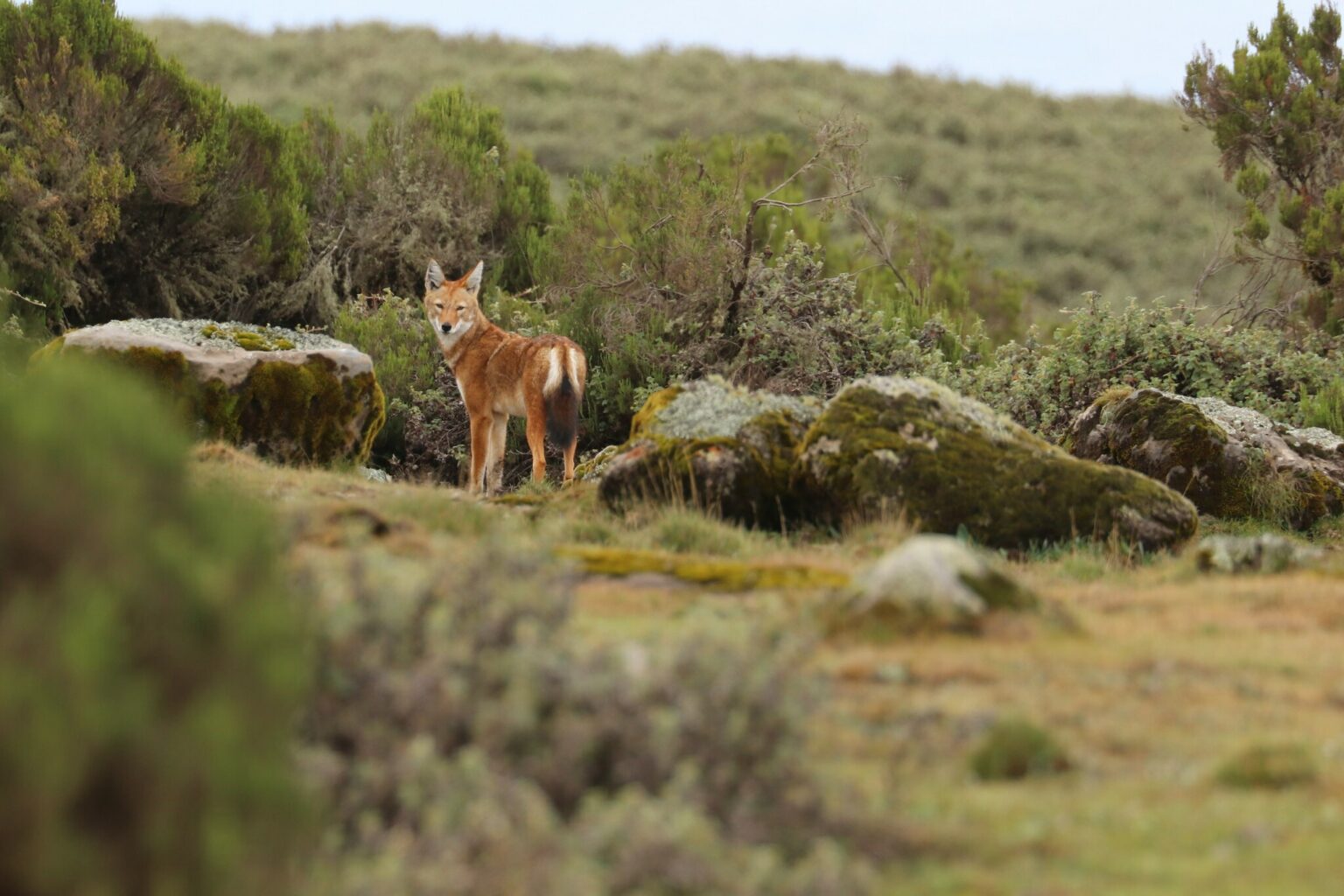
In photos, a reddish-brown wolf stretches its neck up toward a cluster of yellow-orange flowers as its tongue laps nectar from the petals. Such nectar usually serves as a reward for a wide variety of recognized pollinators from insects to bats. But just like the head of a bee, the wolf’s muzzle is coated in yellow pollen. This behavior that researchers observed and photographed recently in the wolves is a rare case of plant-pollinator interaction involving a large carnivore. In the Bale Mountains of Southern Ethiopia, researchers documented six Ethiopian wolves (Canis simensis) feeding on Kniphofia foliosa flowers. Some wolves visited and fed on multiple Kniphofia foliosa flowers, spending hours in the flower patch. While they may occasionally pollinate such flowers, the jury is still out on classifying the species—among the most endangered canids in the world—officially as a full-blown pollinator. For that, researchers would need to learn more about how often they visit flowers, how much pollen they move around, and whether their visits result in the plants producing fruit.
Read more in The Scientific Naturalist.