







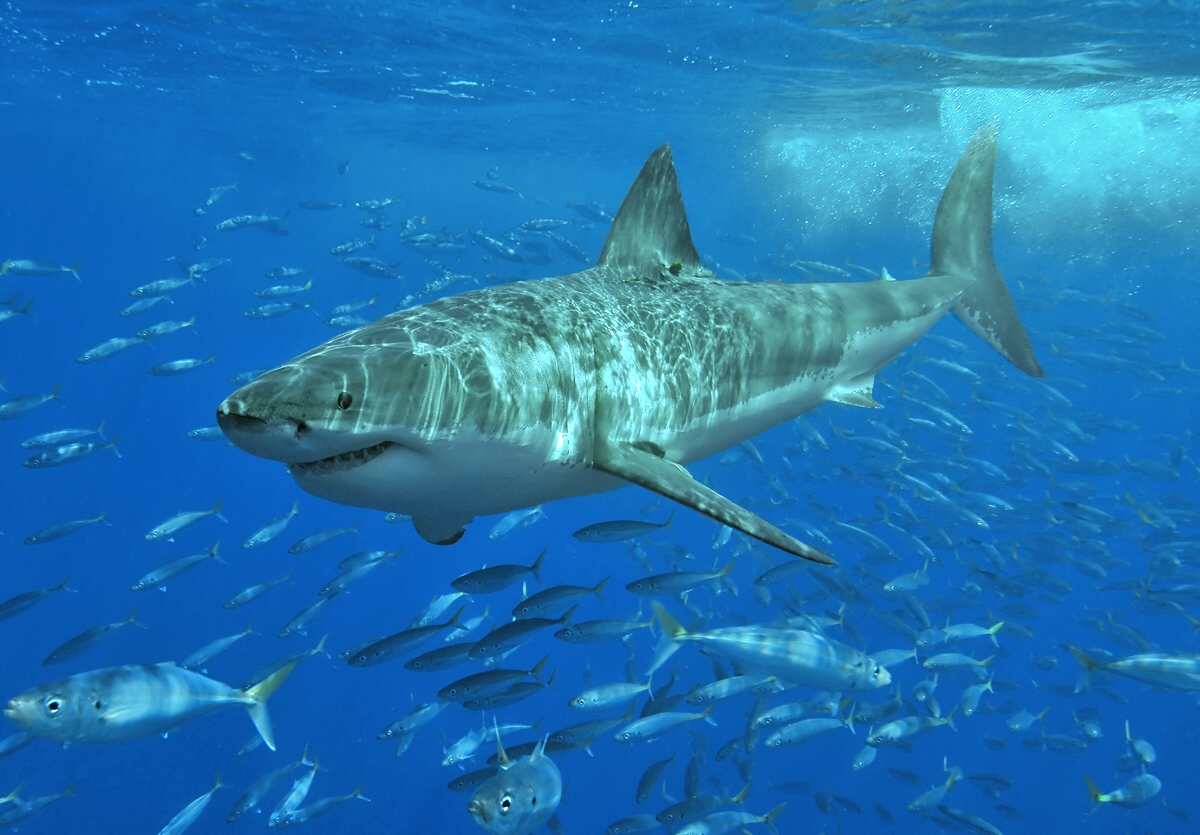
When a gang of orcas show up, white sharks tend to flee. But new research shows that the often-feared fish leave certain areas even when orcas aren’t present. Orcas (Orcinus orca) are formidable predators that can take down whales or even white sharks (Carcharodon carcharias). In one published event in South Australia’s Neptune Islands in 2015, a group of about six orcas attacked and likely killed a white shark. After that incident, white sharks left the area for over three months. Researchers from the University of Flinders dug deeper into the interactions between white sharks and orcas to figure out if that was an exceptional event or part of a larger pattern. To track the sharks’ movements, scientists inserted acoustic transmitters into the dorsal fins of white sharks using a modified spear gun. Throughout the 12-year study, scientists documented six instances of white sharks vacating the area around the Neptune Islands for more than 42 days. Only one of these instances overlapped with the presence of orcas in the area. “Our results show that killer whales can absolutely trigger an immediate response from white sharks, but they are not always the whole story when it comes to long-term shark disappearances,” said Isabella Reeves, a researcher at Flinders University in Adelaide, South Australia. The researchers also found that not all interactions between orcas and sharks led to sharks vacating the area.