States Appeal Court Decision Regarding Wolf Management

Gray Wolf

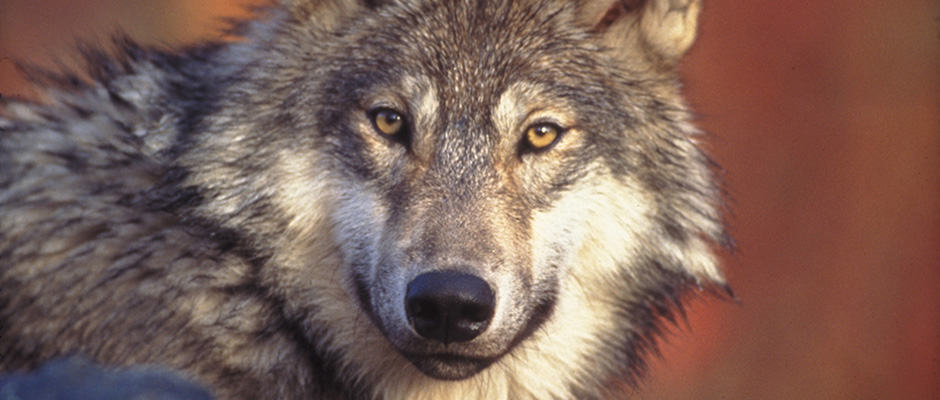
Both Michigan and Wisconsin have filed appeals to a federal judge’s order restoring protection to gray wolves in the Great Lakes region. The U.S. Fish and Wildlife Service was required to reinstate wolf protection in this area under the Endangered Species Act due to a court order and also filed notice to appeal the decision earlier this month.

Read more at the Chicago Tribune.

TWS Participates in Fly-In to Advocate for Wildlife Funding

FlyIn

The Minnesota Chapter, Western Section, and TWS Headquarters participated in the Teaming with Wildlife National Coalition’s Annual Fly-In to advocate for increased funding levels for the State and Tribal Wildlife Grants program. The President’s budget requested $70 million for the program in Fiscal Year 2016, which is an increase of $11.3 million over enacted Fiscal Year 2015 levels.

Fly-In participants from over 25 different states and the District of Columbia met with Members of Congress and their staff to emphasize the importance of the program. Participants explained how State and Tribal Wildlife Grants prevent species from becoming endangered and optimize capacity to implement on-the-ground conservation actions through fund-matching and empowering partnerships between federal, state, and non-governmental agencies.

FlyIn

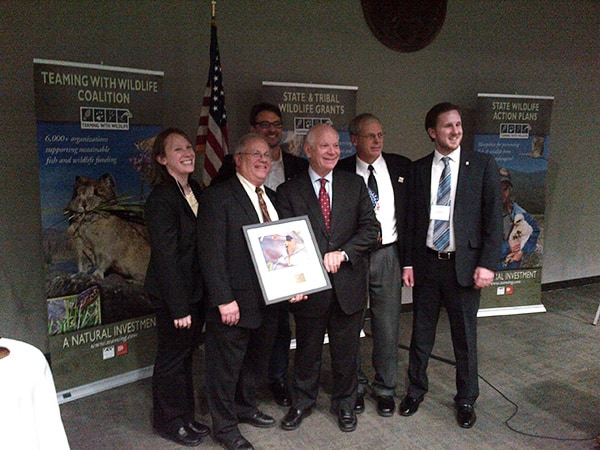
Senator Cardin and Maryland Constituents, including TWS Staff.
Image Credit: Tim Zink, Senator Cardin’s Office

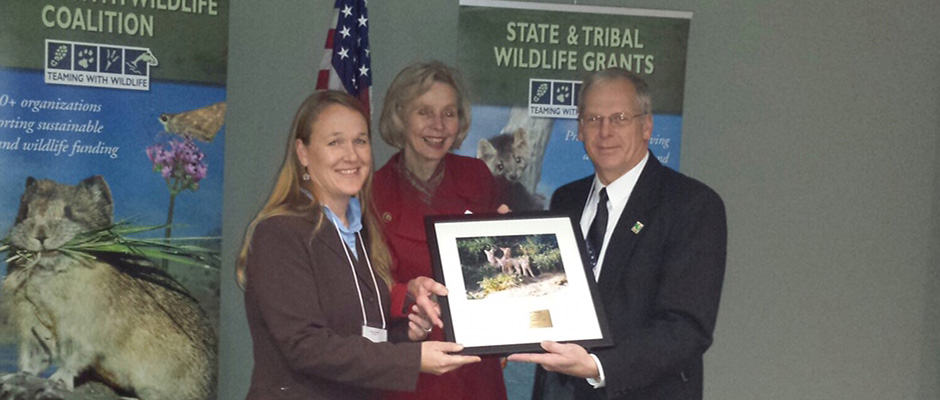
Cynthia Perrine, Western Section Representative to Council, met with Congresswoman Lois Capps (D-CA), while TWS staff met with Senator Ben Cardin (D-MD), as well as other members of the Maryland Congressional delegation. Congresswoman Capps and Senator Cardin were selected to receive the two annual coalition awards because of their longstanding support for the program. Other TWS members and staff met with offices for Minnesota and Illinois.

Ultimately, the goal of the fly-in was to ask Members of Congress to sign a letter to Congressional appropriators advocating for robust funding for the program. Last year, 170 Members of Congress signed onto the letter. Currently, the letter, which is led by Don Young (R-AK) and Mike Thompson (D-CA), is circulating through the House of Representatives. A Senate version will be distributed later. Members were also asked to submit “programmatic requests” to the Appropriations Committee for the specific level of funding, $70 million.

State Wildlife Grant funds are apportioned to each state, territory, and federally recognized tribe and are used aid in the conservation of over 12,000 species nationwide. Each state identifies its own pressing conservation needs in each individual State Wildlife Action Plans, which are required to be revised in 2015.

The fly-in was hosted by the Teaming with Wildlife Coalition, which represents over 6,400 organizations. TWS serves on the steering committee for the coalition.

TWS Member Honored for Invasive Species Management

Steve Kendrot

Wildlife biologist Steve Kendrot, a member of The Wildlife Society since 1993, recently received the 2015 Leadership/Aquatics Award during National Invasive Species Awareness Week. Currently the deputy director of the operational support staff of USDA Wildlife Services, Kendrot was recognized for his 12 years as project leader on the Chesapeake Bay Nutria Eradication Project, a collaborative public/private partnership to eradicate the invasive nutria (Myocastor coypus), in the Delmarva peninsula.

Steve Kendrot

Image Credit: USDA, Wildlife Services

Under his leadership, the Wildlife Services staff accomplished the successful removal of all known breeding nutria populations from approximately one-quarter million acres of threatened wetland habitat across three states. The Project was known for trying novel methods, including Judas nutria, a detection raft with hair snares, and implementation of GIS and GPS technologies. He recognized the importance of outreach and was accomplished in telling the story of nutria damage to local and international audiences including landowners, sportsmen, students and citizens. (Read the full story in the spring Wildlife Professional.)

Kendrot, a Certified Wildlife Biologist ®, is a member of the Maryland-Delaware Chapter and the Wildlife Damage Management and the Invasive Species working groups.

In 2011, the Aquatic Nuisance Species Task Force (ANSTF), the National Invasive Species Council (NISC) and the Federal Interagency Committee for the Management of Noxious and Exotic Weeds (FICMNEW) developed this nonmonetary awards program to recognize the leadership and accomplishments of important partners, and increase awareness and understanding about invasive species issues.  The NISAW Awards Program features three award categories which include an aquatic and terrestrial component.

Other 2015 winners include:  Lifetime Achievement/ Aquatic Award to Al Cofrancesco, U.S. Army Engineer Research and Development Center, MS and Robert McMahon, University of Texas at Arlington, TX; Lifetime Achievement/Terrestrial Award to Gordon Brown, retired National Invasive Species Council, DC; Leadership/ Terrestrial Award to Cathy Lucero, Clallam County Noxious Weed Control Board, WA; Outreach/Aquatic Award to Bob Wiltshire, Invasive Species Action Network, WI; Outreach/Terrestrial Award to Christy Martin, Coordinating Group on Alien Pest Species, HI; Volunteer/ Aquatic Award to The Volunteers, NH LAKES Lake Host Program, NH; and Volunteer/Terrestrial Award to Mark Imlay, Mid-Atlantic Invasive Plant Council, MD.

Wildlife Services is a Strategic Partner of The Wildlife Society.

TWS Chapter Comments on Missouri Legislation

MO Chapter

The Missouri Chapter of The Wildlife Society submitted comments to the Missouri legislature noting their opposition to several pieces of legislation targeting the Missouri Department of Conservation. The legislation being considered has far-reaching impacts on funding and limiting the capacity of the Department to implement conservation actions with partner organizations.

HJR 27 and HJR 28 both propose amendments to the Missouri Constitution to alter sales tax procedures. HJR 27 reduces the sales tax, while HJR 28 increases how frequently voters need to re-approve the sales tax. The conservation sales tax was originally intended as a permanent source of funding for the Missouri Department of Conservation. Lowering the tax and requiring more frequent periodic re-approval would prevent long-term planning in the Department.

SB 56 would also greatly impact funding for the Department. The bill would eliminate hunting, fishing, and trapping permit fees for Missouri residents. In addition to lost permit sales, Missouri would also not receive funds from the Wildlife and Sport Fish Restoration Accounts, which are funded by excise taxes on guns, ammo, archery equipment, fishing tackle, and motorboat fuel taxes and based on the number of hunting, fishing, and trapping permits sold. The Wildlife and Sport Fish Restoration Programs receive about $56 million and permit sales and federal aid money annually. Passage of this bill would reduce funding to the Department significantly.

Partnerships between agencies and organizations are critical in managing natural resources. The Department has many partnerships at the state and local level with conservation and sportsmen’s organizations that provide valuable educational opportunities about natural resource management, hunting, fishing, firearms safety, and other outdoor recreation. SB 337 would ban the Conservation Commission and Department of Conservation from providing money and services to not-for-profit organizations and cease involvement in already existing partnerships with 4H, Future Farmers of America, Quail Forever, National Wild Turkey Federation, and the Audubon Society of Missouri, among others.

“The Missouri Chapter strongly supports the current funding model for the Department of Conservation,” says Tony Elliot, President of the TWS Missouri Chapter. He continues, “[The] partnerships have provided substantial benefits for the citizens and natural resources of Missouri and we feel it is essential for those to continue.”

This legislation has direct impacts on the ability of the Missouri Department of Conservation to manage wildlife for both the public and future generations. Both HJR 27 and HJR 28 have been introduced to the Missouri House of Representatives. SB 56 and SB 337 have been referred to the Senate Committee on Agriculture, Food Production and Outdoor Resources and Committee on Rules, Joint Rules, Resolutions and Ethics respectively.

Beaver Hills Bioblitz

Alberta Chapter

Alberta Chapter of The Wildlife Society (ACTWS) biologists again played a key role in the success of the second annual Beaver Hills Bioblitz held January 18, 2015 at the Strathcona Wilderness Centre, in the heart of the Beaver Hills Moraine.

This event was inspired by a 2013 helicopter accident that led to the loss of a provincial government biologist and the pilot, and serious injury to another biologist. It aims to share our love of nature and raise awareness of the role of biologists in managing provincial wildlife and their habitat. Partnering with Nature Alberta’s Young Naturalists, the Strathcona Wilderness Centre and the Beaver Hills Initiative (BHI) on the event has resulted in a mutually beneficial collaboration that allows each organization to promote their respective initiatives.

This year the BHI used the Bioblitz to raise awareness and support for their application for UNESCO Biosphere Reserve status for the Beaver Hills Moraine. News coverage about the bid helped promote the Bioblitz and all partner organizations, as well as to collect supporting signatures for the nomination.

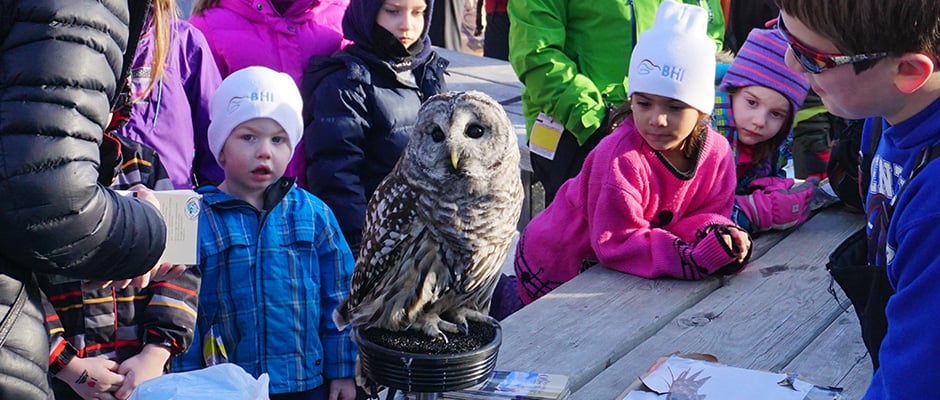
The popular event helps the public learn about radio-telemetry, winter tracking, wildlife cameras and wildlife ‘aches and pains’ from ACTWS volunteer biologists, and winter survival skills from Nature Alberta’s Young Naturalists. Interpretive talks about owls and beavers were very popular, as was a ‘field station’ wall tent with furs, skulls and the Nature Mystery box.

Eight students from the Augustana Campus of University of Alberta kicked off their citizen science winter tracking study with a training session and volunteer duties working with ACTWS biologists at the event. Their tracking study will provide a second year of data from the moraine and further test this citizen science program for the BHI as a monitoring and engagement tool for the future biosphere reserve. Volunteering with ACTWS biologists hopefully also sparked discussion and interest in a future wildlife career.

The Alberta Chapter of The Wildlife Society thanks our sponsors and volunteer biologists from Alberta Environment and Sustainable Resource Development, Alberta Innovates Technology Futures, University of Alberta, and of course, our wonderful partners!

For more information on the ACTWS visit their website and Facebook.

Researchers Identify Birds Hosting Lyme Disease

Golden-Crowned Sparrow

Researchers have discovered several bird species that host ticks carrying Lyme disease bacteria in northwestern California as well as another pathogen that causes chronic illness in humans.

“The role of birds in the maintenance of Lyme disease bacteria in California is poorly understood,” said Erica Newman in a release. Newman is a UC Berkeley Ph.D. student in the Energy and Resources Group at the University of California, Berkeley and lead author of a recently released study that “did a molecular study of bird blood, ticks present on the birds, and the associated species of bacteria that they were hosting.”

“This is the most extensive study of the role of birds in Lyme disease ecology in the western United States, and the first to consider the diversity of bird species, their behaviors and their habitats in identifying which birds are truly the most important as carriers.”

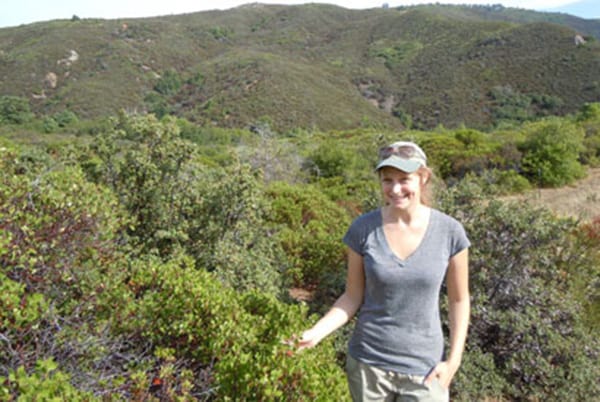
Erica Newman

UC Berkeley researcher Erica Newman, pictured in front of chaparral, where she studies bird communities. Chaparral biodiversity, including bird communities, is largely understudied because of the difficulty of detecting wildlife in dense shrub habitats.
Image Credit: David Hembry

Using mist netting, Newman and others in the team trapped over 623 birds from 53 different species from 14 sites in the UC Hopland Research and Extension Center in northwestern California and took blood samples to analyze them for the presence of pathogens. More than 99 percent of the ticks discovered were western black-legged ticks (Ixodes pacificus). Of the birds, 23 species were found to be infected with Lyme bacteria, though a few species harbored more subtypes of the disease than others.

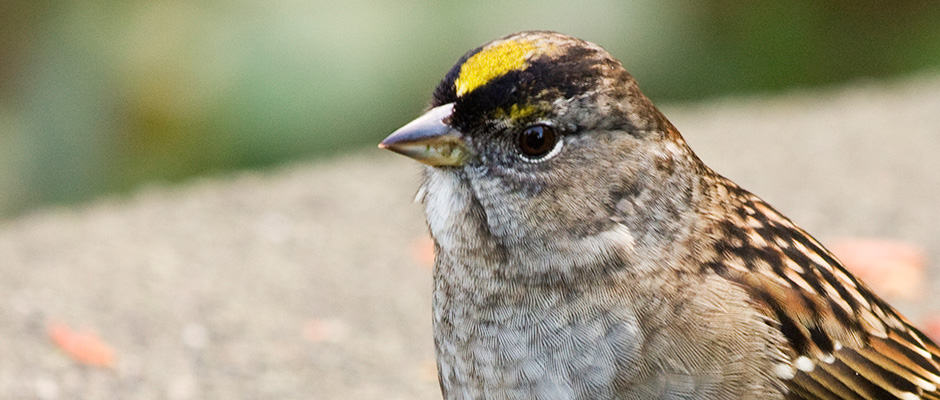
The teams study showed that the lesser goldfinch (Spinus psaltria), oak titmouse (Baeolophus inornatus) and the dark eyed junco (Junco hyemalis) were all competent hosts of Lyme disease bacteria (Borrelia burgdorferi) and harbored many more subtypes than other species. The golden crowned sparrow (Zonotrichia atricapilla) was found to be infected more frequently than other species. They also found, for the first time in the world according to Newman, that some bird species were hosting a related disease that humans can contract ­­— Borrelia bissetttii — which has infected people in Southern California and Europe.

But not all ecosystems showed an equal level of infection.

“The birds that were associated with dense oak woodlands in California had higher levels of Lyme disease bacteria in them,” Newman said. “Basically the different habitats and their associated birds really showed different levels of infection.”

While chaparral shrub ecosystems tend to have high biodiversity with many species endemic to California, birds in those areas weren’t found to host Lyme disease at any significant rate.

But the birds that were found to host the disease were coincidentally the same bird species that happened to benefit from suburbanization in California, meaning they spend more time around humans.

Newman said that the team’s findings could have implications for land development policies in California such as the way chaparral is currently cleared to reduce fire risks. The practice of clearing the land may favor birds hosting Lyme disease that move into areas once the chaparral is gone.

“We may be playing around with disease ecology by trying to manage the fire ecology of a region,” she said.

Researchers to Revisit Moose Study

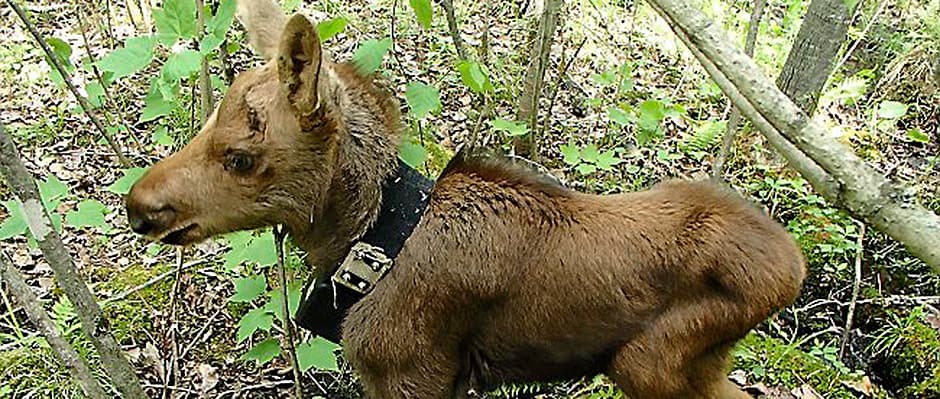
Moose calf

After two years of struggling to study moose calves, Minnesota wildlife researchers plan to give the moose calves study another try this year after working out a few issues. Last summer, researchers collared 25 calves to determine the cause of die-offs, but most of them were abandoned by their mothers and had to be rescued, or their collars fell off. The remaining calves were eaten by wolves. This year, researchers plan to study why the Minnesota moose population is dwindling by capturing a larger sample size and tracking the calves’ early years of life. Read more about the Minnesota moose study at TwinCities.com.

Turnips, Radishes and Peas Lure Deer Away From Livestock Feed

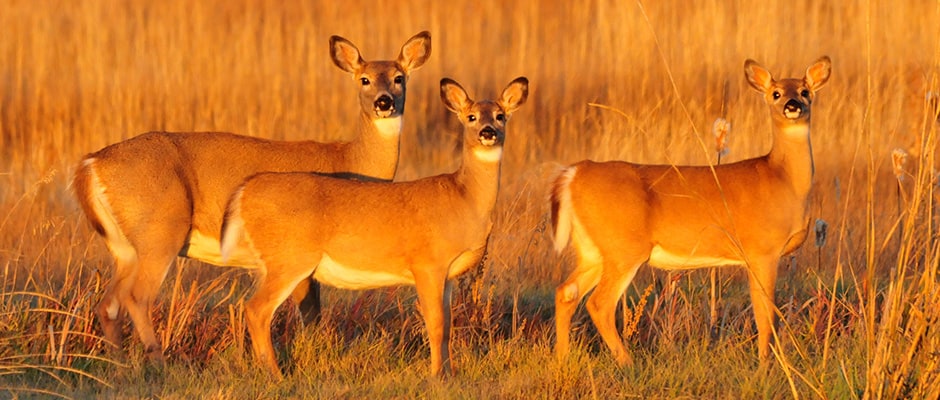
Deer

Researchers with South Dakota State University are finishing up a three-year study funded by the South Dakota Department of Fish, Game and Parks and the South Dakota Agricultural Experiment Station that will determine which fall cover crops lure deer away from livestock feed in South Dakota, particularly during the months of August and September.

The study is the first controlled experiment with fall cover crops, although some landowners experiment with cover crops and deer on their own, according to Jonathan Jenks, distinguished professor at the University’s Department of Natural Resource Management and lead researcher on the study. Landowners in the state are often faced with large herds of 100 to 200 deer eating their stored livestock feed including hay and distiller grains.

With limited information so far north in the Great Plains, South Dakota proved to be a good location for the study. Further, Jenks manages a captive deer herd of 50 white-tailed deer at the Wildlife and Fisheries Sciences Research Facility at South Dakota State University. “Because we have a captive deer herd at South Dakota State, there is more control when evaluating the deer rather than just planting crops and seeing what gets eaten,” Jenks said.

In response to SDFGP’s interest in forages that best attract deer, Jenks and graduate student Troy Weiberg put together a project evaluating a number of forages that had been used in other studies.

As part of the project, Jenks and Weiberg chose six cover crops based on previous literature from state biologists — purple top turnips, Daikon radishes, Austrian winter peas, winter rye, chicory and crimson clover — and planted them at the South Dakota State’s Wildlife and Fisheries Research Facility. Based on their data, they found that deer were particularly drawn to purple top turnips, Daikon radishes and Australian winter peas — likely because they are more digestible and have the highest protein content.

Jenks plans to provide wildlife officials with the results as soon as they are compiled. He hopes that his research will help provide wildlife officials recommendations in regards to which cover crops should be used to help manage South Dakota’s deer population.

Turkey Vultures Turning Up Comatose

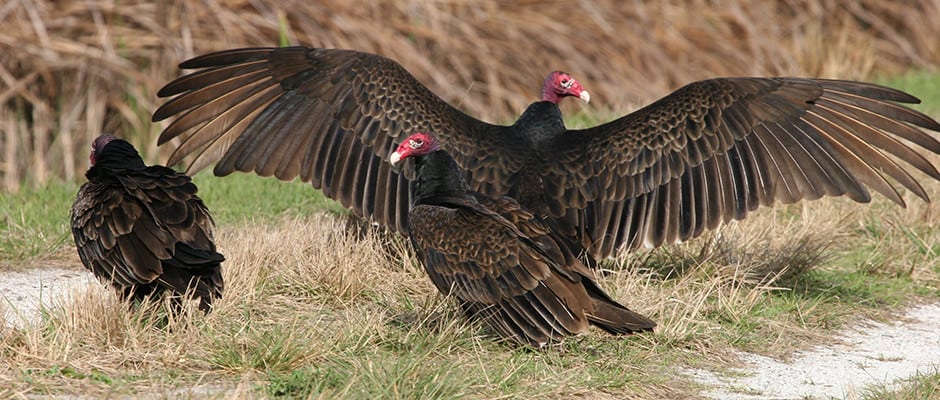
Turkey vultures

Recent lab work has determined why turkey vultures (Cathartes aura) have been turning up comatose in wildlife clinics in northern California since last year. Researchers with the California Department of Fish and Wildlife conducted lab work on six sick vultures’ stomach contents last month and found traces of pentobarbital — a drug used to euthanize animals. They concluded that turkey vultures had consumed carcasses of euthanized animals that were not disposed of properly. Read more about it at KCET Los Angeles.

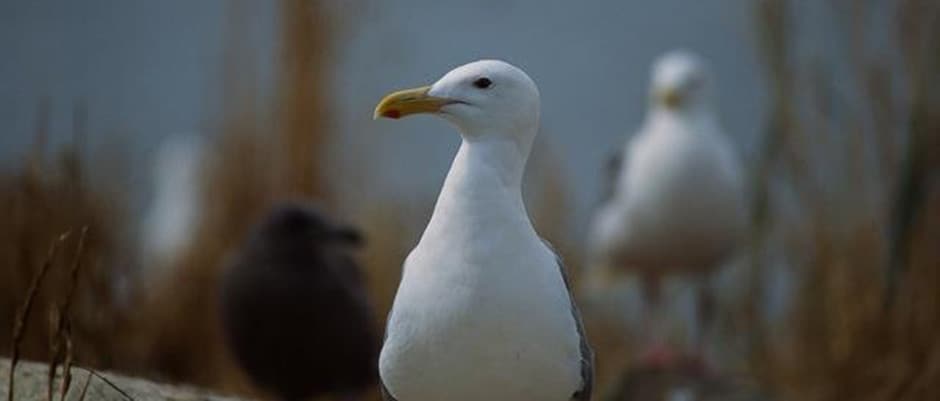
Assessing the Big Picture on Declining Gull Populations

Gulls

Gull populations off Canada’s southwest coast have dropped by half since the 1980s, likely due to a decline in quality food, according to a new study.

But at the risk of crying wolf, researchers at the University of British Columbia looked at long-term data compiled about the Glaucous-winged Gulls (Larus glaucescens) over the past 150 years to make sure the 30-year trend isn’t a passing phase.

“The larger implications in part are to point out that using long-term information on population trends, diet and demography gives us a much richer picture of the factors potentially driving bird population trends, said Peter Arcese, the Forest Renewal British Columbia chair of conservation biology at UBC and coauthor of the study.

“The [gull] population increased into the 1980s, but that’s really only when people started monitoring birds systematically there.”

Arcese said the team focused their study on Mandarte Island — a small rocky outcropping in the Salish Sea near Vancouver Island. On that island, the population of birds had increased from 200 breeding pairs around the beginning of the 20th century to about 2,500 breeding pairs in the 1980s. But he said this spike could be representative of the effects of the Migratory Bird Treaty Act of 1918. Prior to that, humans harvested gull eggs or hunted the birds and historical factors like the gold rushes of the 1800s could have affected populations.

The study found that even though gull populations started to recover throughout most of the 20th century, egg clutch sizes tended to be small, and diet analysis showed a decline in food quality.

“Eventually the decline in diet reduced clutch size and began to impair the survival of young to the point that that increase could no longer be sustained,” Arcese said.

He also added that other factors like the recovery of bald eagles (Haliaeetus leucocephalus) that prey on gulls could have had an effect on the latter’s numbers. And the lack of food for gulls may only make it easier for the eagles to hunt them. “When food is short, predators are often more effective.”

A Gauge for Ecosystem Change

While Arcese said that many people often think about gulls as “garbage birds,” the birds didn’t always feed on human trash and leftovers. Much of their diet was based on so-called forage fish.

“This bird 150 years ago was a bird that fed almost exclusively on herring and other marine organisms,” Arcese said. But these fish stocks have declined drastically over the past 150 years due to human development and fishing.

“We think there needs to be focused attention on the recovery of forage fish stocks that sustain a whole host of marine organism and marine birds,” he said.

And it isn’t just gulls. The birds were chosen because their wide-ranging diet means their population dynamics are a good gauge for health of the ecosystem in general. “Because they’re generalists, and omnivores, they also tell us something about the foods available over the past 150 years,” Arcese said. “We think the gulls are riding on top of that long-term change.”

Arcese said the gull study is part of a larger work on the history of bird populations on the Salish Sea that sits roughly between Vancouver Island and the mainland of B.C. and Washington state. They have done other studies on Mandarte island looking at marbled murrelets (Brachyramphus marmoratus) and western grebes (Aechmophorus occidentalis), which have declined by 90 percent since the 1950s and 1970s, respectively. But while the historical information on the numbers of these birds is often fragmented, they have much better information on gulls. This is necessary, he stresses, because in order to create working conservation and management plans, it’s necessary for governments and conservationists to know what the situation was like in the past.

“It’s that long term perspective that we feel is essential if someone is going to be able to create a reliable and defensible long term conservation plan,” he said. “When we talk about restoring ecosystems, we need to know where we come from. You can’t know what’s going on by looking at the past 20 years.”