
Urban Wildlife Working Group Announces Student Travel Grants

Chicago Architecture

The Wildlife Society recently learned that the Urban Wildlife Working Group will be offering student travel grants of up to $500 to be used towards attending the International Urban Wildlife Conference in Chicago, Illinois from May 17-20, 2015. The grants can be used for partial reimbursement of transportation, lodging, registration, and meal expenses. To be eligible, individuals must be a current student or a recent graduate (within past three years). Priority will be given to students presenting a talk or poster and who are members of The Wildlife Society.

The International Urban Wildlife Conference will be hosted by The Wildlife Society’s Urban Wildlife Working Group and the Lincoln Park Zoo’s Urban Wildlife Institute. Many topics of research will be presented and discussed, including the latest on the ecology and management of urban wildlife as well as how to reduce human-wildlife conflict. Attendees will include researchers and planners from state and federal agencies, universities, architects, and private organizations. The conference provides an excellent opportunity for students interested in urban wildlife to learn more on the subject and to network with professionals from across the United States and the world.

Applications must be submitted by March 1, 2015. For more information or to apply please download the application here. More information on the International Urban Wildlife Conference can be found on their website.

Sources: Shannon Pederson, International Urban Wildlife Conference
Settlement Aims to Reduce Red Wolf Mortality

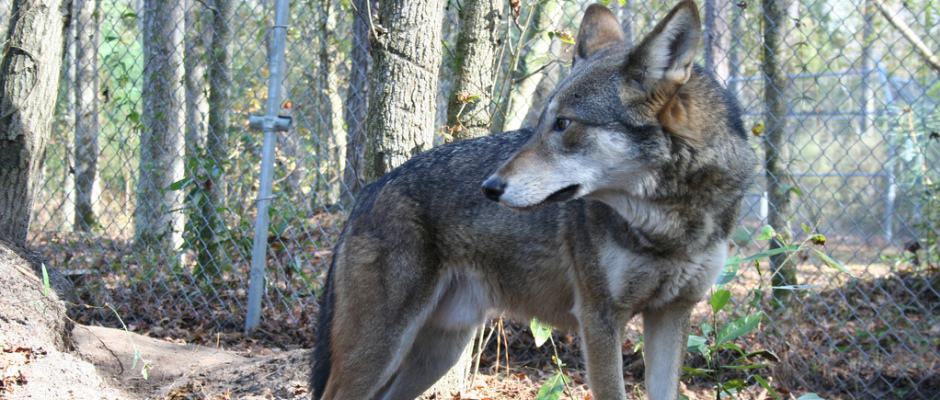
Red Wolf Captive Program

North Carolina will adjust its coyote hunting regulations to help reduce mortality of the endangered red wolf (Canis lupus rufus) as part of a court settlement with several environmental non-profits. The legally designated experimental, non-essential population of an estimated 100 wolves has been the accidental target of hunters who mistake them for large coyotes. The North Carolina Wildlife Resources Commission will ban night hunting of coyotes in the five-county area in eastern North Carolina where the wolves reside, and also require a permit for hunting during the day.

Read more at Southern Environmental Law Center.

Thoughts from the Executive Director

By the time of this writing those of you who attended our annual conference in Pittsburgh have hopefully completed the inevitable in-basket routine, and made all the calls and responded to all the emails that accumulate with time away from your workplace. Informal feedback so far indicates that the conference was a big success. We ended up with 1552 attendees, which exceeded the number we had expected just a few weeks prior to the event. Judging from the session attendance, there was a lot of interest in many of the topics highlighted at the conference. Several conference events were quite popular, for example the quiz bowl, the Ignite! session, the student mixers. And then there was the very popular closing night river cruise and dinner. We’ve been pleased with opinions from many of you that overall, Pittsburgh was one of our better conferences.

In addition to the conference itself, the TWS Council held a very productive two-day meeting on Friday and Saturday just before the conference began. Included in the many issues addressed and actions taken during the meeting were Council approval of a new strategic plan for 2015-2019, along with approval of annual operational plans for the current year. The Society’s new web site, the centerpiece of our new e-communications strategy, was rolled out during the meeting. Council had in-depth discussions about the Society’s financial status and the rather complicated transition this year from a calendar year financial cycle to one that goes from July each year to June the next. Also discussed were our publication strategy and our new agreement with Wiley Publishers. There was in-depth discussion about a new member survey covering a wide range of topics about the Society and its members. Responses from the nearly 4,000 members who have responded to date will be invaluable in designing new ways to provide benefits and services.

The Council Meeting on Friday and Saturday was followed with a Members meeting on Tuesday and a follow-up Council meeting on Wednesday during the conference. The Members meeting is held each year, and it provides an opportunity for members to gain and share up-to-date information on TWS activities and to voice their concerns and ideas for the future. This year about 200 members attended; a goal for next year is to double that number. The follow-up Council meeting on Wednesday was presided over by our new president Rick Baydack, with an agenda that included the appointment of new TWS committee members and preparations for our next Conference in Winnipeg in 2015.

Overall, a lot of very positive change is planned or underway for the Society, much of which builds on the Pittsburgh Conference and meetings. We will be sharing progress with you throughout the year, and of course the Winnipeg Conference will provide the opportunity to update everyone on where we are in October 2015. So start now in your planning to attend – it promises to be another exciting event.

-Ken

World’s Largest Bat Colony Saved by Land Deal

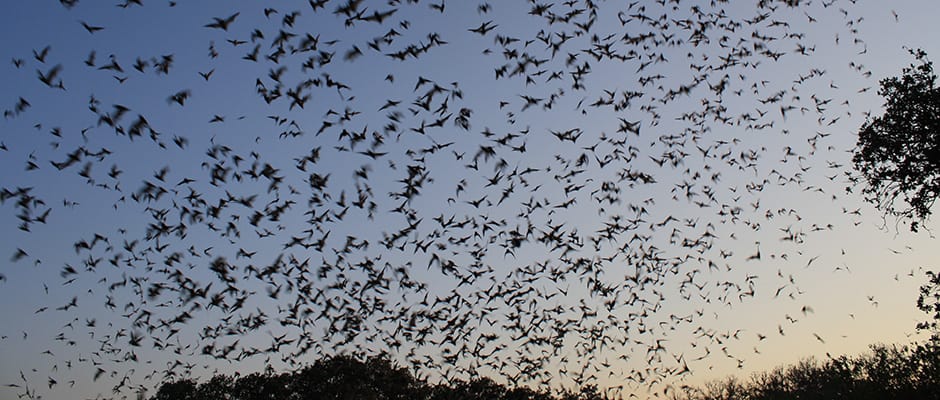
Just outside of San Antonio, Texas, resides the world’s largest bat colony. Approximately 20 million migrating Mexican free-tailed bats (Tadarida brasiliensis) roost in Bracken Cave every summer, but urban sprawl and accompanying light pollution threatened their habitat, until now.

Last month, the Nature Conservancy of Texas and Bat Conservation International—with help from other groups including the city of San Antonio and the Department of Defense—purchased a swath of undeveloped and unprotected land adjacent to the cave for $20.5 million, ending a developer’s plans to construct 3,500 homes on the property and ensuring the skies around the cave remain dark.

Bracken Cave’s Mexican free-tailed bats comprise nearly one-fifth of the species and play an important ecological role. At summer’s peak, the colony consumes 140 tons of insects each night, saving farmers $23 billion in reduced crop damage and pesticide use, according to the Nature Conservancy. “The emergence of these millions of bats, as they spiral out of the cave at dusk for their nightly insect hunt, is an unforgettable sight,” said Andrew Walker, executive director of Bat Conservation International in a press release. “The protection of [this land] helps ensure this centuries-old wildlife habitat will continue to provide a safe home for one of the region’s most unique and important inhabitants.”

The 1,521 acre plot—called Crescent Hills—will serve as a buffer between the cave, which sits on the edge of a nature preserve, and surrounding suburbs. Protecting the land also has added conservation benefits: Crescent Hills serves as a habitat for federally endangered golden-cheeked warblers (Dendroica chrysoparia) that only nest in the Texas Hills Country, and lies within the Edwards Aquifer Recharge Zone, which provides drinking water for nearly two million Texans, including the entire city of San Antonio. “Our collective efforts have resulted in a trifecta of conservation success for the entire region by safeguarding Bracken Bat Cave, preserving important habitat for warblers, and safeguarding Texas’ most valuable resource—clean, fresh water,” said Laura Huffman, Texas state director of The Nature Conservancy.

The Nature Conservancy will manage the newly-acquired land and plans to create hiking trails and public bat-watching events.

TWS Comments on Clean Water Act Proposed Rule

test

The Wildlife Society (TWS) submitted comments on the Environmental Protection Agency’s (EPA) proposed changes to policies regarding implementation of the Clean Water Act (CWA). The proposed rule is intended to clarify long standing confusion over which water bodies are under jurisdiction of the CWA.

The EPA originally proposed the “Definition of `Waters of the United States’ Under the Clean Water Act” rule in April, but extended the comment period twice to allow organizations and individuals more time to read and interpret the proposal before making comments. The comment period closed this past Friday, November 14.

Members of TWS’ Wetlands Working Group played a major role in developing the Society’s comments using their expertise on wetlands and the wildlife dependent on wetlands habitats. The recommendations focused on clarifying some of the definitions within the rule such as “significant nexus” which describes how wetlands are connected and “floodplain,” which describes the process by which the EPA will delineate areas that flood periodically. TWS suggested tweaking some of the definitions to be more clear and better reflect current scientific knowledge so the EPA can make consistent, accurate and timely designations.

Sources: Federal Register (April 21, 2014), Federal Register (October 14, 2014)

Tracking Yosemite’s Bears

Yosemite National Park

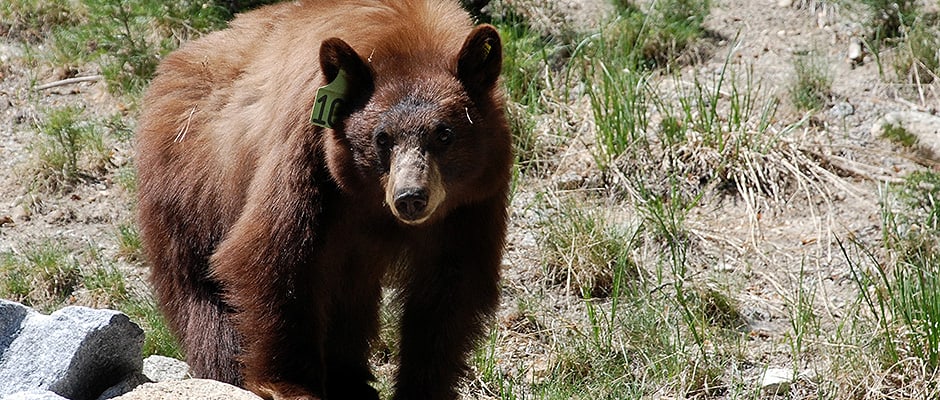
Yosemite National Park wildlife biologists are using GPS to track nine bears in an effort to prevent run-ins with park visitors.

Watch more at Today.

New Prediction Tool for Birds’ Future Habitat Ranges

Bird Ranges

A newly developed tool from the United States Geological Survey (USGS) shows how the habitat ranges for select species of North American birds might look in 2075 and could eventually help wildlife biologists make their own local predictions. USGS scientist Terry Sohl looked 50 species of birds in a study published in PLOS ONE and found the results varied by species — some birds could have expanding ranges, while others might see theirs shrink.

The study is not the first to cast light on how bird ranges will shift in the future. The Audubon Society released a comprehensive report detailing how 588 bird species in North America will react to the changing climate. A forecast map illustrates how species’ ranges may shrink, expand, or shift over the next 65 years. Climate change is only one of many challenges that birds will face according to Sohl.

How humans use the land within a bird’s given range can be just as important as climate shifts. The spread of urban areas, land development, and deforestation are a few things that can cut into vital bird habitat and impact bird ranges locally. “Climate gives you the big brush picture of what will happen over all, but if you have the land use data you can see the fine detail,” said Sohl. “It can really change the picture.”

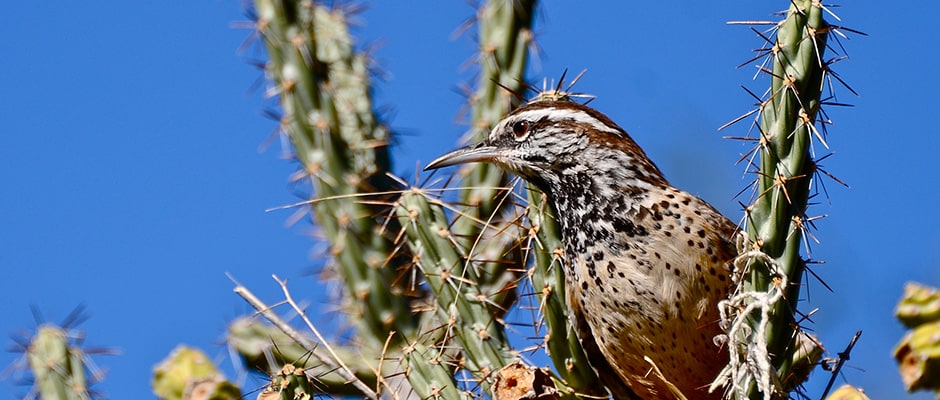
For some birds the picture looks good. By 2075, climate change will increase temperatures by three to seven degrees Fahrenheit, making larger swaths of area in the southwest suitable for species such as the Gambel’s quail and the cactus wren that breed there. The study predicts the ranges of both species will increase by more than 50 percent.

Other birds may not be so lucky. The model projected that the Baird’s sparrow could lose up to 90.8 percent of its range in the U.S. as warming temperatures drive it out of its summer breeding grounds in the Dakotas, Minnesota, and Montana northward further into Canada. Similarly, the forest-dwelling hooded warblers may move north into upstate New York, northern New England, and Michigan as the climate warms, but its northern range may become fragmented as agricultural lands in the east expand and replace forested areas.

While Sohl looked at large range changes over North America, he believes the approach — taking into account both climate change and future land use — can be useful on a smaller scale. He and other USGS researchers are working on a tool that would allow land and wildlife managers to make their own projections about how the landscape will change locally. Researchers could then plug their projections into climate change prediction models and achieve similar results but on a local scale.

“What we are trying to say is ‘hey, all you guys using climate modeling, land use data is interesting too,’” said Sohl. “You are only telling part of the story if you are just looking at climate going out into the future.”

Landowner Partnerships with FWS Protect Habitat

The U.S. Fish and Wildlife Service partnered with Texas landowners to protect nearly 7500 acres of ranchland along the Gulf Coast near the border with Mexico. The ranch, which is located near Laguna Atascosa National Wildlife Refuge, will provide habitat for a diverse assemblage of species that require the unique combination costal prairie, thorn forest, and wetlands found in the southern tip of Texas. The ocelot and the Aplomado falcon are two species of concern that will benefit from the easement.

Read more here.

FWS Reopens Comment Period on Yellow-Billed Cuckoo Habitat

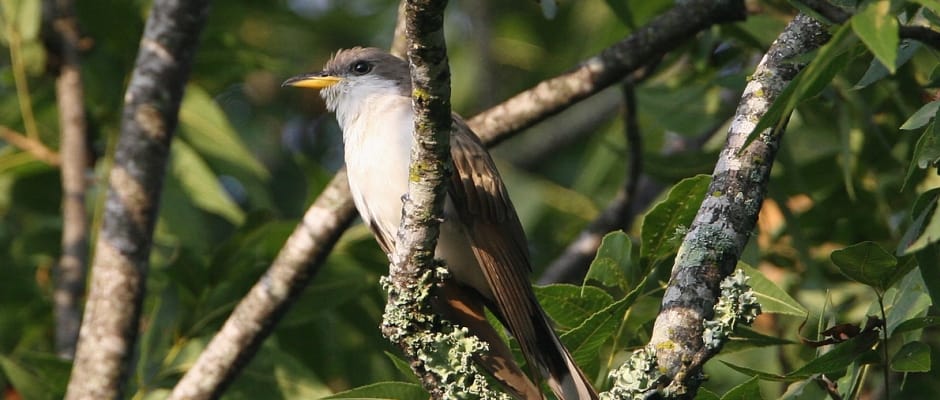
The U.S. Fish and Wildlife Service (FWS) reopened the comment period on its critical habitat designation proposal Wednesday for the western population of the yellow-billed cuckoo (Coccyzus americanus). FWS originally announced their proposal for the bird’s critical habitat in August and closed the public comment period on October 14th. However, the agency decided to extend the comment period three more months to January 12, 2015 in response to criticism from House Republicans who called for more time to carry out public hearings in the affected areas.

The yellow-billed cuckoo is an elusive but distinctive bird that breeds in North America during the summer and spends its winters in South America. The species relies on cottonwood trees and willows along rivers and streams for habitat. Land use changes brought on by agriculture and water diversions by dams have resulted in dramatic declines in these trees and therefore the cuckoo.

The controversial critical habitat proposal spans nine western states, covering 546,335 acres with 242,000 of them on private property. House Natural Resources Committee Chairman Doc Hastings (R-Wash) and 17 other members of Congress communicated dismay over the proposal in a letter to FWS director Dan Ashe, noting that the agency underestimated “the true economic impact of the listing and habitat designation” of the species. They state that the $3.2 million per year in incremental cost estimated by FWS does not take into account impacts to grazing, development, and irrigation.

Comments may be submitted online at the Federal eRulemaking Portal at http://www.regulations.gov. The docket number for the proposed rule is FWS–R8–ES–2013-0011. Comments can also be sent by U.S. Mail or Hand Delivery: Public Comments Processing, Attn: FWS–ES–R8–2013–0011; Division of Policy and Directives Management; U.S. Fish and Wildlife Service; U.S. Fish & Wildlife Headquarters, MS: BPHC, 5275 Leesburg Pike, Falls Church, VA 22041-3803.

Sources: Greenwire (October 2, 2014), Environment and Energy News (October 7, 2014), Greenwire (October 15, 2014), Federal Register (August 15, 2014), U.S. Fish and Wildlife Service (November 10, 2014), Federal Register (November 12, 2014)